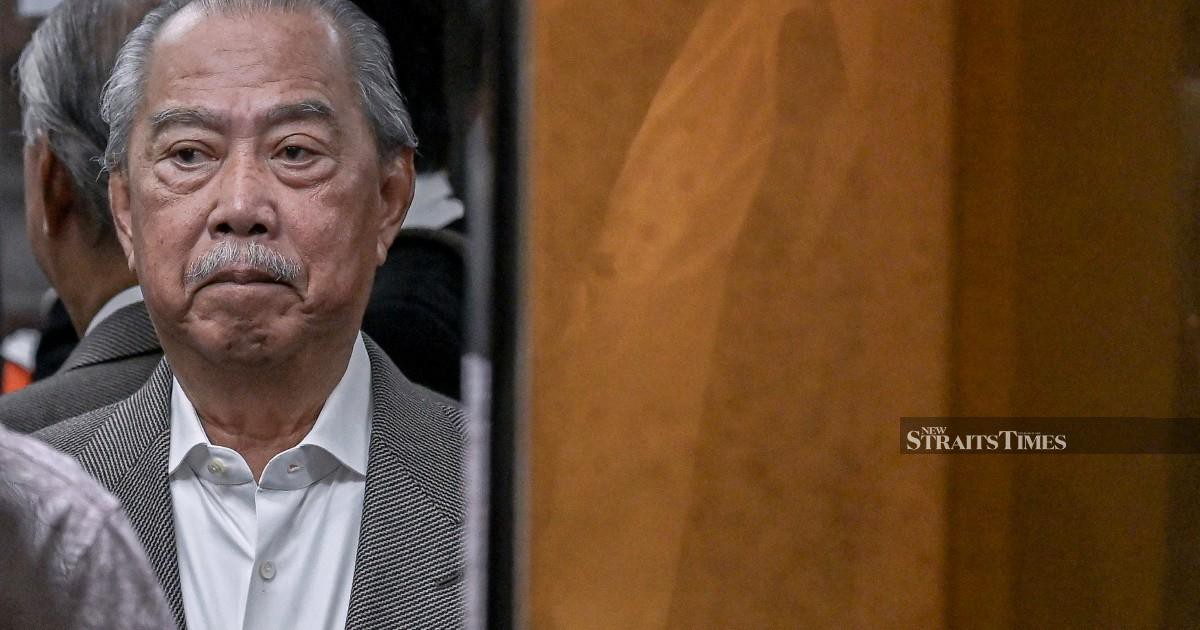
A finance manager employed by KCJ Engineering Sdn Bhd has provided testimony to the High Court establishing a connection between the company's RM800,000 contribution to Bersatu and the Jana Wibawa projects subsequently awarded to the firm, according to court proceedings heard in Kuala Lumpur today.
The disclosure marks a significant development in ongoing investigations into corporate donations to the ruling coalition's parties and the allocation of government contracts. Jana Wibawa, the government's initiative to provide infrastructure and development to traditionally underserved communities, has drawn scrutiny regarding how projects are distributed among private contractors. The revelation suggests a potential correlation between financial contributions from companies and the conferment of lucrative public works opportunities.
KCJ Engineering Sdn Bhd, a construction and engineering services provider, received substantial Jana Wibawa contract awards that followed the company's substantial financial gift to Bersatu, the finance manager's testimony implies. Such arrangements, if structured as quid pro quo arrangements, would potentially contravene anti-corruption regulations and undermine the integrity of public procurement processes designed to ensure fair competition and transparent allocation of government resources.
The High Court proceedings underway in the capital represent part of a broader examination into the nexus between corporate donations to political parties and the distribution of state contracts. Malaysia's regulatory framework, overseen by the Malaysian Anti-Corruption Commission and enforced through the courts, prohibits arrangements where private sector support to political entities is explicitly or implicitly conditioned upon the receipt of government business. Such investigations are critical to maintaining public confidence in the integrity of Malaysia's procurement and political funding systems.
Bersatu's position within Malaysia's political landscape makes this testimony particularly relevant. As a component party within the current ruling coalition, its fundraising mechanisms and donor relationships have attracted considerable public and institutional scrutiny. The RM800,000 contribution in question represents substantial financial support, and the finance manager's assertion that company leadership informed her of the donation's connection to Jana Wibawa awards suggests deliberate structuring of the arrangement rather than coincidental timing.
For Southeast Asian observers monitoring Malaysia's governance standards, such court revelations carry implications beyond the immediate parties involved. The region's investors and development partners frequently assess countries based on the transparency and integrity of their contracting processes. Public evidence of political donation schemes influencing public works allocation can undermine international confidence in Malaysia's institutional framework and regulatory environment, potentially affecting foreign direct investment patterns and the nation's standing within regional business communities.
The Jana Wibawa initiative itself—designed to improve infrastructure and socioeconomic conditions in designated areas—stands to lose credibility if project allocation decisions reflect political patronage rather than merit-based criteria. The scheme's fundamental purpose of equitably distributing development benefits across constituencies depends upon procurement processes insulated from undue political influence. When courts examine evidence suggesting that donations determine project awards, the initiative's foundational premise comes into question, potentially compromising community confidence in the program's objectives and governance.
KCJ Engineering's role in this arrangement warrants examination not merely as the recipient of beneficial contracts, but as an entity potentially involved in structuring a donation explicitly linked to commercial gain. Company leadership's reported communication to finance staff regarding the RM800,000 contribution's connection to Jana Wibawa awards suggests institutional awareness of the quid pro quo character of the arrangement. Whether the company initiated this structure or responded to external expectations remains a matter for judicial determination.
The testimony also raises broader questions about internal governance at companies engaged in government contracting. Finance managers and other internal oversight personnel occupy positions where they might identify and potentially report questionable arrangements. The fact that this particular manager's knowledge of the donation-contract linkage became evident during court proceedings suggests that internal compliance mechanisms may not have functioned as intended, or alternatively, that staff concerns were not escalated through appropriate channels.
Bersatu's response to these proceedings and the allegations they contain will likely influence perceptions of the party's organisational integrity and commitment to regulatory compliance. Political parties across the democratic world face scrutiny regarding donor relationships, yet how they respond to credible allegations of improper arrangements distinguishes those committed to institutional reform from those seeking to minimise accountability. The party's willingness to engage transparently with investigative processes may determine whether public confidence in its governance evolves positively or deteriorates further.
The High Court's examination of this matter reflects Malaysia's judicial system's capacity to investigate complex arrangements involving political institutions and government procurement. Despite challenges facing judicial independence globally, Malaysian courts have demonstrated willingness to examine controversial matters involving high-level figures and powerful institutions. The outcomes of such proceedings carry significance for Malaysia's broader governance trajectory and regional standing as a state governed by law rather than patronage networks.
As these proceedings continue, attention will focus on whether additional witnesses can corroborate the finance manager's testimony and whether documentary evidence exists substantiating the alleged linkage between the Bersatu donation and Jana Wibawa awards. The evidentiary standards applied by the court will determine whether this narrative of corruption becomes legally established or remains contested. Either outcome will carry considerable implications for Malaysian governance, political funding transparency, and public sector procurement integrity across Southeast Asia.

