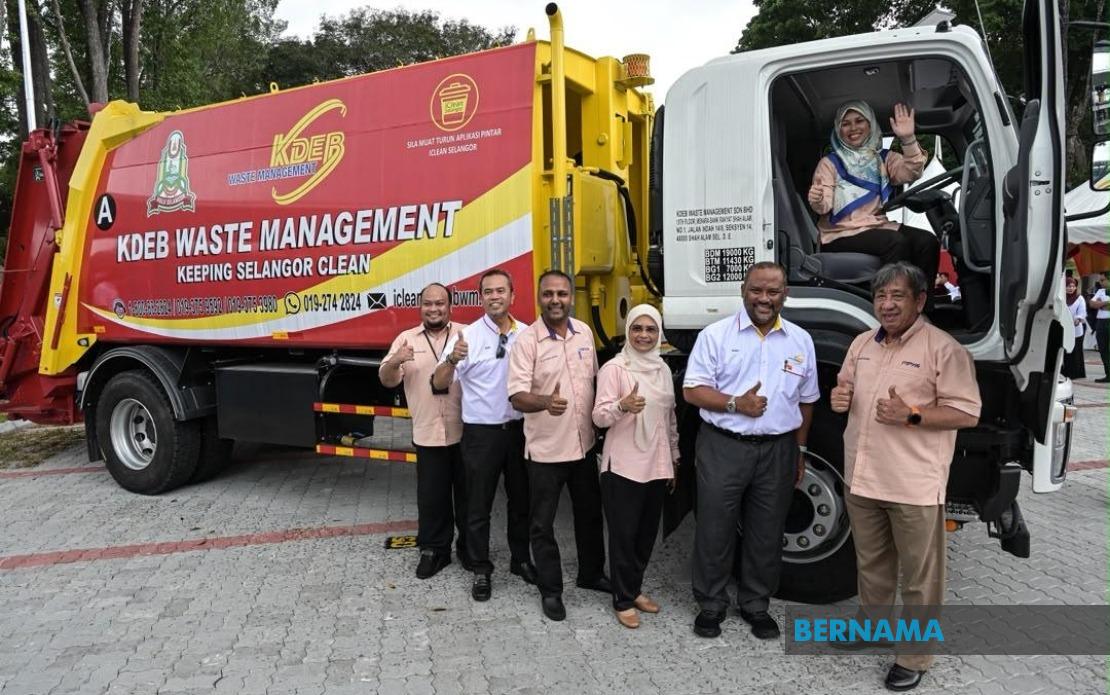
KDEB Waste Management has formally launched its second contract period with Hulu Selangor Municipal Council (MPHS) by introducing a fleet of 33 newly-acquired compactor lorries designed to modernise residential waste collection across the district. The handover ceremony, held in Hulu Selangor, marked the official commencement of a seven-year service agreement that will run until June 30, 2033, representing a RM117.2 million investment in waste management infrastructure for the region.
The new vehicle fleet comprises three different truck models tailored for varying operational demands. The procurement includes 18 Isuzu compactor lorries, five Mitsubishi Fuso units, and ten UD Trucks, each equipped with contemporary technology designed to maximise collection capacity while maintaining strict environmental and safety protocols. According to KDEBWM managing director Datuk Ramli Mohd Tahir, this diversified approach to fleet composition ensures optimal performance across different topographies and residential densities found throughout the Hulu Selangor area.
The transition to this expanded service model reflects significant growth in waste volumes within the municipality. During the previous seven-year contract period spanning 2018 to 2030, KDEBWM collected between 100 and 150 tonnes of domestic waste daily. However, current operational data indicates this figure has nearly doubled, with collection volumes now ranging from 150 to 250 tonnes per day, and projections suggesting capacity could reach 300 tonnes daily. This escalation underscores the rapid urbanisation and population expansion occurring throughout Hulu Selangor, requiring proportionate increases in collection infrastructure and service frequency.
The renewed engagement between MPHS and KDEBWM carries an annual financial commitment of approximately RM16.7 million, structured across the seven-year contract term. MPHS president Julaiahah Jamaludin emphasised that this partnership represents not merely a service provision arrangement but rather a collaborative framework aimed at systematically addressing the district's evolving waste management challenges. The financial scale of this commitment reflects the complexity and resource intensity of maintaining contemporary waste collection systems across a growing municipality.
A fundamental operational change accompanying the new contract involves the transition from traditional communal waste collection points to a comprehensive door-to-door collection system commencing July 1. This shift represents a departure from the previous methodology, wherein residents disposed of waste in designated community bins. The new approach requires KDEBWM contractors to collect segregated waste directly from individual residences on predetermined schedules, potentially enhancing convenience for householders whilst imposing stricter compliance requirements.
The implementation of this collection system necessitates specific household preparedness standards designed to facilitate efficient and hygienic operations. Residents throughout Hulu Selangor must now provide individually-owned covered waste bins with minimum capacity of 120 litres, prominently labelled with corresponding house or lot numbers. The municipal council has discontinued reliance on leach bins entirely, requiring households to transition to compliant containerisation. All domestic waste must be placed within sealed plastic garbage bags before disposal into these bins, with covers maintained in closed position to prevent environmental contamination and unauthorised animal scavenging.
Beyond domestic waste management, the MPHS-KDEBWM partnership encompasses a broader sanitation strategy encompassing industrial waste streams. The municipal council is simultaneously collaborating with KDEBWM to establish collection mechanisms for industrial waste generated by small and medium enterprises operating throughout Hulu Selangor. This expansion recognises that comprehensive waste management extends beyond residential sources to encompass commercial and light industrial operations, requiring coordinated collection protocols through approved concession panel companies.
The introduction of this modernised waste collection infrastructure carries implications for service quality and environmental protection across the district. By centralising collection through professional waste management operators utilising contemporary compaction technology, the arrangement aims to reduce operational inefficiencies, minimise littering from overflowing bins, and decrease environmental exposure to decomposing waste materials. The sealed containerisation requirement and scheduled collection model also address public health concerns associated with uncontrolled waste accumulation and pest proliferation in residential areas.
For Malaysian municipalities observing waste management innovations in peer administrations like Hulu Selangor, this transition model offers practical insights into modernising collection systems. The phased introduction of standardised waste containers and scheduled collection protocols, whilst requiring citizen adjustment and compliance, represents evidence-based approaches to enhancing municipal service delivery. The significant increase in collection capacity documented in Hulu Selangor—roughly doubling within a seven-year period—reflects broader urbanisation patterns evident throughout Malaysia's suburban and semi-urban regions.
The financial sustainability of expanded waste management services remains a critical consideration for Malaysian local authorities. The RM16.7 million annual expenditure by MPHS reflects the genuine cost structures associated with professional waste collection, fleet maintenance, and operational safety standards. Many smaller municipalities across Malaysia struggle to allocate comparable resources to waste management, potentially creating service disparities. The Hulu Selangor arrangement, through its formalised contract structure and competitive procurement, provides a comparative benchmark for evaluating waste management costs and service standards across other Malaysian jurisdictions.
Looking forward, the seven-year contract period extending to 2033 positions Hulu Selangor to assess whether demand projections requiring 300-tonne daily capacity materialise. Should urbanisation continue accelerating as anticipated, the municipality may require further infrastructure investments before the current contract concludes. Additionally, the transition period requiring household compliance with containerisation standards will test the effectiveness of public education campaigns and enforcement mechanisms designed to ensure systematic adoption across the district's diverse residential communities.

