Malaysia's regulatory framework for film is entering a new phase aimed at granting filmmakers substantially more creative latitude, according to a joint commitment from the Ministry of Home Affairs (KDN) and the Film Censorship Board (LPF). The announcement signals an attempt to reconcile two competing imperatives: fostering a dynamic, world-competitive film sector and maintaining the government's duty to protect national security, public harmony and social values. This rebalancing reflects broader regional trends toward cultural liberalisation among Southeast Asian nations seeking to build globally competitive creative industries.
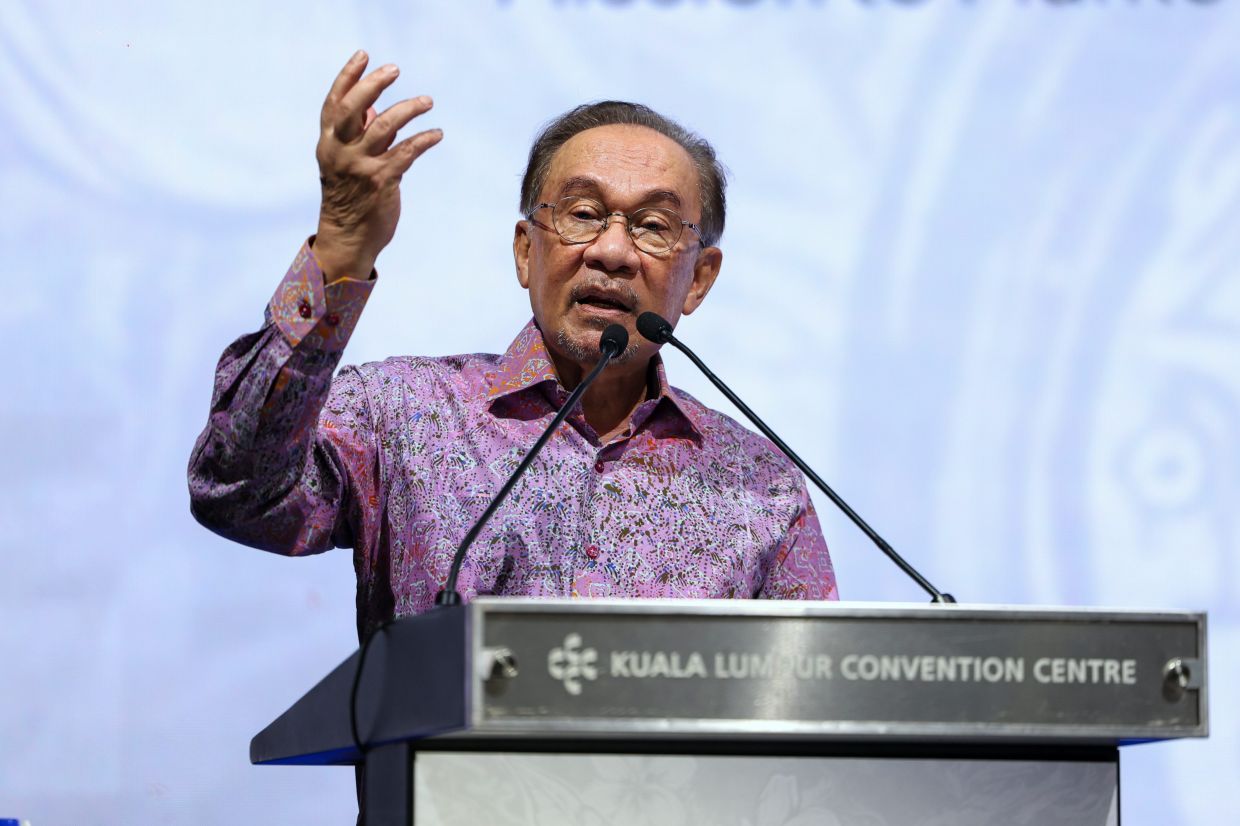
The KDN's statement endorses Prime Minister Datuk Seri Anwar Ibrahim's recent call for the national film industry to operate with fewer constraints, permitting greater experimentation, critical examination of issues, and artistic risk-taking. This represents a significant policy signal from Malaysia's leadership that the film sector should be empowered to evolve alongside societal changes and technological shifts, suggesting recognition that overly restrictive frameworks may handicap local productions in an increasingly international streaming and cinema market. The move positions Malaysia as attempting to strike a middle ground between regulatory caution and creative vitality—a challenge many developing democracies face.
Central to the KDN's recalibrated approach is a clarification of how classification and censorship operate as distinct yet complementary mechanisms under the Film Censorship Act 2002. Classification determines age-appropriate content boundaries, assigning films to categories suited for particular audience demographics. Censorship, by contrast, evaluates material comprehensively against applicable laws, policies and guidelines, examining whether content meets regulatory standards regardless of intended audience. The ministry emphasised that assigning an age classification does not automatically exempt a film from full censorship evaluation; every production must still undergo LPF's complete scrutiny process.
This distinction carries practical importance for Malaysian filmmakers. A film receiving a classification does not guarantee approval without edits or cuts. However, the KDN indicated that the censorship process now operates with greater nuance: content may be retained within its designated age classification without modification if evaluators determine it remains appropriate for that audience bracket. This represents a meaningful departure from more rigid historical approaches, acknowledging that context matters profoundly. A scene involving violence, language or mature themes might be acceptable in an R-rated film but inappropriate in a children's production—a principle the board now explicitly recognises.
The LPF's evaluation methodology has been redesigned to assess films more holistically, examining scenes, dialogue, audio composition, thematic elements, character behaviour and narrative structure together rather than isolating individual components. This contextual approach mirrors international best practices used by censorship boards in countries like Australia and South Korea, where evaluators consider how specific content functions within a film's overall artistic vision. For Malaysian filmmakers, this means controversial or boundary-pushing material may be approvable if it serves narrative purpose and targets appropriate audiences, rather than being rejected on principle.
Yet the KDN made clear that expanded creative space does not mean unconstrained freedom. The government will continue prosecuting its responsibility to prevent content jeopardising national security, public order, religious sentiment, morality, or social and cultural stability. Content bearing potential to destabilise these domains will face heightened scrutiny and potential rejection or modification requirements. Additionally, the LPF will evaluate material through a geopolitical lens, considering whether films might damage Malaysia's international image, undermine social cohesion, or strain relations with other nations. These guardrails reflect Malaysia's complex multi-religious society and the government's concern about communal tensions.
For Southeast Asian context, Malaysia's recalibration follows similar initiatives across the region. Thailand, Indonesia and the Philippines have all wrestled with balancing censorship against industry development. Vietnam recently loosened documentary regulations, while Singapore's Media Development Authority has adopted classification-based approaches permitting more content to reach adult audiences. Malaysia's explicit recognition that creative expression and national responsibility must coexist represents acknowledgment of this regional momentum toward more sophisticated, audience-focused regulatory models rather than blanket restrictions.
The practical implications for local filmmakers could be substantial. Producers may have greater confidence exploring socially critical themes, experimenting with narrative form, and depicting adult experiences authentically, provided content targets appropriate age groups and avoids core restrictions around national security or religious sensitivity. This could facilitate Malaysian productions addressing contemporary issues—economic inequality, environmental degradation, identity politics—with greater nuance and artistic integrity, potentially enhancing competitiveness in regional and international festivals and streaming platforms.
However, the revised framework remains inherently discretionary. The LPF's assessment of whether content genuinely serves artistic purpose versus gratuitous provocation, or whether material crosses from legitimate criticism into destabilisation, necessarily involves subjective judgment. Filmmaker advocacy groups will likely scrutinise whether the promised flexibility materialises consistently or whether decision-making remains opaque and inconsistent. The success of this policy depends heavily on the LPF's transparency, consistency and genuine commitment to the more progressive stance articulated by KDN.
The timing of this announcement reflects Malaysia's broader policy orientation under the current administration. The government has positioned itself as relatively more open than predecessors on cultural matters, from relaxing restrictions on LGBTQ+ content in films to permitting greater political expression in arts. Whether this represents durable institutional shift or temporary political messaging remains to be tested through actual application and filmmaker experience over coming months and years.
Film industry observers note that Malaysia's documentary sector has particularly chafed under historical restrictions, with several notable works banned or heavily censored despite international acclaim. Tighter space for critical documentaries addressing governance, social justice or historical events would represent genuine progress. The board's commitment to context-aware evaluation suggests such documentaries might find approval pathways previously closed, though ambiguity persists about which topics remain off-limits regardless of artistic merit or audience designation.
Looking forward, the KDN's stance indicates willingness to experiment with more mature regulatory approaches, potentially including public consultation on guidelines and clearer communication of decision rationales. Such measures would further align Malaysia with international best practices and strengthen filmmaker confidence in the system's fairness. The film industry, meanwhile, faces responsibility to exercise this expanded space maturely, demonstrating that greater creative freedom need not mean irresponsible content that justifies regulatory retrenchment.

