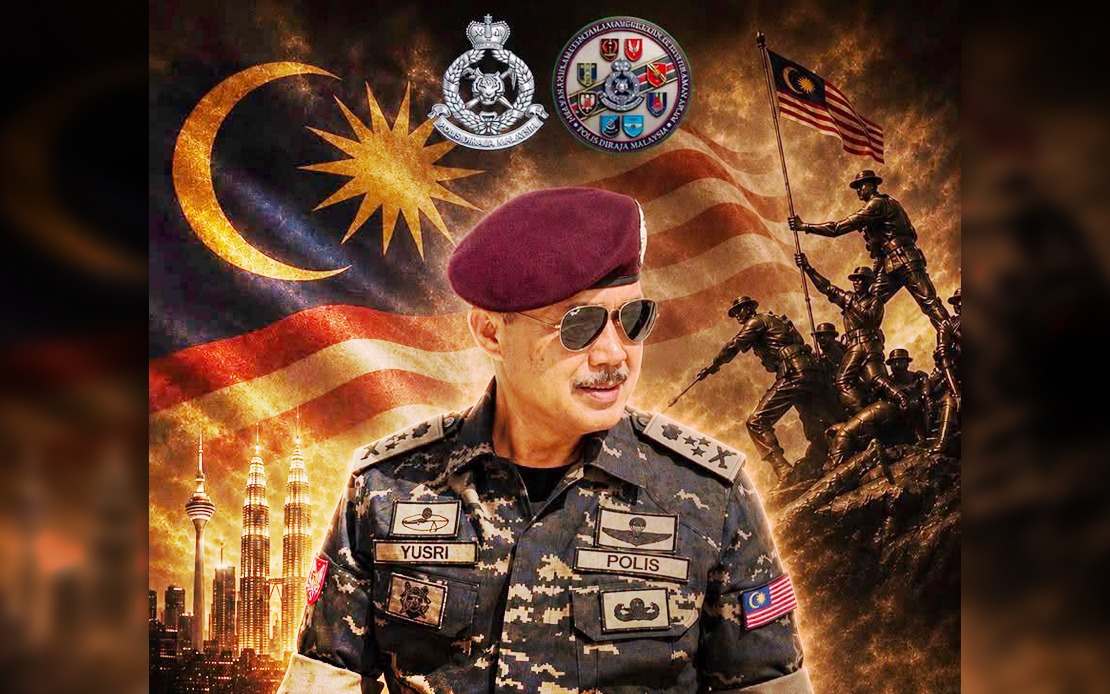
Datuk Seri Mohd Yusri Hassan Basri is trading horsepower for hoofbeats this year. The director of the Department of Internal Security and Public Order (KDNKA) will take the reins of a white horse named Al-Sakb to lead the Royal Malaysia Police (PDRM) contingent at the 69th National Day Parade at Dataran Putrajaya on Monday, August 31. The shift marks a notable departure from his previous leadership role, when he guided the police detachment aboard a high-powered BMW R 1250 RT motorcycle at last year's celebration—a change that underscores the evolving pageantry and symbolic dimensions of Malaysia's annual independence commemoration.
The PDRM contingent will comprise 595 officers and personnel, with the Federal Reserve Unit's Mounted Unit leading the formation. This specialized unit brings together 20 mounted officers and personnel alongside 20 horses, creating an impressive visual centerpiece for the parade. The Mounted Unit's placement at the front reflects a deliberate choice to blend tradition with contemporary policing, introducing a ceremonial dimension that harks back to classical parade formations while maintaining the professional standards of the force.
The transition from motorcycle to horseback leadership has demanded significant personal preparation. Mohd Yusri underwent more than a month of intensive training to ensure his horsemanship met the exacting standards required for such a high-profile appearance. This preparation was essential not merely for the director's own competence, but to guarantee that the movements of the entire Mounted Unit and the broader contingent remained synchronized and orderly throughout the parade. The training regimen reflects the meticulous planning that goes into orchestrating such large-scale ceremonial events, where even minor coordination failures could compromise the visual impact and professional image the police force aims to project.
For Mohd Yusri, who previously served as director of the Traffic Investigation and Enforcement Department (JSPT) before taking the helm at KDNKA, this assignment represents both a departure and a continuation of his pattern of leadership visibility. His earlier role at JSPT saw him leading department contingents on motorcycle, establishing a precedent for leading from the front. However, the shift to equestrian leadership introduces what he himself describes as a fresh challenge, one that demands different skills and carries distinct symbolic weight. The change also illustrates how police leadership roles in Malaysia involve not just administrative and operational responsibilities, but also ceremonial and representational duties that require versatility and adaptability.
Beyond the symbolic significance of mounted leadership, the KDNKA contingent has been carefully designed to showcase the full spectrum of police capabilities and modern operational equipment. The General Operations Force (GOF) will feature prominently, alongside the Air Operations Force, demonstrating the geographical range of PDRM's reach from ground-level community policing to advanced aerial surveillance and intervention. This multi-layered presentation serves to communicate to the Malaysian public the breadth and sophistication of police operations, moving beyond the traditional image of uniformed officers marching in formation.
A particularly notable inclusion is the debut of ten All Terrain Tactical Assault E-Bikes (ATEB)—advanced electric motorcycles recently acquired by the GOF for specialized operations. These high-performance vehicles represent a significant technological investment in police capability, designed for deployment in security operations, border patrols, high-risk special operations, and conflict management scenarios. Their appearance at the National Day Parade introduces Malaysian citizens to the modernization underway within the force, signaling a shift toward more agile, sustainable, and technologically capable operational units.
The air dimension will be represented through a flypast by an AW139 helicopter operated by PDRM, providing a dramatic aerial component to the terrestrial formations below. Combined with the mounted unit's ceremonial presence, the helicopter's participation creates a three-dimensional demonstration of police capabilities—tradition on horseback, modern ground technology in electric bikes, and advanced aerial assets in the sky. This layered approach to presentation allows the parade to communicate multiple messages simultaneously: respect for established protocols and heritage, embrace of technological advancement, and confidence in operational sophistication.
The PDRM contingent will also feature the specialized skills of the K9 Unit, with 16 dogs participating in the parade. Police dogs represent another dimension of operational capability, particularly valued in detection, search and rescue, and security operations. Their inclusion humanizes the police force in public perception, as dogs remain universally appealing symbols that bridge the gap between institutional authority and public affection. The K9 Unit's presence also highlights the investment in specialized training and the deployment of non-human assets in policing strategies.
Elite force personnel and tactical specialists will complete the KDNKA presentation, ensuring that the contingent reflects the full range of police competencies and specializations. This comprehensive approach to the parade contingent transforms what could have been a simple processional display into an educational presentation of police capabilities and organizational scope. For Malaysian citizens attending or watching the parade, the effect is to demonstrate that the police force comprises diverse, specialized units rather than a monolithic entity.
Mohd Yusri has emphasized that extensive preparations and rigorous training have been completed to ensure flawless execution. He expressed particular focus on maintaining the image and reputation of both PDRM and KDNKA through disciplined, perfectly coordinated movements. The director also acknowledged the importance of weather cooperation and public participation, calling on families to attend and immerse themselves in the National Day atmosphere. His appeal reflects an understanding that national celebrations succeed not through official participation alone, but through genuine public engagement and the creation of shared celebratory experiences across Malaysian society.
The National Day Parade, now in its 69th iteration, remains a significant moment for Malaysia to reaffirm its independence achieved on August 31, 1957. The police contingent's role within this celebration extends beyond ceremonial formality; it symbolizes the security apparatus that undergirds national stability and sovereignty. By modernizing the presentation of police capabilities while maintaining traditional elements like mounted units, the force communicates continuity with Malaysia's established institutions while demonstrating commitment to contemporary operational standards and technological advancement. For Malaysian observers, the parade offers a rare opportunity to witness their security forces in ceremonial context, reinforcing public connection to institutions charged with maintaining national order and safety.

