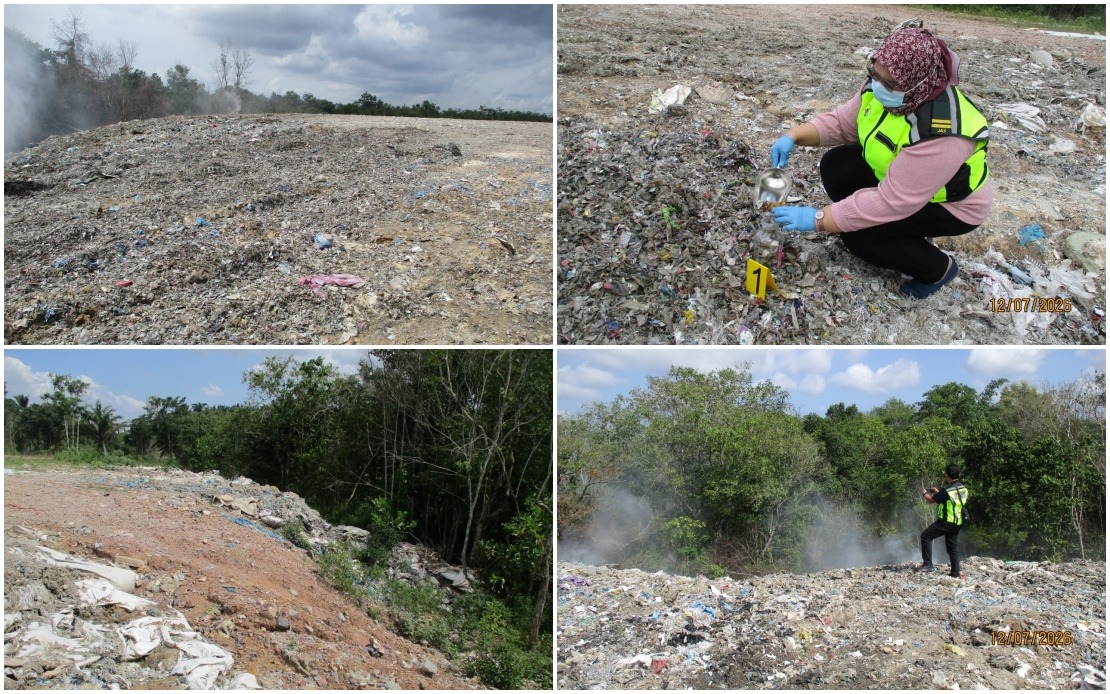
Authorities in Kedah have uncovered an unauthorised solid waste disposal operation in Bukit Banyan near Sungai Petani, following complaints from residents about noxious fumes in the neighbourhood. The Kedah Department of Environment (DOE) responded to public reports of burning odours by conducting an on-site investigation that revealed extensive illegal dumping and open burning activities on a cleared plot of land.
Director of the Kedah DOE Sharifah Zakiah Syed Sahab confirmed that the site contained approximately 250 square metres of accumulated domestic and solid waste scattered across the property. Visible smoke at the location indicated active burning operations, which environmental officers concluded was being conducted by individuals attempting to extract valuable metals from the discarded materials—a practice common in informal waste recycling operations across the region.
Investigations determined that the dumping site was operating without formal authorisation from the director-general of the Environment Ministry. This administrative violation represents a fundamental breach of Malaysia's waste management regulatory framework, which requires all solid waste facilities to obtain written approval before commencing operations. The lack of proper licensing suggests the operation had been functioning clandestinely, avoiding regulatory oversight and environmental impact assessments.
According to environmental officials, a waste collection contractor servicing industrial facilities across the district appears to be responsible for the dumping. Rather than transporting collected domestic waste to authorised disposal sites, the contractor allegedly used this remote location as an informal dump, likely to reduce operational costs and avoid proper waste management expenditures. This pattern reflects broader challenges in Malaysia's waste management sector, where financial incentives sometimes encourage non-compliant disposal practices.
The open burning element of this operation poses particular health and environmental concerns. When waste containing mixed materials undergoes uncontrolled combustion, it releases potentially toxic substances including dioxins, heavy metals, and other volatile organic compounds into the atmosphere. Residents in surrounding areas face exposure to air pollution and respiratory hazards, issues that have become increasingly serious across Malaysian towns experiencing rapid industrial expansion without corresponding environmental safeguards.
The Kedah DOE has collected physical samples from the dumping site for chemical analysis at the Department of Chemistry laboratory. This forensic approach will help establish the precise composition of the waste and potentially identify the specific industries that generated the discarded materials. Such analysis can provide evidence linking the dumping operation to particular commercial sources, strengthening enforcement actions and enabling authorities to address the root causes of improper waste generation.
The investigation is proceeding under two separate provisions of the Environmental Quality Act 1974, reflecting the multi-faceted nature of the violations detected. Charges under Section 29A(1) address the open burning component, while Section 34A(6) covers the unauthorised operation of what authorities classify as a sanitary landfill facility without regulatory approval. These dual charges indicate prosecutorial intent to pursue maximum penalties available under environmental law.
Responsibility for ongoing enforcement has been transferred to the Solid Waste and Public Cleansing Management Corporation (SWCorp), the federal agency with statutory authority over solid waste management and public cleanliness across Malaysia. This handover ensures that follow-up monitoring, site remediation, and prevention of future illegal dumping at this location fall under the purview of the agency best equipped to implement comprehensive corrective measures and deterrent actions.
The discovery reflects systemic enforcement challenges across Malaysia's growing manufacturing and industrial zones, where waste generation has outpaced the development of formal disposal infrastructure in some regions. Small and medium enterprises, contractors, and informal operators sometimes view unauthorised dumping as a cost-saving shortcut, particularly when regulatory presence appears limited and penalty risks seem manageable. Incidents like the Bukit Banyan case demonstrate the effectiveness of community reporting in identifying environmental violations that might otherwise escape official notice.
For Kedah residents and industrial operators, this enforcement action underscores heightened environmental scrutiny in the state. The combination of environmental agency investigations, chemistry department analysis, and corporate enforcement authority involvement signals that waste management violations are being treated seriously at multiple administrative levels. Industries generating waste now face clarified expectations: disposal through authorised facilities is not optional, and cutting corners carries real legal consequences.
The incident also highlights ongoing tensions between economic activity and environmental protection in Malaysia's industrial states. Waste management infrastructure costs represent significant business expenses, creating pressure on operators to seek shortcuts. However, the external costs borne by surrounding communities through air pollution, potential soil contamination, and health impacts eventually demand government intervention and enforcement resources. Proactive waste management compliance ultimately proves more economical than reactive environmental cleanup and legal proceedings.
As Malaysia pursues its commitment to circular economy principles and sustainable industrial practices, incidents involving unauthorised dumping and open burning represent regulatory failures that undermine national environmental goals. The Bukit Banyan case will likely prompt the Kedah DOE and SWCorp to intensify monitoring of known industrial waste generators and informal dumping hotspots, potentially leading to expanded enforcement operations across the state's manufacturing corridors.

