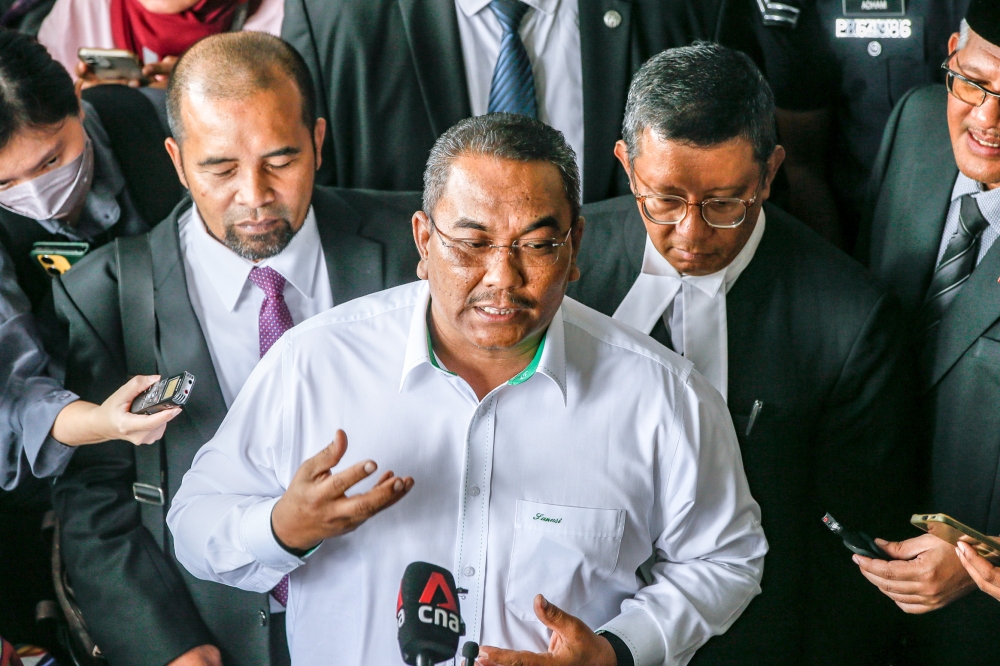
Kedah Menteri Besar Datuk Seri Muhammad Sanusi Md Nor has taken legal action against DAP politician Nga Kor Ming and two other individuals, issuing formal letters of demand that accuse them of deliberately distorting his public statements. The move underscores escalating tensions between the state leadership and opposition figures over the interpretation and representation of remarks made in the political sphere, a pattern increasingly common in Malaysian political discourse.
The letters of demand, issued through Sanusi's legal representatives, target the misquotation or misrepresentation of statements attributed to the Kedah chief minister. Such formal notices typically precede potential defamation claims and signal a serious intent to pursue legal remedies should the recipients not comply with the demands outlined. The issuance of multiple letters suggests a coordinated effort by the recipients to amplify or alter Sanusi's original message, in the view of his legal team.
Nga Kor Ming, a prominent DAP figure, has been at the centre of various political controversies involving the interpretation of statements and policy positions. His political track record includes vocal criticism of state and federal government policies, positions that have occasionally generated disputes over whether his characterisations accurately reflect the original intent of government announcements. The inclusion of two other individuals alongside Nga suggests a broader network involved in the alleged misrepresentation.
The context for this legal action emerges from heightened political competition in Kedah, where Sanusi's administration has sought to consolidate control and messaging around key governance issues. The state has witnessed shifting political dynamics in recent years, with different coalitions competing for influence and public support. In such environments, control over political narratives becomes increasingly contested, with both government and opposition figures working to shape public perception of policies and statements.
Misrepresentation of remarks has become a recurring flashpoint in Malaysian politics, particularly as social media amplifies selective quotations and partial interpretations of statements. Government officials frequently claim that opposition politicians take their words out of context or deliberately distort meaning to serve political ends. Conversely, opposition figures argue that official statements often obscure genuine policy implications or hide uncomfortable truths behind careful wording. These disputes reflect deeper challenges in political communication and accountability.
The legal pathway chosen by Sanusi—through letters of demand rather than immediate litigation—offers an opportunity for resolution without court proceedings. However, it also serves as a public demonstration of his willingness to defend his reputation through formal legal mechanisms. Such actions can influence political discourse by establishing consequences for those accused of misrepresentation, though they also raise questions about the appropriateness of using legal tools to resolve political disputes.
For Malaysian and Southeast Asian observers, this development illustrates broader trends in regional politics where governments increasingly deploy legal instruments to counter opposition messaging. While protecting reputation against genuine misstatement is a legitimate concern, critics worry that such approaches can chill legitimate political criticism and debate. The threshold between fair commentary and actionable misrepresentation remains contested in many jurisdictions across the region.
The specific content of Sanusi's alleged remarks is not immediately clear from the issuance of the letters alone, leaving open questions about whether the dispute involves substantive policy matters or more procedural concerns about accuracy. Regardless, the action signals that the Kedah leadership views the alleged distortion as sufficiently serious to warrant formal legal engagement. The recipients of the letters will now face decisions about whether to comply with demands, issue clarifications, or contest the allegations through legal channels.
This incident occurs against a backdrop of intensifying political competition ahead of potential electoral contests in Kedah and at the federal level. Political figures across the spectrum have become more aggressive in defending their public personas and policy records, using both traditional media and digital platforms to counter narratives they view as hostile or inaccurate. The willingness to pursue legal action reflects confidence in the strength of their case, or alternatively, a desire to demonstrate political resolve to their supporters.
Observers of Malaysian politics will likely monitor whether the recipients of these letters respond formally, issue public statements, or seek their own legal counsel. The outcome of this matter could establish precedents for how similar disputes are handled in the future and may influence the tone of political discourse in Kedah and beyond. Such confrontations, while common in competitive democracies, require careful balance between protecting individual reputation and maintaining space for robust political debate.

