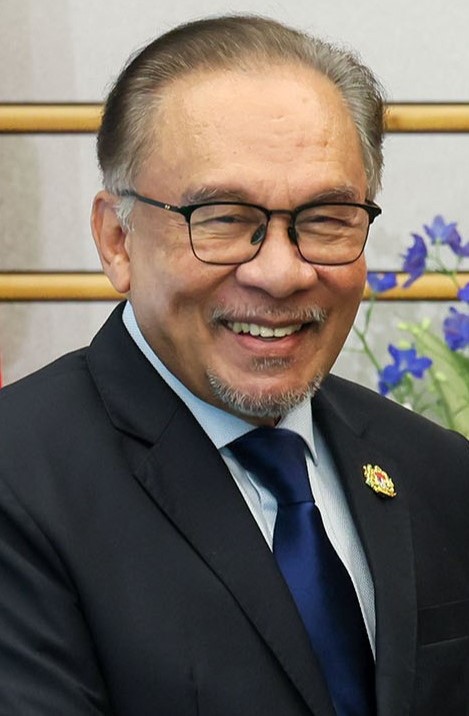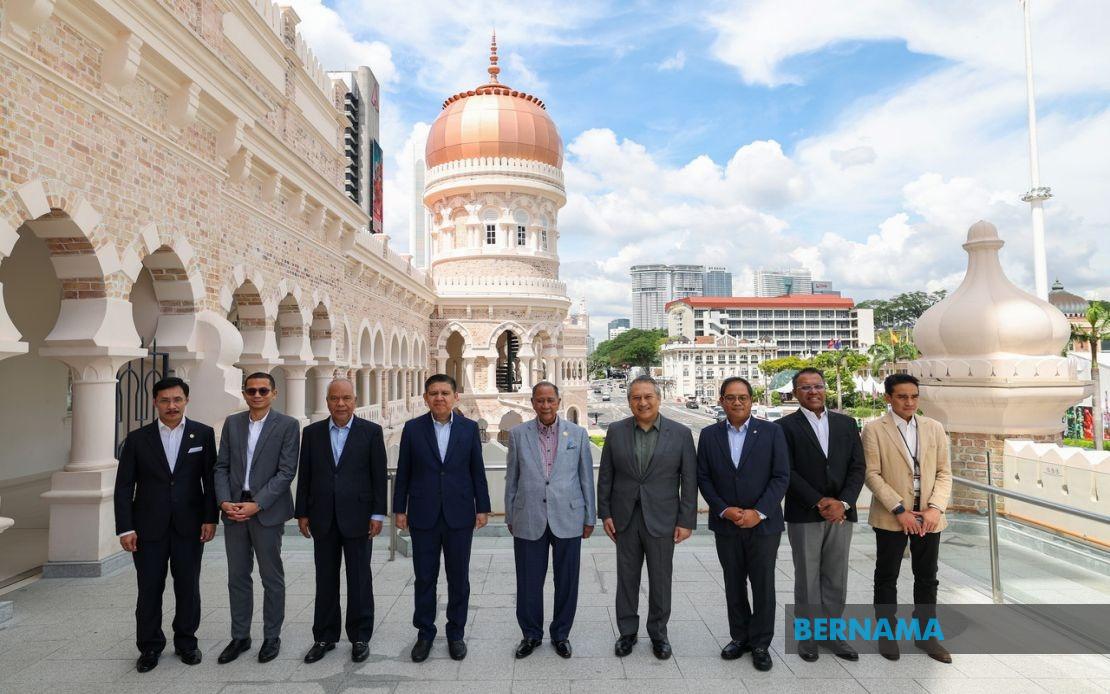
The Sultan of Kedah, Al Aminul Karim Sultan Sallehuddin Sultan Badlishah, conducted an official visit to the Sultan Abdul Samad Building in Kuala Lumpur on June 24, touring one of Malaysia's most architecturally significant and historically resonant structures. Arriving at the heritage landmark at approximately 10.30 am, the Sultan was welcomed by senior management from Khazanah Nasional, the state-owned investment company overseeing the building's extensive conservation programme. His presence at the site underscored the continuing commitment of Malaysia's royal institutions to recognising and supporting the preservation of the nation's architectural legacy.
The morning itinerary provided the Sultan with a comprehensive overview of the curatorial work undertaken within the restored structure. His Royal Highness first visited the Confluence Hall, which operates as a dedicated gallery space documenting the origins and evolution of Kuala Lumpur as a city. During this section of the tour, Think City senior manager Mariana Isa provided detailed briefings on the exhibits on display, contextualising Kuala Lumpur's transformation from a tin-mining settlement into Malaysia's modern capital. This gallery serves as a narrative anchor for visitors seeking to understand the spatial and temporal dimensions of the city's development.
Following the Confluence Hall experience, the Sultan proceeded to the Visionary Hall, which employs architectural models and multimedia installations to illustrate prospective and historical dimensions of the capital's urban planning and growth trajectories. These interactive and visual elements cater to diverse audiences, enabling both specialist and general visitors to engage with complex narratives of urban development. The Sultan subsequently accessed the balcony overlooking the Porte Cochere, the building's distinctive covered entrance, which afforded views of the heritage structure's architectural detailing and surrounding institutional landscape.
The visit incorporated an engagement with contemporary social enterprise initiatives housed within the building. The Sultan visited the School of Hard Knocks, a vocational training programme operated by Royal Selangor, before participating in a light luncheon at the venue. This element of the royal visit acknowledged the building's evolving role as not merely a museum or heritage site, but as an active community space supporting skills development and employment pathways. The Sultan's attendance at this facility recognised the integration of heritage preservation with social responsibility initiatives.
Khazanah Nasional managing director Datuk Amirul Feisal Wan Zahir subsequently offered remarks reflecting on the significance of the royal visit. He characterised the Sultan's presence as a meaningful recognition of Khazanah Nasional's conservation methodology, which extends beyond structural restoration to encompass historical documentation and public education around Kuala Lumpur, Selangor, and Malaysia's broader development narrative. The executive noted that the Sultan Abdul Samad Building had attracted approximately 200,000 visitors since its opening to the public on February 2, indicating substantial public engagement with the restored facility.
Amirul Feisal emphasised that the royal visit represented validation of the institution's efforts to preserve national history in ways that resonate with Malaysian society and the royal institution itself. This framing positioned heritage conservation as a matter of collective national concern, aligned with the constitutional and cultural roles of the monarchy. The visit therefore functioned as a symbolic affirmation of shared commitment across institutional actors—including the royal establishment, state investment entities, and civil society—to safeguarding Malaysia's historical patrimony.
The restoration initiative itself represented a substantial undertaking. On January 31, His Majesty Sultan Ibrahim, King of Malaysia, officially inaugurated the completion of Phase One conservation works at the Sultan Abdul Samad Building following eleven months of intensive restoration activity conducted under the Khazanah Heritage Fund programme. This earlier ceremony, whilst focused on technical achievement, established the broader context for the subsequent royal visits and public engagement activities. The restoration work exemplified the increasing priority accorded by Malaysia's institutional framework to heritage preservation as a strategic initiative.
The historical significance of the Sultan Abdul Samad Building extends deep into Malaysia's national narrative. Originally designated as the Secretariat Building, the structure functioned as the administrative nucleus of colonial and post-colonial governance. Most significantly, it witnessed the ceremonial lowering of the Union Jack and the concurrent raising of the Federation of Malaya flag in 1957, marking the moment of formal national independence. The building thus carries profound symbolic weight as a material embodiment of Malaysia's transition to sovereign statehood.
For contemporary Malaysia, the preservation and reactivation of such heritage structures addresses multiple policy objectives simultaneously. The project demonstrates commitment to architectural conservation at a moment when rapid urban development and modernisation pressures frequently threaten historical structures. The integration of educational galleries, community facilities, and public access transforms the building from a remnant of historical significance into an active participant in contemporary cultural and civic life. This approach resonates with international best practices in heritage management, which increasingly emphasise sustainable use and public benefit rather than preservation in isolation.
The visit by the Sultan of Kedah carries specific relevance for inter-regional dynamics within Malaysia's federation. Royal engagement across state boundaries, particularly when focused on national heritage assets located in the federal capital, reinforces the integrative function of shared historical narratives. The Sultan's participation in the celebrations of Malaysia's architectural heritage subtly reinforces the federal structure itself and the collective ownership of national symbols that transcends individual state jurisdictions. Such symbolic activities, whilst ceremonial in character, contribute to reinforcing national cohesion and institutional legitimacy.
Looking forward, the completion of Phase One restoration and the successful public reopening of the Sultan Abdul Samad Building establish parameters for potential Phase Two development. The building's capacity to attract 200,000 visitors within a relatively brief operational window suggests sustained public interest in accessible heritage experiences. The royal patronage demonstrated through both the King's January inaugural address and the Kedah Sultan's June visit provides institutional momentum for continued investment in preservation and public programming. This trajectory positions the Sultan Abdul Samad Building as a flagship model for heritage conservation practice in Malaysia and potentially across the broader Southeast Asian region.