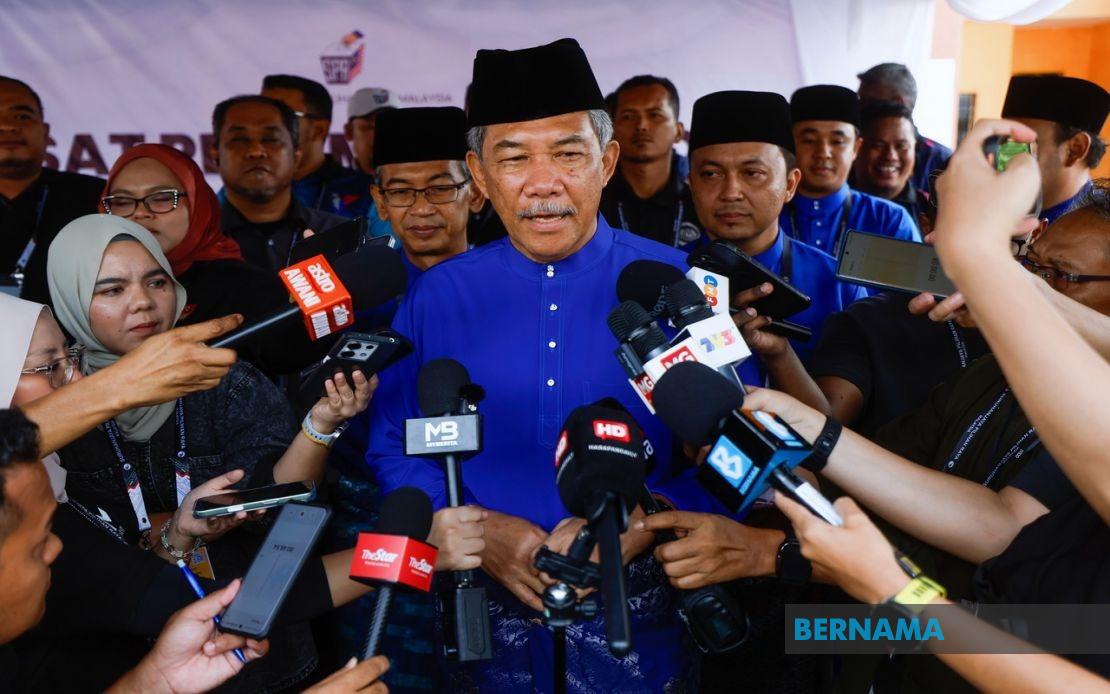
With the 16th Negeri Sembilan state election campaign now in full swing, Barisan Nasional deputy chairman Datuk Seri Mohamad Hasan has issued a firm directive to the coalition's election machinery: traditional customs and adat institutions must remain firmly separated from political messaging. Speaking after the nomination process at Dewan Seri Rembau on July 18, the UMNO deputy president stressed that exploiting adat-related matters as campaign material would only sow discord and undermine the electoral process, which hinges on public confidence and social stability.
The warning reflects a recognition within BN leadership that Negeri Sembilan's unique constitutional framework—particularly the role of the Yamtuan Negeri and customary governance structures—creates particular sensitivities around adat matters. These institutions carry deep cultural significance for local communities and carry symbolic weight that transcends ordinary policy debates. By explicitly instructing party operatives to steer clear of adat controversies, Mohamad was signalling that BN intends to contest the election on substantive policy grounds rather than through mobilisation of cultural grievances or institutional disputes that could permanently damage social fabric.
The timing of this intervention suggests BN recognises a real risk within the current political environment. As coalition politics has fragmented across Malaysia, with various permutations of partnerships forming at state level, there exists heightened potential for campaigns to veer into divisive territory. Adat and customary institutions, being emotionally resonant and institutionally complex, present obvious temptation for parties seeking to energise certain voter segments. Mohamad's explicit prohibition essentially attempts to establish a self-imposed boundary that may help depoliticise what could easily become a flashpoint.
The Negeri Sembilan Legislative Assembly was dissolved on June 5, with the Election Commission scheduling early voting for July 28 and general polling for August 1. The compressed timeline means candidates and campaigners face pressure to mobilise voter support rapidly, creating conditions where certain operatives might be tempted to resort to divisive messaging. By articulating this boundary clearly before campaigning fully intensifies, Mohamad positioned BN as the guardian of institutional propriety and social harmony—a framing that carries distinct electoral advantage in a state where respect for traditional institutions remains important to many voters.
Mohamad's emphasis on respecting Negeri Sembilan's adat institution reflects broader constitutional principles that distinguish Malaysian federal states from one another. Unlike some other states, Negeri Sembilan possesses a distinctive governance architecture centred on its adat council and the Yamtuan Negeri's constitutional role. This institutional distinctiveness means that local politics operates within a framework that blends Westminster-style democracy with customary governance. Parties contesting elections in the state must therefore navigate these parallel institutional systems, requiring political actors to understand and respect boundaries between democratic processes and adat domains.
The coalition's approach to Negeri Sembilan represents a calculated strategic choice that differs markedly from recent electoral contests elsewhere. Rather than weaponising institutional or customary disputes—tactics that have proven inflammatory in other Malaysian states—BN has chosen to present itself as custodian of institutional stability. This positioning suggests confidence that the coalition can compete effectively on conventional grounds of economic management, development delivery, and governance competence without requiring recourse to adat-related mobilisation.
Regarding broader coalition dynamics, Mohamad clarified that BN and Perikatan Nasional maintain an electoral understanding rather than a formal coalition arrangement. This distinction carries significance for Negeri Sembilan voters attempting to understand the political landscape. The two coalitions have agreed to coordinate candidate placement across the 36 state seats, with BN fielding candidates in certain constituencies while PN contests others, thereby avoiding three-cornered contests that might split anti-incumbent votes. Mohamad characterised this as mutual support for maximising electoral prospects, explicitly distancing the arrangement from the formal coalition structure that emerged in Johor's 2022 state election.
This electoral understanding between BN and PN represents a pragmatic accommodation reflecting Malaysia's fractured national political environment. Rather than competing as unified coalitions across all constituencies, the two groupings have recognised that strategic coordination serves mutual interests. For voters in constituencies where one coalition refrains from contesting, this arrangement effectively presents a binary choice rather than a fragmented field. Whether such understandings ultimately strengthen or weaken either coalition remains contested, but their emergence across multiple state elections suggests they have become a standard feature of contemporary Malaysian electoral politics.
For Malaysian observers, Negeri Sembilan's election offers a test case of how parties navigate the intersection of institutional respect, democratic competition, and coalition politics in an increasingly complex political environment. BN's explicit boundary-setting regarding adat suggests the coalition views institutional propriety as a competitive advantage rather than an obstacle. This positioning may resonate with voters concerned about political stability and respect for established frameworks, particularly in a state where traditional institutions retain genuine social legitimacy.
The campaign ahead will reveal whether BN's self-imposed restraint regarding adat matters influences electoral outcomes or competitor behaviour. If other parties choose to exploit adat-related issues despite BN's warning, the contrast could either damage BN's positioning or strengthen it by positioning the coalition as uniquely committed to democratic restraint. Conversely, if all major contestants honour similar boundaries, the election may proceed as a relatively conventional contest focused on economic performance and development delivery.
Negeri Sembilan's electoral contest therefore carries implications beyond the state itself, potentially influencing how major coalitions approach institutional and cultural sensitivities in future elections elsewhere. The assertion that adat matters should remain protected from campaign politics represents a notable commitment to institutional boundaries at a moment when such boundaries face increasing pressure across Malaysian politics. Whether this approach proves durable or represents merely one cycle's strategic positioning will become clearer as the August 1 polling day approaches and results reveal voter preferences.

