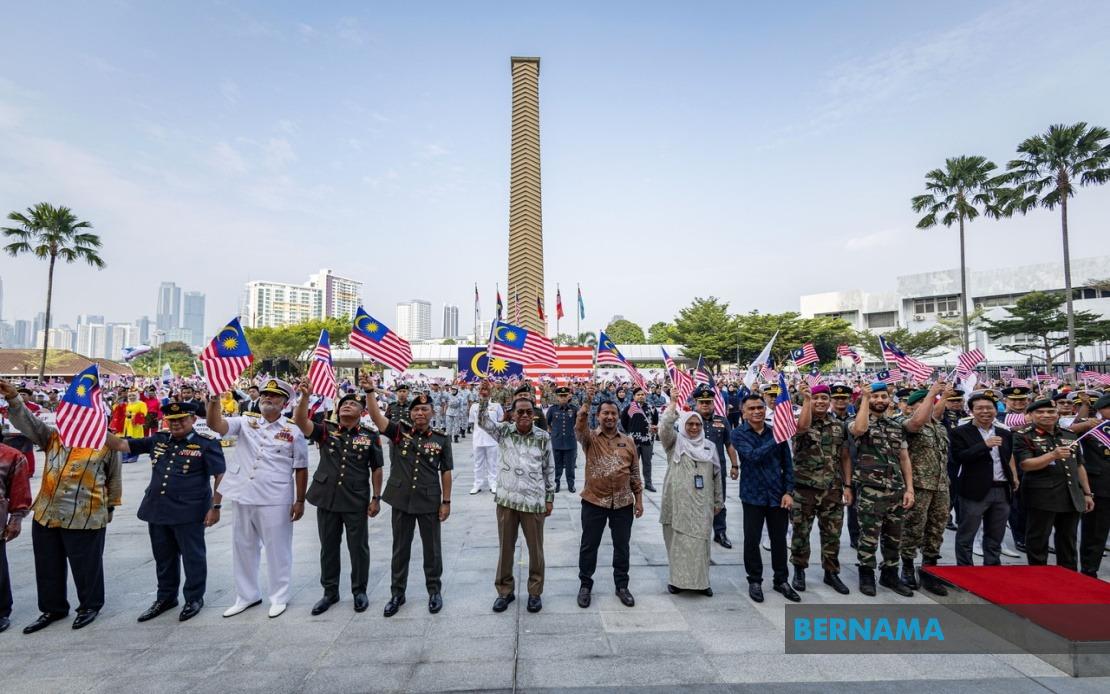
Defence Minister Datuk Seri Mohamed Khaled Nordin has cautioned against allowing Malaysia's National Day and Malaysia Day observances to become venues for political agitation and divisive sentiment, arguing instead that these occasions should serve as meaningful expressions of collective patriotism and shared national identity.
Speaking at the launch of the Defence Ministry's National Month and Jalur Gemilang campaign in Kuala Lumpur on August 27, Mohamed Khaled underscored that the annual celebrations represent a crucial moment for Malaysians to reaffirm their attachment to the nation. Rather than channelling discontent over specific policy disputes or international concerns into boycott movements during these festivities, he suggested the country's citizens should use the period to demonstrate their genuine commitment to Malaysia's stability and sovereignty.
The Defence Minister's remarks appear directed at recent calls to boycott the celebrations in response to Malaysia's handling of the Rohingya refugee situation. He explicitly referenced this controversy, stating his strong disagreement with those who wish to use the national commemoration as a vehicle for protesting government decisions on humanitarian matters. His position reflects an official government line that maintains a distinction between legitimate policy debate and the deliberate weaponisation of patriotic occasions for political purposes.
Mohamed Khaled emphasised that Malaysia's foundational strength lies in the mutual respect and harmonious coexistence cultivated among its diverse racial and religious communities since independence. He argued that preserving this delicate balance of intercommunal understanding requires all segments of Malaysian society to actively recommit to these unifying principles. The Defence Minister's framing suggests that boycotts and public dissent during national celebrations risk undermining the very fabric of social cohesion that has enabled the nation to maintain stability across its pluralistic landscape.
Central to his message was the assertion that patriotism itself serves as a powerful statement to both domestic and international audiences. By maintaining a united national front during Malaysia Day and National Day observances, Mohamed Khaled implied, Malaysians send a clear signal that their country will not become a stage for external manipulation or internal factionalism. This assertion of national resilience through unified celebration carries particular significance in Southeast Asia's geopolitical context, where several nations grapple with questions of sovereignty and external pressure.
The Defence Minister called upon all Malaysians to display the Jalur Gemilang flag with genuine pride and thankfulness, transforming the symbolic gesture into an act of conscious national affirmation. Beyond the ceremonial aspects, he urged citizens to remember in their prayers the wellbeing of the nation itself, as well as the contributions and sacrifices made by military and security personnel stationed throughout Malaysia's borders. This invocation of military service grounds the celebration in concrete recognition of those who maintain the country's physical and strategic security.
Mohamed Khaled's intervention reflects broader tensions within Malaysian public discourse about how citizens should respond to government policies they find objectionable. The Rohingya issue, in particular, has generated sustained criticism from civil society organisations, religious groups, and ordinary Malaysians who believe the government should do more to assist the persecuted Muslim minority. His plea for restraint during national celebrations suggests official concern that such boycott movements could gain momentum if left unchallenged, potentially fragmenting the carefully maintained consensus around national identity.
The timing of these remarks, coinciding with the Defence Ministry's official launch of National Month festivities, indicates that government agencies are treating the issue seriously enough to deploy ministerial-level responses. The choice to use this platform underscores how the administration views attempts to politicise national celebrations as a matter worthy of high-level attention and clarification. Such an approach also signals to society that the government expects patriotic occasions to remain largely free from contestation or partisan manipulation.
For regional observers, Mohamed Khaled's comments reveal how Malaysia navigates the perennial tension between maintaining social cohesion in a diverse, federal democracy and accommodating legitimate public dissent on policy matters. Unlike some of its Southeast Asian neighbours, Malaysia's approach emphasises the separation of these spheres—allowing robust debate during ordinary times while expecting citizens to subordinate grievances during formally designated patriotic occasions. Whether such compartmentalisation remains tenable in an era of social media activism and instantaneous communication remains an open question for Malaysian political analysts.
The Defence Minister's call for unified celebration ultimately rests on the premise that national solidarity and patriotic expression provide essential foundations for addressing challenges ranging from border security to regional geopolitical positioning. His framing suggests that by maintaining these celebrations as spaces of inclusive, non-partisan national affirmation, Malaysia can better project stability and cohesiveness to both neighbouring countries and the international community. This perspective reflects traditional statecraft reasoning, though it continues to generate debate among those who view such occasions as appropriate venues for airing public concerns about government conduct.

