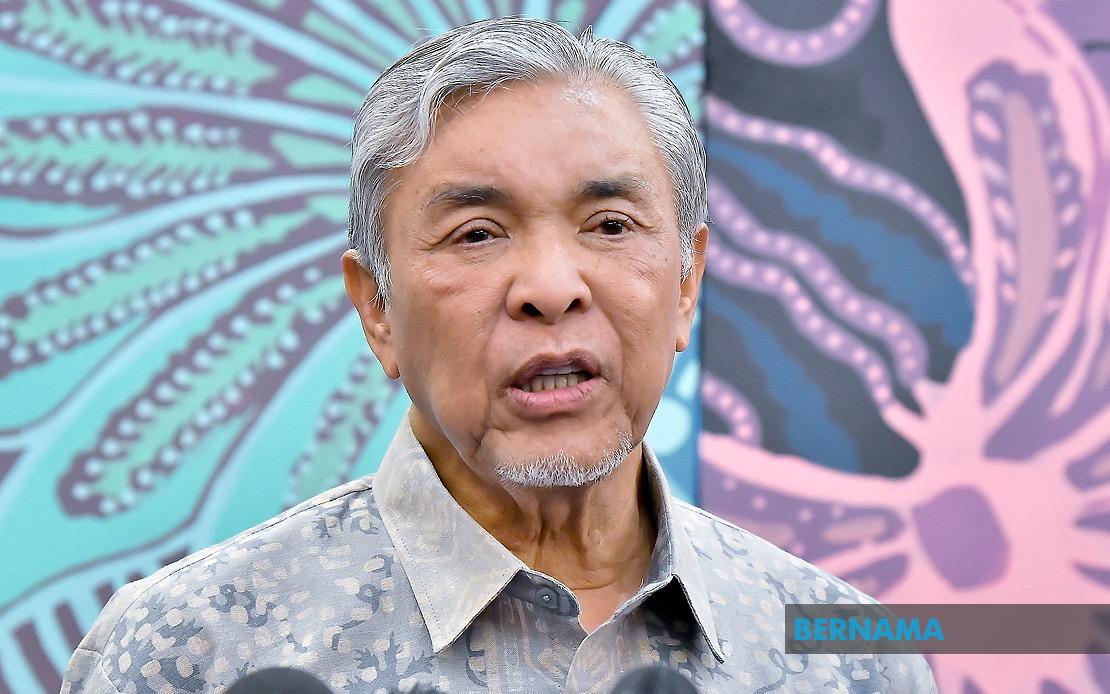
Deputy Prime Minister Datuk Seri Dr Ahmad Zahid Hamidi moved to dispel widespread concerns about the South East Johor Development Authority's expansion plans, characterising the initiative primarily as a coordination mechanism rather than a land acquisition exercise. Speaking at a press conference in Kota Tinggi on July 2, Zahid underscored that public apprehension regarding potential state seizure of private property had prompted the need for clarification. The distinction between coordinating development activities and acquiring ownership rights represents a critical messaging point for the government as it seeks to build confidence in the expansion proposal among residents and stakeholders in the proposed expansion zones.
The Deputy Prime Minister, who simultaneously holds the Rural and Regional Development portfolio, anchored the expansion case on KEJORA's operational track record. The development authority has achieved a 98.3 per cent success rate across its project implementations, a performance metric that Zahid cited as the primary justification for extending the agency's jurisdictional scope across south-eastern Johor. This statistical foundation suggests the government intends to leverage proven administrative competence and project delivery capacity to convince sceptics that expansion would benefit the region through improved coordination and execution of development initiatives.
KEJORA's expansion would encompass growing areas including Pengerang, which has experienced accelerated economic activity driven by major industrial and tourism sector investments. The authority's proposed extended reach would enable it to coordinate development efforts across a broader geographic footprint, ostensibly delivering more cohesive planning and implementation of infrastructure and economic projects. The expansion thus represents an attempt to match administrative boundaries with evolving economic realities in southern Johor, where rapid growth in certain districts has potentially outpaced existing governance frameworks.
Zahid highlighted the results of a public feedback study commissioned by KEJORA itself, noting that 96 per cent of surveyed respondents supported the expansion initiative. This strong approval rating, if accurate and representative, suggests that public concern about land seizure may not necessarily reflect majority sentiment among affected communities. However, the reliance on KEJORA-commissioned research warrants scrutiny, as questions inevitably arise regarding survey methodology, sample representativeness, and the framing of questions posed to respondents.
The expansion proposal nevertheless remains contingent on formal constitutional approval. Zahid stressed that implementation requires the consent of His Majesty Sultan Ibrahim and Tunku Mahkota Ismail, the Regent of Johor. This constitutional requirement reflects Malaysia's federal structure and the residual powers retained by state rulers over matters of governance within their domains. The monarchical approval condition suggests that the proposal, despite government backing, does not represent a foregone conclusion and remains subject to higher-level institutional scrutiny.
The financial commitment underpinning KEJORA's current operations underscores the resource intensity of the development agenda. The Rural and Regional Development Ministry has allocated approximately RM138 million to KEJORA for regional development projects, with 107 programmes already in implementation and approximately 350 additional smaller-scale projects planned under this allocation. This substantial budgetary commitment signals serious government investment in accelerating development across south-eastern Johor and suggests that expansion represents an attempt to distribute and maximise the impact of these resources across a wider geographic area.
Zahid's expression of support for Minister in the Prime Minister's Department Datuk Seri Azalina Othman Said's proposal to elevate Pengerang to full district status reflects recognition that administrative structures may require recalibration to accommodate rapid economic and demographic changes. Pengerang, the parliamentary constituency represented by Azalina, has emerged as a development hotspot, necessitating enhanced governance capacity and infrastructure investment. The district elevation proposal, coupled with plans for a new hospital to serve the growing population, indicates that the government perceives structural administrative reforms as necessary complements to KEJORA's operational expansion.
Azalina's proposal for Pengerang district status gains additional weight when considered alongside the broader development trajectory of the region. The area's expansion through major industrial projects and tourism infrastructure development has created administrative pressures that conventional district-level governance may struggle to accommodate effectively. Elevating Pengerang to formal district status would presumably align administrative authority with existing economic and demographic realities, potentially improving service delivery and development coordination.
For Malaysian readers, the KEJORA expansion carries significant implications for how development authorities operate and coordinate regional growth. The proposal tests fundamental questions about governance structures, the balance between centralised coordination and local autonomy, and mechanisms for managing rapid economic transformation in specific regions. Southeast Asian readers more broadly may observe this case as an example of how middle-income countries seek to align administrative institutions with changing economic landscapes through expansion of development authority mandates and geographic scope.
The emphasis on coordination rather than land acquisition also reflects sensitivity to property rights concerns that have historically complicated development initiatives across Malaysia. By framing the expansion as a coordination exercise, the government attempts to reposition a potentially contentious proposal as a technical administrative adjustment focused on improving service delivery and development outcomes. This rhetorical positioning suggests recognition that public anxiety about state power over private property remains a significant political consideration, even when actual land acquisition may not be the primary objective.
The success of the KEJORA expansion ultimately depends on whether the government can sustain this narrative around coordination and operational excellence while simultaneously delivering tangible development improvements across the expanded territory. Public perception will hinge not merely on stated intentions but on demonstrated results in project implementation, infrastructure development, and economic opportunity creation. The expansion proposal thus represents both an assertion of confidence in KEJORA's administrative capacity and an undertaking to justify that confidence through concrete developmental outcomes across south-eastern Johor's rapidly evolving landscape.

