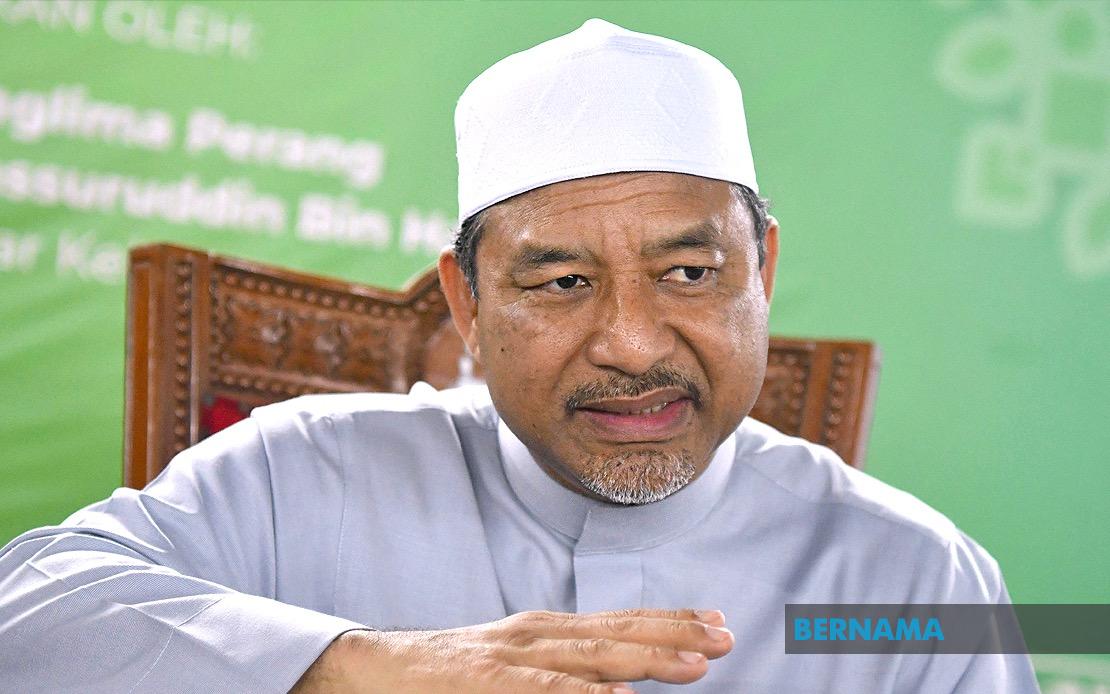
Kelantan is charting a distinctive path in cultural preservation by integrating traditional artistic practices with Islamic principles, a balancing act demonstrated at the closing of the Kelantan Arts Festival (FKRK) 2026 in Pasir Puteh. Menteri Besar Datuk Mohd Nassuruddin Daud emphasised that the state government views cultural heritage not as incompatible with religious values, but rather as an expression of them when properly refined and practiced within moral and ethical boundaries established by Islam.
The approach taken by the Kelantan administration reflects a deliberate strategy that acknowledges the state's deep cultural roots while maintaining religious orthodoxy. Rather than outright rejection of traditional forms, the government has adopted a framework of selective refinement, allowing practices deemed culturally significant to continue once elements considered at odds with Islamic teachings are removed or modified. This nuanced stance represents a departure from stricter interpretations that might dismiss all traditional arts as inherently problematic, instead treating cultural expression as capable of evolution and improvement.
Mohd Nassuruddin articulated that some performances previously restricted are now being reconsidered for reinstatement once purified of problematic components. This openness signals potential for dialogue between cultural practitioners and religious authorities, creating space for heritage forms to be revived without compromising the state's Islamic character. The practical implications are significant for Kelantan's artistic community, which gains clearer parameters for innovation while maintaining respect for governing values.
Kelantan's cultural inventory spans performing arts, traditional games, craftwork, handicrafts, and culinary traditions—elements the Menteri Besar framed as repositories of accumulated Malay wisdom and philosophy. These tangible and intangible heritage assets represent centuries of accumulated knowledge and aesthetic refinement, making their preservation not merely nostalgic but intellectually substantive. By positioning cultural continuity as philosophically grounded rather than arbitrary, the state government creates a stronger rationale for why succeeding generations should engage with and sustain these traditions.
The FKRK 2026 event itself embodied this philosophy by functioning simultaneously as entertainment venue, economic stimulus, knowledge-sharing platform, and tourism draw. A four-day festival that concluded recently, it was jointly organised by the Ministry of Tourism, Arts and Culture alongside the National Culture and Arts Department (JKKN) Kelantan, demonstrating coordinated state and federal effort. Such institutional backing underscores recognition that cultural preservation requires sustained investment and professional infrastructure, not merely goodwill.
Particular emphasis was placed on reviving traditional games including gasing uri, congkak, dam aji, and tating—activities that once occupied significant social space in Kelantan communities. The Menteri Besar highlighted their contemporary relevance as counterweights to digital technology's influence on younger demographics. This positioning reframes traditional games not as quaint anachronisms but as deliberate lifestyle choices offering cognitive and social benefits that screen-based activities cannot replicate, making cultural revival a health and wellbeing matter rather than purely heritage preservation.
For Malaysian readers across other states, Kelantan's explicit articulation of its cultural framework offers instructive contrast. While debates over tradition versus modernity, and culture versus religion, occur nationwide, few state governments have articulated as clearly how these apparent tensions might be productively reconciled. The Kelantan model suggests that cultural forms need not be abandoned when religious considerations arise; instead, they can undergo transformation that respects both heritage and belief systems.
The economic dimensions warrant attention for regional observers. Cultural tourism increasingly drives revenue streams across Southeast Asia, and Kelantan's approach of tying heritage to authentic Islamic identity potentially creates market differentiation. Visitors seeking authentic experiences in Muslim-majority settings may be drawn to cultural offerings that visibly integrate rather than segregate religious values from artistic expression. This could position Kelantan competitively within Malaysia's broader tourism landscape and the wider regional market.
The government's stance also reflects pragmatic recognition that Kelantan's population derives identity and pride from its distinctive cultural character. Wholesale dismissal of heritage practices would risk alienating communities already invested in these traditions, whereas engagement with refinement offers opportunity for shared ownership of cultural evolution. This represents sophisticated stakeholder management that acknowledges legitimate attachments while maintaining principled boundaries.
Looking forward, success of this approach depends significantly on implementation consistency and transparency regarding which elements require modification and why specific changes are necessary. Cultural practitioners and communities need clear guidance and genuine consultation, not merely top-down directive. Where dialogue is robust and decisions are well-reasoned, the framework can strengthen cultural vitality. Where it becomes merely regulatory, it risks limiting creative expression and authenticity.
The Kelantan experience also raises broader questions about federalism and cultural policy in Malaysia. If individual states can articulate distinct frameworks for managing heritage within their particular religious and social contexts, this creates room for regional variation in how Malaysia approaches the relationship between tradition and modernity. Such variation, if handled thoughtfully, could enrich the nation's overall cultural landscape rather than fragment it, provided coordination and mutual respect characterise interstate relationships.
For cultural practitioners, tourism entrepreneurs, and policymakers across Malaysia and Southeast Asia, Kelantan's declared commitment to culturally-grounded development merit study. The state is essentially arguing that prosperity and cultural continuity need not conflict with religious principle—a proposition with significant implications for how predominantly Muslim nations approach development and heritage preservation in an increasingly globalised, technology-driven world.

