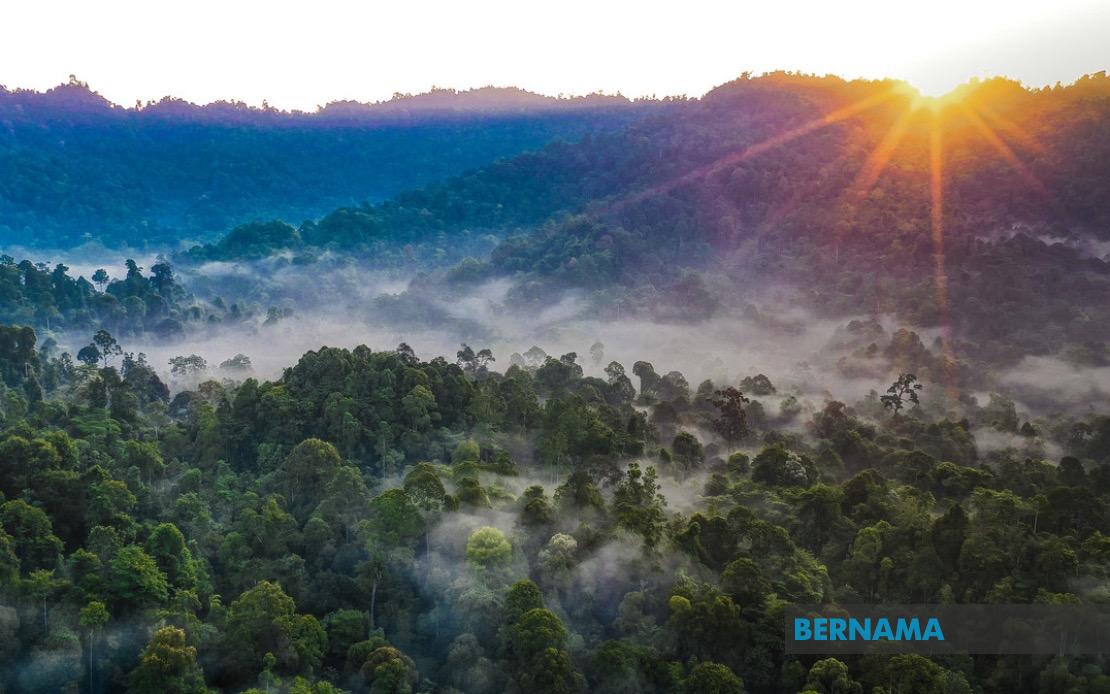
The Kelantan state government has moved to reassure stakeholders that the long-term environmental impact of degazetting forest reserves will be mitigated through systematic replacement of protected woodland areas. Deputy Menteri Besar Datuk Dr Mohamed Fadzli Hassan made the commitment during a state government executive meeting at Kota Darulnaim Complex in Kota Bharu, signalling the administration's intention to balance economic development with forest conservation objectives.
The assurance takes on particular significance given the contentious history of the Temangan Forest Reserve in Machang, which has been at the centre of environmental debates in the state. The degazettement of this reserve was formally processed to permit granite mining operations authorised more than a decade earlier. Mohamed Fadzli explained that the mining approval dates back to 2009, when a company received permission to extract granite from within the designated forest reserve boundaries. The delay between initial authorisation and actual implementation created a prolonged period of uncertainty regarding the reserve's status.
According to the Deputy Menteri Besar, the recent degazettement action was undertaken to give legal effect to the approval that had languished in the administrative pipeline for years. This explanation suggests that the state government views the degazettement as a necessary procedural step to honour commitments made to the private sector, rather than as a departure from conservation principles. The positioning of the announcement indicates an attempt to frame the decision within a broader policy framework of responsible resource management rather than environmental abandonment.
To substantiate these assurances, Mohamed Fadzli stated that he had engaged directly with the Kelantan State Forestry Department to obtain clarity on replacement mechanisms. The forestry department has reportedly confirmed that any forest reserve which is cancelled or degazetted must trigger the identification and registration of an equivalent or alternative protected forest area. This requirement suggests the existence of formal procedures governing the replacement process, though the specific criteria for determining equivalence and the timeline for identifying replacement sites remain unclear from the public statements.
The commitment to replace degazetted reserves reflects growing pressure across Southeast Asia to reconcile economic development with environmental stewardship. Malaysia's forest reserves represent approximately 5.1 million hectares of protected woodland, and any reduction in this area carries implications not only for biodiversity conservation but also for carbon sequestration, water management, and the livelihoods of indigenous and forest-dependent communities. For Kelantan specifically, which has experienced significant forest loss over recent decades, the replacement pledge may indicate recognition of the political risks associated with further net losses of protected woodland.
The Temangan case exemplifies the tensions between long-standing commercial approvals and contemporary environmental concerns. The fourteen-year interval between the 2009 mining approval and the 2023 degazettement suggests either administrative delays or deliberate deferment, possibly reflecting shifts in political priorities or environmental awareness. The granite mining sector operates across Peninsular Malaysia and remains economically important for various state governments, yet increasingly faces scrutiny from environmental groups and concerned citizens who question the sustainability of large-scale extraction from sensitive forest ecosystems.
Malaysian forest management falls under state jurisdiction, giving individual state governments considerable discretion in determining which areas remain protected and which are released for commercial use. This decentralised approach means that Kelantan's policies may diverge significantly from those adopted by neighbouring states. The Deputy Menteri Besar's public commitment may partly reflect an attempt to maintain investor confidence in the state's commitment to both development and environmental responsibility, a delicate balance that influences broader perceptions of Kelantan's governance quality.
The replacement mechanism, while theoretically sound, depends critically on implementation. Previous experiences across Malaysia suggest that identifying genuinely equivalent replacement forest areas can prove challenging, particularly if the original degazetted reserve possessed unique ecological characteristics, harboured endangered species, or played crucial roles in watershed protection or carbon storage. The Kelantan State Forestry Department's assurances provide a foundation for accountability, though civil society organisations and environmental monitors will likely scrutinise whether proposed replacements meet rigorous equivalence standards.
Looking ahead, the Kelantan government faces the practical challenge of identifying suitable replacement forest areas that are either already under state control or potentially acquirable without prohibitive cost. The success of this replacement policy will substantially influence public confidence in forest management across Kelantan and potentially shape dialogue regarding resource extraction in other Malaysian states. Environmental advocates and local communities will monitor the implementation closely, as the credibility of replacement commitments affects broader debates about forest conservation in Malaysia's development trajectory.

