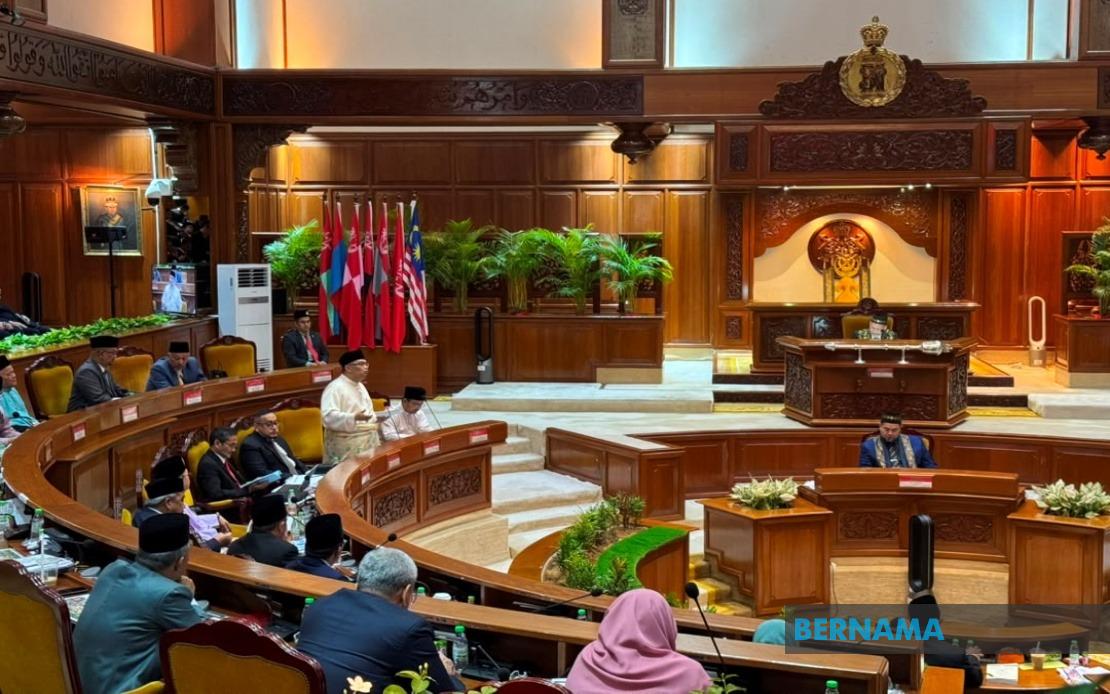
Kelantan's state legislative assembly has unanimously approved the Syariah Criminal Offences (Kelantan) Bill 2026, marking a significant attempt by the northeastern state to rebuild its Islamic criminal law framework following a major constitutional setback. The legislation, tabled by Deputy Menteri Besar Datuk Dr Mohamed Fadzli Hassan, represents a carefully recalibrated approach to defining and punishing offences under Islamic law within the state's jurisdiction, drawing upon the state assembly's understanding of permissible legislative boundaries established by recent federal court decisions.
The passage of this bill comes precisely two and a half years after Malaysia's Federal Court delivered a landmark ruling that invalidated much of Kelantan's existing Islamic criminal legislation. In February 2024, the court's 8-1 majority decision declared 16 of 18 provisions in the Kelantan Syariah Criminal Code (I) Enactment 2019 unconstitutional, determining that the state lacked the authority to legislate certain categories of offences that fell within the exclusive domain of federal jurisdiction. That decision had erupted into a broader constitutional debate about how authority over Islamic criminal law should be distributed between Malaysia's federal and state governments, a matter of profound significance across the nation's complex federal structure.
The new bill's architecture reflects lessons drawn from the 2024 judgment. The legislation encompasses nine distinct parts and 62 clauses structured across various substantive areas, incorporating what state leadership characterizes as systematic reforms to create greater clarity and administrative coherence. Rather than attempting to resurrect the provisions that were struck down, the new legislation reimagines how Kelantan's state assembly can address Islamic criminal matters within its retained authority, signalling a pragmatic recognition of the constitutional limits now imposed upon state legislatures.
Menteri Besar Datuk Mohd Nassuruddin Daud emphasized that the bill's development had been neither hasty nor casual, underscoring that it emerged from extended consultation and refinement across multiple procedural stages before reaching the assembly floor. His remarks suggest that the state government invested considerable effort in ensuring the new framework would withstand legal scrutiny, having witnessed how quickly comprehensive legislation could be dismantled by a court challenge. The legislative process involved substantive debate from six state assemblymen representing Pasir Tumboh, Melor, Galas, Jelawat, Kota Lama and Chempaka constituencies, indicating that the measure received scrutiny across different political voices within the assembly.
Among the bill's notable provisions are requirements regarding obligatory prayer observance, protections for bodily integrity and organs, safeguarding of intellectual faculties, restorative justice mechanisms, and the prioritisation of whipping as a punishment modality alongside a structured compound mechanism for certain offences. These elements suggest the legislation attempts to codify Islamic legal principles within domains where the Federal Court's reasoning would recognize state legislative competence. The emphasis on restorative and rehabilitative approaches may also reflect contemporary international trends in criminal justice that have influenced thinking across Malaysia's legal establishment.
Kelantan's experience illuminates the enduring tensions within Malaysia's constitutional settlement regarding Islam's role in the nation's legal architecture. The state's persistent efforts to strengthen its Islamic criminal code, despite federal judicial constraints, reflect the deeply held convictions within Kelantan's political leadership about the state's proper role in administering Islamic law to its Muslim population. These convictions are shared across much of Malaysia's Islamist political movements, which view state-level Syariah authority as an essential expression of Islam's place in governance.
Yet the Federal Court's 2024 decision created a hard boundary that state legislators cannot easily circumvent through drafting ingenuity alone. The judgment rested upon constitutional interpretation of the division of powers between federal and state governments, a question that does not yield to legislative workarounds. Kelantan's response—redesigning rather than abandoning its Islamic criminal law framework—suggests the state is attempting to work within those boundaries, focusing legislative energy on matters the court's reasoning would permit the state to address.
The unanimous passage of the bill in the state assembly signifies broad political consensus within Kelantan's legislature, though this agreement masks deeper questions about whether the new legislation will survive federal legal challenge should it be mounted. Previous experience shows that constitutional litigation can emerge from individual petitioners rather than institutional actors, meaning the courts may yet be asked to scrutinize whether the new provisions exceed state authority under federal constitutional arrangements.
For Malaysian observers beyond Kelantan, this bill represents a critical case study in how states navigate constitutional constraints on their legislative ambitions. The outcome will likely influence thinking in other Malaysian states with substantial Muslim populations that harbour similar aspirations regarding expanded Syariah criminal jurisdiction. Simultaneously, the bill's design choices offer insights into how legal advisors attempt to thread constitutional needles when prior court decisions have narrowed available pathways. Whether Kelantan's architects have successfully distinguished the new legislation from what the Federal Court rejected remains a question that may ultimately require judicial determination.

