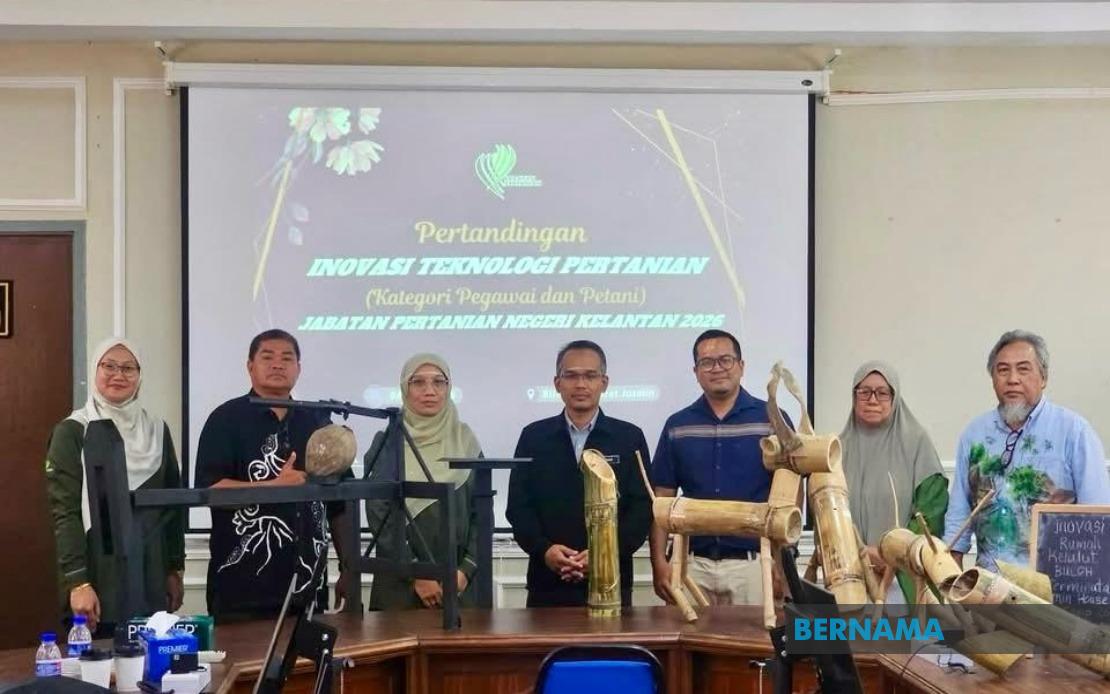
Che Adnan Che Kadir, a 56-year-old plantation entrepreneur from Kelantan, has developed a coconut dehusking device that has caught the attention of agricultural officials for its potential to transform fruit processing across Southeast Asia. The invention received a four-star rating at the Kelantan Department of Agriculture's 2026 Agricultural Technology Innovation Competition and has now sparked interest in expanding its application beyond coconuts. The judging panel, impressed by the device's engineering and market potential, has proposed that Che Adnan adapt the technology for durians and areca nuts, with durians identified as the priority target fruit for commercial development.
The transition to durian processing represents a logical and commercially significant pivot. Unlike coconuts, which require straightforward husking, durians demand considerable skill and care to open safely—a labour-intensive process that puts farm workers at risk of injury. The distinctive spiky exterior of the durian makes manual handling particularly hazardous, and opening the fruit to extract the prized flesh without damaging its quality requires years of experience. This technical challenge has made durian processing a bottleneck for farmers and exporters across Malaysia and the broader Southeast Asian region, where durian cultivation is expanding rapidly amid growing global demand.
Che Adnan's original innovation emerged from practical necessity on his six-hectare farm in Kampung Chetok, Pasir Mas. Developed in 2024, the device was designed to address the inefficiencies and safety risks inherent in traditional hand-dehusking methods. The results have been striking: the portable 3.5-kilogramme machine reduces dehusking time from the conventional two to three minutes per coconut down to approximately one minute, with experienced operators achieving processing speeds of 40 to 45 seconds per fruit. This efficiency gain translates directly to higher productivity and lower labour costs for farmers, making mechanisation increasingly attractive across the coconut and potentially durian sectors.
The recognition at the state level competition has positioned Che Adnan for advancement to the national stage. He received the farmer category award two days before speaking with Bernama and stands to represent Kelantan at National Innovation Week in Putrajaya at the end of September. Such exposure at the national level could significantly amplify the device's market profile and attract attention from agricultural investors and industry bodies keen to support home-grown innovation. The pathway from state to national recognition reflects Malaysia's broader commitment to fostering agricultural technology development through institutional support and structured competition frameworks.
The judging process itself demonstrates the collaborative approach that characterises Malaysia's innovation ecosystem. Evaluators came from the Kelantan Department of Agriculture, the Malaysian Agricultural Research and Development Institute (MARDI), and regional polytechnics—a cross-institutional panel bringing diverse expertise in agronomy, engineering, and practical farm management. This multidisciplinary assessment means that recommendations for design refinement carry considerable weight and reflect real industry needs rather than theoretical considerations alone. The judges' suggestion to pursue durian adaptation indicates they perceive genuine commercial and humanitarian value in extending the technology's application.
Financial support remains crucial for moving the innovation from its current stage toward market-ready commercialisation. A national innovation grant of RM10,000, should Che Adnan secure it, would enable critical refinements to the device's design, durability testing, and adaptation specifically for durian processing. The relatively modest sum reflects Malaysia's pragmatic approach to supporting grassroots innovation—sufficient to enable prototype development and field testing without requiring prohibitive capital investment upfront. Coupled with this funding, access to technical expertise from MARDI and polytechnic partners would accelerate the adaptation process and improve the likelihood of successful market introduction.
The potential commercial significance extends well beyond Kelantan or even Malaysia. Durian cultivation is expanding throughout Southeast Asia, particularly in Thailand, Indonesia, and Vietnam, where rising domestic consumption and export opportunities are driving agricultural investment. A practical, affordable, and safe mechanised dehusking solution would address a genuine pain point across the entire region. Malaysian farmers, already leading in durian quality and export markets, could gain competitive advantage through access to superior processing technology developed domestically. This positions the innovation as a potential regional export product in its own right—equipment that Southeast Asian durian producers would be keen to acquire.
Che Adnan's vision reflects a broader recognition within Malaysia's agricultural sector that technology adoption need not require importing foreign solutions. By developing the device initially for his own farm needs, he exemplified the farmer-driven innovation model that often produces the most practical and cost-effective solutions. His willingness to share the technology and pursue broader commercialisation suggests a mature understanding that innovation value multiplies through wide adoption. The journey from personal farm tool to potential regional product demonstrates how Malaysian agricultural entrepreneurs can drive development that benefits not only their own operations but the entire industry.
The intersection of safety, efficiency, and affordability makes this innovation particularly significant for Southeast Asia's agricultural workers. Manual durian processing carries genuine injury risk—cuts from the spiky shell, strain injuries from repetitive work, and accidents during high-speed cutting operations. A well-designed mechanical alternative could materially improve workplace safety while simultaneously boosting productivity. For countries across the region where agricultural labour carries elevated injury rates and worker protections remain inconsistent, technology that reduces hazardous manual work addresses a humanitarian concern alongside economic efficiency.
Moving forward, the critical phase will involve engineering the device specifically for durian processing while maintaining the simplicity and portability that characterises the current coconut version. Durians vary considerably in size and skin thickness depending on variety and maturity level, requiring the adapted device to accommodate this variability. Additionally, the fruit's value makes users particularly sensitive to damage—any processing innovation must preserve flesh quality and consistency to meet export standards. These technical requirements demand rigorous testing and iterative refinement, precisely the work that innovation grants and institutional support are designed to enable.
If successful, the durian-adapted device could establish a template for mechanising other tropical fruit processing tasks across Southeast Asia. Areca nuts, mangosteen, rambutan, and other regionally significant fruits present similar opportunities for innovation. Che Adnan's willingness to pursue adaptation and commercialisation suggests he recognises this broader potential. The institutional support he has received from the Kelantan Department of Agriculture indicates that Malaysian government bodies are actively invested in translating grassroots farmer innovation into scalable commercial solutions. This alignment of farmer initiative with government support infrastructure creates the conditions for agricultural innovation that generates both profit and progress.

