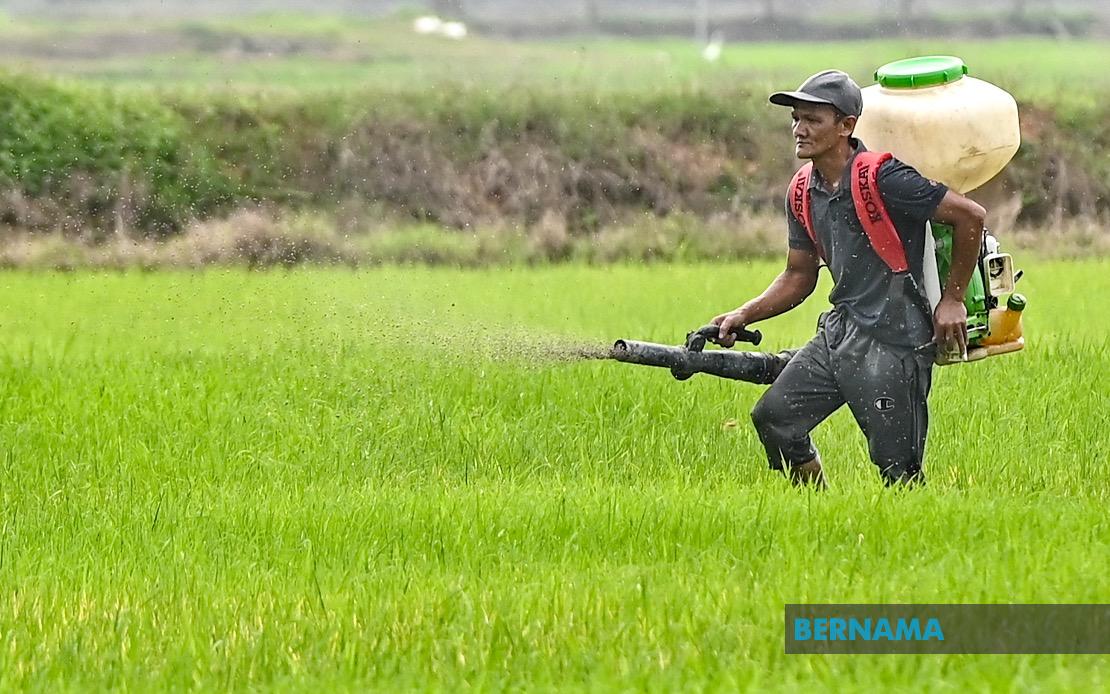
The Kelantan government has committed RM3.64 million this year to drive agricultural expansion across multiple sectors, reflecting state authorities' determination to position farming as a cornerstone of economic development and food resilience. Speaking during the State Legislative Assembly sitting at the Kota Darulnaim Complex in Kota Bharu, Datuk Tuan Mohd Saripudin Tuan Ismail, chairman of the Agriculture, Agro-Food Industry and Commodity Committee, outlined how the allocation would fund ten distinct development initiatives designed to modernise farming practices and unlock dormant agricultural potential throughout the state.
The initiative represents a multifaceted approach to sectoral growth. The funding targets unused arable land, traditional rice cultivation, diverse commodity crops, and intensive vegetable and fruit production systems. Critically, the programme also emphasises entrepreneur development, signalling recognition that agricultural success depends not merely on production capacity but on cultivating a vibrant ecosystem of farm-based business operators. This diversification strategy acknowledges that Kelantan's rural communities require varied income pathways to sustain livelihoods and reduce dependency on single crops.
Commercial production forms a significant pillar of the strategy, with the Kelantan State Agriculture Development Corporation (PKPNK) spearheading high-value initiatives. The corporation operates advanced facilities at Rong Chenok Agro Valley, where precision agriculture techniques are applied to chilli fertigation systems, honeydew melon cultivation, and hydroponic vegetable production. These technologies substantially increase yields per unit area compared to conventional farming, a crucial advantage in densely populated or land-constrained regions. The shift toward controlled-environment agriculture demonstrates Kelantan's willingness to adopt modern production methods that enhance consistency, reduce water consumption, and minimise pesticide dependency.
The livestock subsector has proven particularly responsive to government support. More than 380 breeders have accessed state programmes facilitating cattle, goat, sheep, deer, buffalo, and quail production, alongside provision of essential equipment. This breadth of species enables farmers to select enterprises matching their land holdings, capital availability, and market preferences. Livestock production generates reliable protein sources for domestic consumption while creating export opportunities, particularly for halal-certified products serving regional Islamic markets increasingly receptive to Malaysian meat producers.
Fisheries and aquaculture represent Kelantan's emerging growth frontier. The state directed RM382,094 toward 122 breeders engaged in fish and prawn farming. The results are quantifiable: 2025 production reached 7,901.74 tonnes valued at RM76.2 million, with authorities targeting 8,000 tonnes in the current year. This modest yet consistent expansion reflects both sector maturation and improved management practices. PKPNK's breeding facilities demonstrate particular capacity, producing one million catfish fry and 500,000 tilapia fry annually. The white prawn operation at Pantai Geting in Tumpat delivers approximately 400,000 kilogrammes yearly, establishing Kelantan as a meaningful aquaculture producer within Malaysia's broader seafood landscape.
Infrastructure supporting fry and juvenile fish distribution undergoes parallel expansion. The state constructed over 130 artificial hatcheries and released 1.26 million fish and prawn fingerlings into public waters, bolstering wild populations and recreational fishing opportunities. These investments in hatchery capacity and stock enhancement reflect long-term thinking about both commercial viability and ecosystem stewardship, ensuring that intensified farming does not occur in isolation from broader fisheries management objectives.
Marketing infrastructure and entrepreneurial support have emerged as critical bottlenecks requiring targeted intervention. As of June, 1,560 entrepreneurs benefited from 74 marketing infrastructure facilities and 99 marketing outlets established by the state. The Kota Bharu Rural Transformation Centre (RTC) exemplifies this approach, functioning as an integrated agro-food marketing and distribution hub accommodating approximately 800 businesses. Since 2012, the RTC has generated RM4.16 billion in cumulative sales, demonstrating that connecting smallholder producers with reliable retail space substantially elevates their commercial viability. Such facilities reduce transaction costs, provide market information, and enable farmers to transition from subsistence-oriented production toward genuine business enterprises.
This comprehensive agricultural initiative carries significance extending beyond Kelantan's borders. As Southeast Asia confronts mounting food security pressures driven by climate volatility, regional population growth, and evolving dietary preferences, state-level agricultural investments provide essential buffering capacity. Kelantan's emphasis on crop diversification, modern production techniques, and market integration offers a replicable model for other Malaysian states managing similar pressures and development aspirations. The programme demonstrates that food security is not merely a national-level concern but requires coordinated subnational action combining infrastructure development, knowledge transfer, and targeted entrepreneurial support.
The allocation also reflects broader recognition that agriculture's sustainability depends on attracting younger generations equipped with business acumen and technical competence. By emphasising entrepreneur development alongside production expansion, Kelantan acknowledges that traditional farming alone cannot generate incomes competitive with alternative employment. Market-oriented agricultural enterprises, supported by modern facilities and reliable sales channels, present credible livelihoods attracting educated rural residents who might otherwise migrate cityward. This demographic dimension underpins long-term sectoral viability.
Looking forward, Kelantan's agricultural trajectory will hinge on implementation quality, farmer adaptation rates, and market demand sustainability. The financial commitment appears proportionate to state capacity, though comparative analysis with other Malaysian states' agricultural budgets would illuminate whether Kelantan's investment intensity reflects genuine sectoral prioritisation or more modest resource allocation. Monitoring 2025 production outcomes against established targets will reveal whether current initiatives generate anticipated returns or require strategic recalibration. Ultimately, Kelantan's agricultural ambitions depend on translating allocated funds into tangible benefits for farming communities while establishing production systems resilient against price volatility and climate uncertainty.

