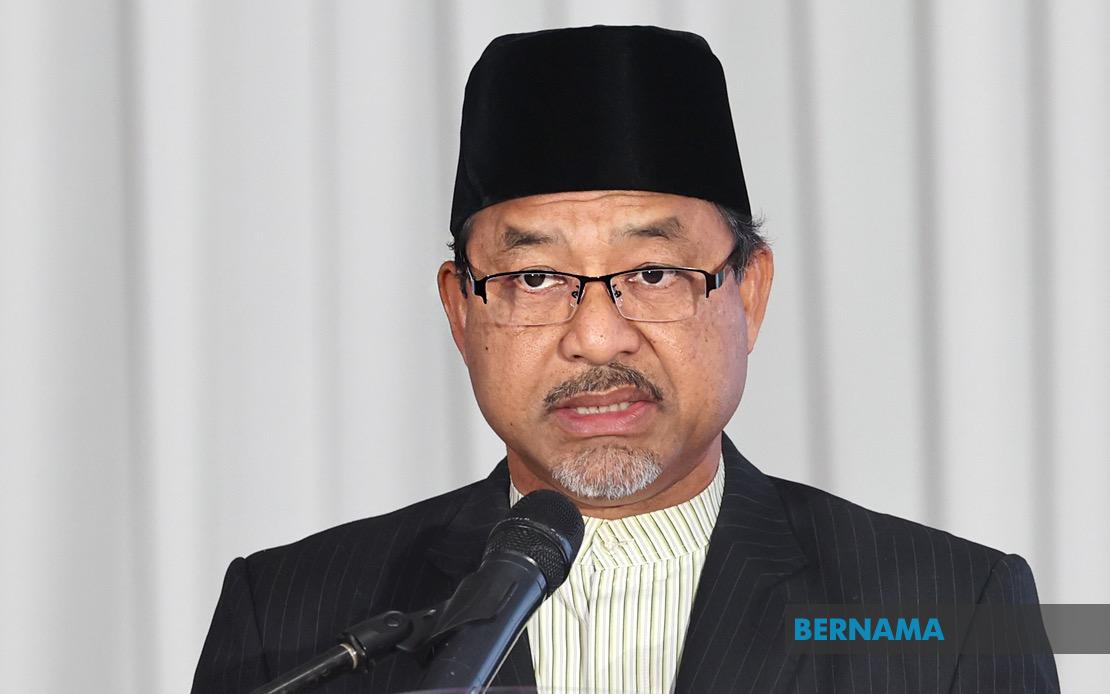
Kelantan's forested landscape spans nearly 779,000 hectares, a figure that places the northeastern state at the forefront of Malaysia's environmental stewardship efforts. Speaking in the state legislative assembly, Menteri Besar Datuk Mohd Nassuruddin Daud disclosed that this substantial forest coverage translates to just over half the state's entire geographical footprint, demonstrating Kelantan's significant contribution to the nation's green spaces and biodiversity reserves.
The state's achievement is particularly noteworthy given the ambitious targets set under the Peninsular Malaysia Forestry Policy, which mandates that at least 50 per cent of the country's total land mass remain under forest and tree cover. Kelantan's 51.79 per cent forest cover not only meets this threshold but comfortably exceeds it, offering a benchmark for other states grappling with the balance between environmental conservation and development pressures. This positioning reflects deliberate policy choices and consistent implementation over multiple planning cycles.
Behind these headline figures lies a comprehensive administrative framework designed to protect and expand Kelantan's forests. The state government has embarked on an initiative to identify suitable government land parcels that possess the ecological characteristics necessary for formal gazetting as Permanent Reserved Forests under state law. This process of designating additional protected areas represents a proactive stance toward forest preservation rather than mere maintenance of existing reserves. The classification system, rooted in the National Forestry Enactment, allows authorities to categorise forests according to their primary functions, whether conservation, watershed protection, or sustainable timber management.
Kelantan's approach incorporates an innovative fusion of traditional conservation methods with contemporary technology. The state forestry administration now deploys advanced monitoring systems capable of detecting changes in forest extent and identifying potential illegal encroachment with minimal delay. This technological layer enables rapid response protocols wherein suspected violations are verified through ground-based patrols and field inspections before any enforcement actions are initiated. Such methodical verification procedures help ensure that interventions are proportionate and accurate, maintaining the integrity of both the forest ecosystem and administrative processes.
The state's commitment to environmental restoration extends beyond passive protection of existing forests. Kelantan actively participates in the Greening Malaysia campaign, implementing tree-planting and forest restoration programmes that augment natural regeneration and expand the total forest estate over time. These initiatives serve dual purposes: they enhance carbon sequestration capacity while simultaneously creating opportunities for community engagement and environmental education. Participation in national afforestation schemes also signals regional cooperation on climate-related challenges that transcend state boundaries.
What distinguishes Kelantan's forest management philosophy is its explicit commitment to balancing conservation objectives with legitimate economic development aspirations. Rather than adopting a purist approach that forecloses all commercial activity in forested areas, the state government consciously pursues what officials describe as a sustainable development pathway. This framework acknowledges that current generations have legitimate needs for timber resources, agricultural expansion, and infrastructure development, while simultaneously imposing constraints designed to preserve ecosystem function and forest cover for future generations. Such intergenerational equity considerations are increasingly central to global forestry discourse.
The implications of Kelantan's forest preservation efforts ripple beyond state borders. The state's forests contribute to regional hydrological cycles, provide habitat for migratory species, and generate ecosystem services beneficial to downstream communities in neighbouring states. The carbon sequestration capacity of Kelantan's extensive forest coverage also contributes to Malaysia's commitments under international climate agreements, positioning the state as a meaningful contributor to national climate action targets. These transboundary benefits underscore why forest conservation in individual states merits attention from policy makers across the entire region.
Kelantan's legislative framework for forest protection, particularly the National Forestry Enactment and its recent amendments, provides the legal scaffolding necessary for effective management. The amendment enacted in 2025 reflects an evolving understanding of forest governance requirements, suggesting that legal frameworks are being progressively refined to address emerging challenges such as climate change impacts, invasive species, and changing land use patterns. Such legislative evolution, when grounded in scientific evidence and stakeholder consultation, typically enhances implementation effectiveness.
The disclosure of these statistics in the state assembly underscores how forest management has become a standard component of legislative accountability. By providing concrete figures and detailing specific strategies, the Menteri Besar demonstrates that forest conservation is not merely aspirational rhetoric but subject to measurable targets and public scrutiny. This transparency model, when consistently applied, helps establish expectations among constituents and creates pressure for sustained implementation rather than allowing commitments to atrophy between electoral cycles.
For other Malaysian states facing similar pressures to monetise forested areas through agricultural conversion or development projects, Kelantan's achievement offers both inspiration and practical lessons. The combination of clear policy frameworks, technological deployment, active restoration efforts, and balanced development approaches provides a replicable model. However, context matters significantly; Kelantan's relative success likely reflects particular demographic conditions, governance capacity, and economic structures that may not be uniformly present across all Malaysian states, suggesting that adaptation rather than direct replication may be necessary elsewhere.

