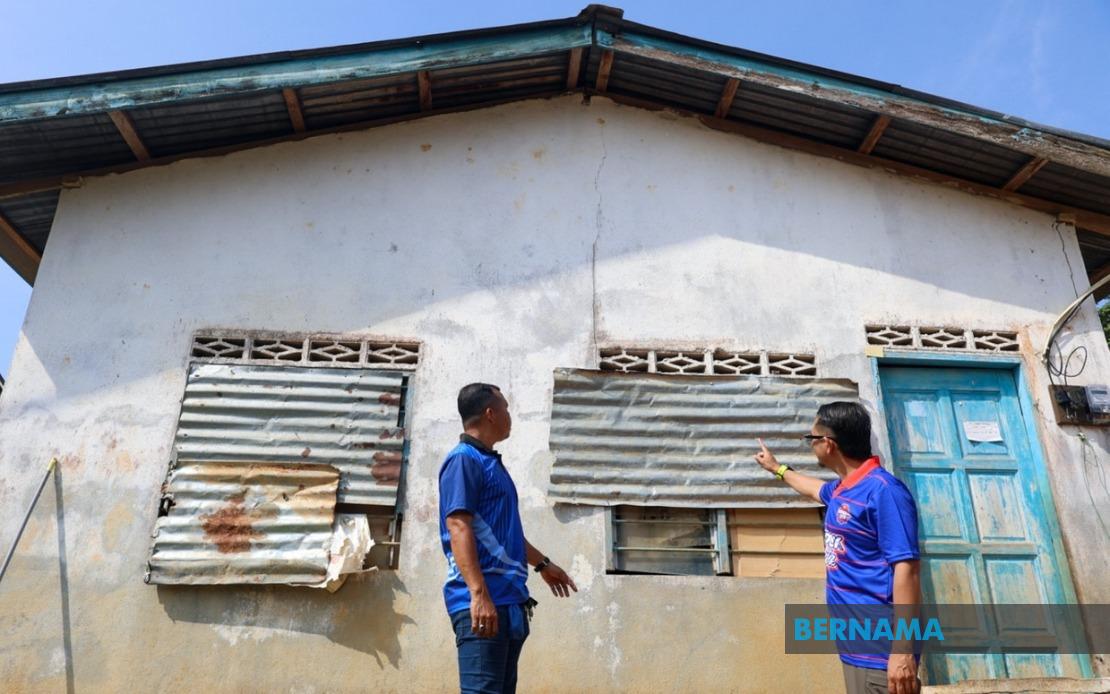
The Kelantan state government has charted a comprehensive development roadmap for indigenous communities in two geographically isolated settlements, addressing critical gaps in infrastructure and services that have long constrained their quality of life. Nenggiri Assemblyman Mohd Azmawi Fikri Abdul Ghani announced the findings after conducting visits to Pasik Resettlement Scheme (RPS) and Kampung Kuala Wok on August 3 and 4, where a combined population of 1,524 Orang Asli residents face considerable hardships stemming from remoteness and limited state support.
The assemblyman identified five interconnected priority areas requiring immediate government intervention. These span the physical condition of dwellings, wildlife management, energy infrastructure, food security mechanisms, and pricing controls—a comprehensive acknowledgment that indigenous development cannot be addressed through single-sector solutions. The breadth of these concerns reflects the multidimensional nature of poverty and marginalisation affecting Malaysia's Orang Asli populations, who continue to experience disproportionate development deficits compared to other communities.
Housing emerges as perhaps the most pressing challenge, with site assessments revealing widespread structural deterioration across the settlements. Mohd Azmawi Fikri detailed that numerous residences require substantial renovation work encompassing roof replacements, load-bearing wall repairs, and critically, the rewiring of hazardous electrical installations. Beyond remedial work, residents have formally requested new dwelling construction to accommodate demographic changes, particularly to house newly married couples establishing independent households. This dual need for both rehabilitation of existing stock and expansion of housing capacity underscores how development challenges compound across generations within isolated communities.
Wild elephant incursions represent an escalating threat that has redefined daily existence in these settlements since 2022. The animals' repeated forays into residential areas have created an environment of chronic insecurity, disrupting agricultural activities, restricting children's mobility, and generating anxiety among vulnerable populations. This ecological-human conflict demands coordinated mitigation strategies that balance wildlife conservation principles with community safety imperatives, a tension that remains underexplored in Malaysian development discourse despite its direct impact on indigenous livelihoods and wellbeing.
Electricity supply remains inconsistent despite being foundational to modern life, hampering education outcomes, limiting economic opportunities, and constraining access to healthcare services requiring powered equipment. The government has committed to strengthening this essential infrastructure, recognising that reliable power enables wider participation in the digital economy and access to online services increasingly integral to Malaysian society.
The state is examining feasibility of incorporating RON95 petrol into its Essential Goods Distribution Programme—a pragmatic response to geographic reality. The nearest petrol station lies approximately 50 kilometres distant, creating operational costs and time burdens that effectively penalise residents for their location. By subsidising fuel alongside food staples, the government acknowledges that remoteness inflates everyday expenses beyond the capacity of residents whose income-earning opportunities are themselves constrained by isolation.
The Jualan Rahmah programme, which offers subsidised prices on essential commodities, represents another mechanism through which the state addresses purchasing power disparities. However, the logistical challenges of delivering affordable goods to settlements requiring four-wheel-drive vehicles and consuming roughly 200 kilometres of round-trip travel from Gua Musang suggest that programme frequency may require augmentation to prevent supply shortages and price fluctuations that disproportionately harm fixed-income households.
The geographic isolation itself functions as a structural barrier to development. Communities deep within Peninsular Malaysia's interior face transportation costs, time delays, and service provision expenses that make standard government programmes prohibitively expensive to operate or difficult for residents to access. This geographic marginality, combined with historical underinvestment, creates compounding disadvantages that require not merely standard policy solutions but differentiated, place-sensitive interventions.
Mohd Azmawi Fikri has committed to engaging the Department of Orang Asli Development (JAKOA) regarding the housing expansion proposal, signalling intention to coordinate across administrative boundaries. Such inter-agency collaboration remains essential, as Orang Asli affairs fall within federal jurisdiction while local infrastructure development sits with state authorities. Navigating this institutional complexity determines whether identified needs translate into actual project implementation.
These assessments arrive amid broader national conversation regarding indigenous development outcomes. Despite Malaysia's economic achievements, Orang Asli communities consistently rank lowest across multiple human development indicators—income, education, health, and housing quality. The Kelantan initiative, while concrete, represents localised problem-solving within larger structural inequities that have persisted across multiple government administrations and development cycles.
Implementation timelines and funding allocation remain unspecified, introducing uncertainty regarding whether this documented catalogue of needs will translate into resourced projects or remain aspirational. The experience of previous state-level Orang Asli initiatives suggests that political commitment and technical capacity both influence outcomes significantly. Sustained monitoring and accountability mechanisms will prove essential to converting identified priorities into material improvements in living standards.
For residents of RPS Pasik and Kampung Kuala Wok, the government's systematic needs assessment represents acknowledgment of long-standing grievances and recognition that current conditions fall below acceptable standards. Whether this translates into expedited resource allocation and implementation will ultimately determine whether these 1,524 individuals experience tangible improvements in housing, safety, and economic opportunity within coming years.

