Kelantan authorities have intensified their crackdown on illegal land encroachment and mining, with state officials revealing that 63 investigation papers have been formally opened in connection with these activities from 2025 through June this year. The figure represents a coordinated response to what has become a persistent challenge across multiple districts in the northeastern state, with enforcement agencies conducting a total of 77 field operations targeting known problem areas including Gua Musang, Kuala Krai, Jeli and Tanah Merah.
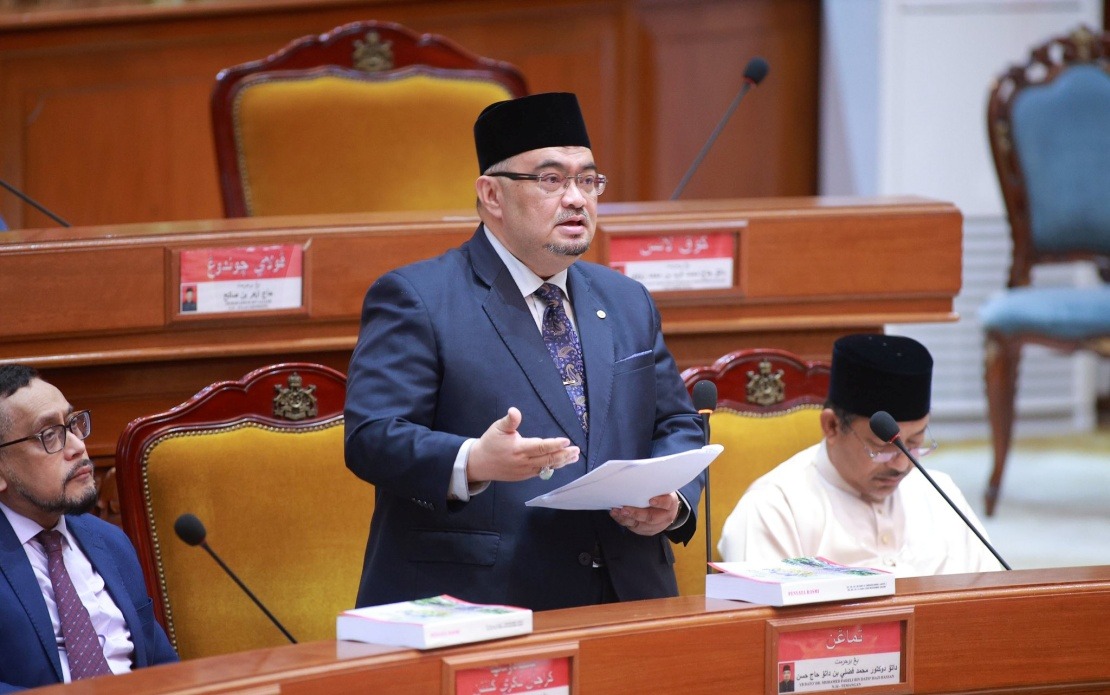
Deputy Menteri Besar Datuk Dr Mohamed Fadzli Hassan disclosed these enforcement results while addressing questions at a recent sitting of the Kelantan State Legislative Assembly at Kompleks Kota Darulnaim in Kota Bharu. His response to a query from assemblyman Datuk Shaari Mat Hussain underscores the state government's determination to tackle what has become an increasingly visible problem affecting land management and natural resources across the state. The investigation papers have been forwarded to the Prosecution Unit of the Kelantan Land and Mines Office for subsequent action, signalling that the enforcement phase represents merely the initial stage of a longer judicial process.
The material impact of these enforcement drives extends beyond mere administrative paperwork. In a significant seizure operation, authorities have impounded 65 excavators and related heavy machinery estimated to have a combined value of RM15.8 million. This targeted approach aims to dismantle the operational capacity of illegal mining enterprises by removing their essential equipment, thereby raising the financial and logistical costs of continuing such activities. The substantial value of seized machinery suggests these are not small-scale informal operations but rather organised ventures requiring significant capital investment.
The problem of illegal mining and land encroachment has become sufficiently entrenched that it has prompted questions about the involvement of more sophisticated criminal networks. During a supplementary parliamentary query from assemblyman Datuk Mohd Syahbuddin Hashim, concerns were raised about the possible involvement of middlemen, masterminds, organisers and powerful protectors who may be benefiting from these illegal activities. Such questions reflect a growing understanding that surface-level enforcement against individual operators may miss the systemic corruption or criminal networks that enable these operations to flourish.
In response to concerns about organised crime connections, Deputy Menteri Besar Mohamed Fadzli indicated that investigative work would expand beyond identifying individual operators to uncovering the broader network of beneficiaries. Given that landowners are typically known to authorities, he suggested that investigations would pursue information-gathering strategies to identify and prosecute those orchestrating or facilitating illegal mining on their property. This represents an acknowledgment that effective enforcement requires moving up the chain of command to pursue those with greater financial or organisational responsibility.
The geographical spread of these activities across four distinct districts suggests that illegal mining has become a zone-wide phenomenon rather than isolated incidents. The concentration of enforcement operations in Gua Musang, Kuala Krai, Jeli and Tanah Merah indicates these represent particular vulnerability zones, possibly due to topographical features, existing mining operations, proximity to transportation networks, or weaker local enforcement capacity. Understanding why certain areas attract disproportionate illegal activity could help refine intervention strategies and direct resources more effectively.
Beyond immediate enforcement measures, state authorities have initiated a systemic review of the legal and penalty framework governing mining operations. Discussions between the state government and relevant authorities, including the Kelantan Land and Mines Office, have focused specifically on revising penalties for repeat offences. This signals recognition that current sanctions may be insufficiently stringent to deter determined operators, particularly those embedded in profitable illegal ventures. Strengthening penalties targets one key lever in the deterrence equation, though enforcement capacity and certainty of prosecution may prove equally important.
For Malaysian readers, these enforcement efforts in Kelantan represent both a microcosm of challenges facing other states and a case study in institutional response to resource-extraction crime. Similar encroachment and illegal mining pressures have surfaced in other jurisdictions across Malaysia, from Pahang to Sabah, suggesting that Kelantan's experience with 77 operations and 63 investigation papers may be part of a broader national pattern. The scale of seizures—65 pieces of heavy equipment worth RM15.8 million—demonstrates the economic significance of the underground extraction economy that authorities are contending with.
The implications for environmental stewardship should not be overlooked. Unregulated mining operations cause significant land degradation, water pollution, and ecological damage. The Kelantan enforcement drive, therefore, serves not merely law-enforcement objectives but also environmental protection goals. The state's agricultural heritage and water security depend partly on preventing unchecked extraction activities from compromising soil quality and hydrological systems.
Moving forward, the success of Kelantan's enforcement campaign will depend on whether the 63 investigation papers translate into convictions that result in meaningful penalties and deterrence. Equally important will be whether authorities can sustain operational pressure at the 77-operations-per-period pace or whether enforcement capacity will prove episodic. For Malaysia's mining sector and land governance more broadly, the Kelantan case offers lessons in institutional coordination, the necessity of targeting criminal networks rather than individual operators, and the importance of maintaining consistent enforcement presence in hotspot areas.

