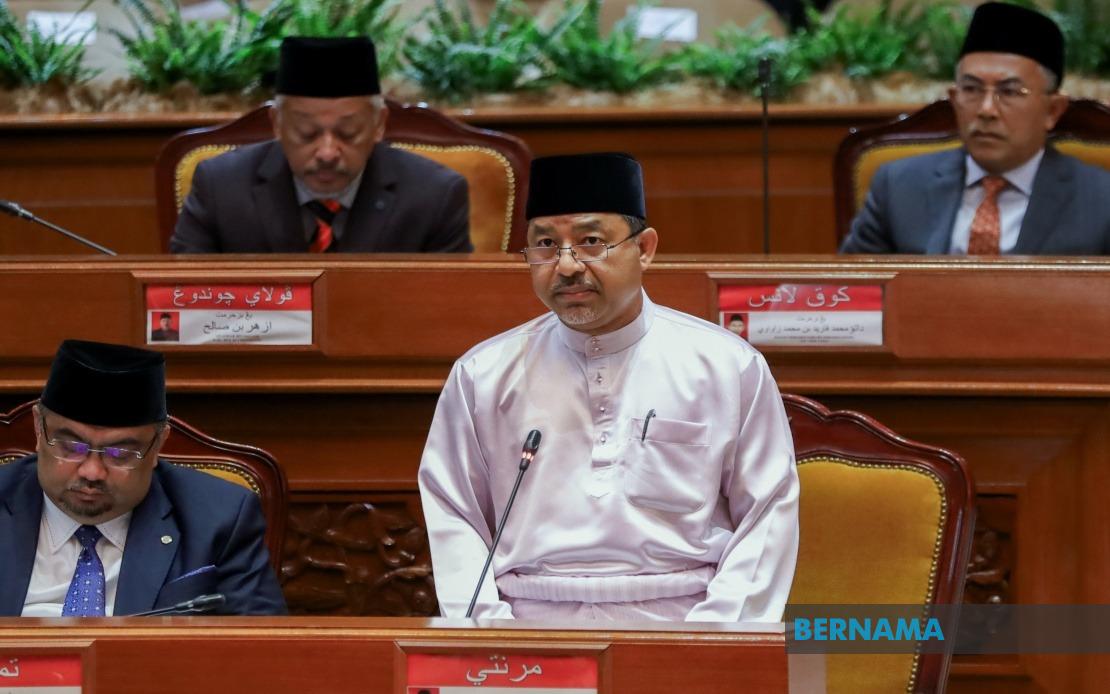
Kelantan has solidified its standing as Peninsular Malaysia's foremost state in terms of Malay reserve land holdings, with the northeastern state controlling 526,083 hectares spread across 816,020 ownerships. Menteri Besar Datuk Mohd Nassuruddin Daud disclosed these figures during a recent sitting of the Kelantan State Legislative Assembly at the Kota Darulnaim Complex in Kota Bharu, emphasising that the proportion represents 91.5 per cent of all documented land ownership within the state's boundaries. The remaining 48,344 hectares, or 8.4 per cent, comprises non-Malay reserve land registered under 43,255 separate titles, bringing the combined total land ownership to 574,427 hectares across 859,275 titles as of June 2026.
The political significance of these holdings extends beyond mere administrative record-keeping. Land ownership patterns in Malaysia carry profound constitutional and cultural weight, particularly in Peninsular Malaysia where state governments hold jurisdiction over Malay reserve designations. The Federal Constitution provides special provisions for these reserves, designed to protect indigenous Bumiputera interests. Kelantan's overwhelming concentration of such lands—with more than nine-tenths of all titled property falling within the reserve category—reflects both historical land distribution patterns and deliberate policy implementation across decades. This positioning underscores the state's role as a custodian of what many view as an essential institutional safeguard for the Malay-Muslim majority.
Geographic disparities within Kelantan reveal instructive variations in reserve land concentration across its districts. Gua Musang dominates in absolute terms, commanding 122,735 hectares of designated Malay reserve land, while Pasir Mas and Tanah Merah follow with 56,656 and 56,246 hectares respectively. Kuala Krai rounds out the top tier with 53,473 hectares. However, proportional analysis yields a different picture: Tanah Merah achieves near-total reserve saturation at 99.9 per cent, whilst Tumpat, Pasir Puteh, Bachok, Pasir Mas, Kota Bharu, and Jeli all maintain percentages exceeding 90 per cent. This bifurcated analysis—absolute acreage versus percentage composition—illustrates how certain districts have achieved virtually complete reserve designation, leaving minimal non-reserve land available for alternative ownership structures or development patterns.
The stability of Kelantan's reserve land base merits particular attention in contemporary Malaysian policy discourse. Menteri Besar Nassuruddin explicitly stated that no reduction in total Malay reserve land has occurred in recent years, a declaration carrying weight given sustained economic pressures and urbanisation trends that have elsewhere eroded reserve classifications. Many states have witnessed gradual conversions of reserve land through exemptions, degazetting, or transfers, often tied to developmental objectives or administrative necessities. Kelantan's resistance to such pressures—whether stemming from careful governance or demographic factors limiting such requests—distinguishes it within the Malaysian federal context and suggests either stronger local commitment to preservation or differing economic incentives compared to more rapidly urbanising states.
The legal framework governing these designations provides state authorities with considerable discretionary power. Section 13A of the Kelantan Malay Reservations Enactment permits non-Malay ownership within reserve areas under specified conditions, yet simultaneously grants the state government authority to regulate, approve, or prohibit transactions deemed detrimental to Malay reserve interests. This dual provision creates a flexible yet protective regime, allowing limited commercial or practical flexibility whilst maintaining overarching safeguards. The provision reflects an evolved understanding that absolute restrictions might prove economically counterproductive, yet unrestricted transactions could compromise the protective purpose underlying reserve designations. Kelantan's implementation of these provisions remains less extensively documented than comparable policies in other states, suggesting potential opportunities for comparative analysis and policy learning across the federation.
The constitutional and political foundations underpinning Malay reserve systems extend beyond land administration into fundamental questions of Malaysian federalism and social contract. These designations, enshrined in the Federal Constitution's Article 153 protections, represent a foundational compromise enabling Malaysia's independence and multi-communal political settlement. For Kelantan, historically a centre of Malay-Islamic cultural and political identity, these extensive holdings carry additional symbolic weight. The state's maintenance and defence of this asset base therefore resonates beyond technocratic land management, speaking to broader questions of communal rights, constitutional fidelity, and the preservation of institutions designed to undergird intercommunal stability. Menteri Besar Nassuruddin's public affirmation of Kelantan's preeminence in this domain thus carries political messaging alongside administrative fact-stating.
Comparative analysis across Peninsular Malaysia reveals pronounced variation in reserve land concentrations. Whilst precise figures for all states remain less widely publicised than Kelantan's disclosures, available evidence suggests that several states—particularly those with significant non-Bumiputera populations in urban centres—maintain substantially lower percentages of reserve designation. Selangor, Perak, and Johor, whilst holding substantial absolute acreages of reserve land, typically show lower proportional concentrations due to larger non-reserve land bases. This variation reflects divergent historical settlement patterns, urbanisation trajectories, and policy choices. Kelantan's position atop such rankings, underpinned by its predominantly rural character and lower historical non-Bumiputera settlement, positions it as a bellwether for reserve conservation even as other states navigate tensions between preservation and development imperatives.
The administrative machinery tracking these landholdings constitutes itself a significant governance achievement. Maintaining accurate records across 859,275 separate titles, ensuring proper classification across multiple district boundaries, and managing the regulatory apparatus overseeing transactions within reserve areas demands substantial institutional capacity. Kelantan's ability to provide precise figures disaggregated by district and category suggests reasonably sophisticated land administration systems, though questions persist regarding data currency, verification methodologies, and responsiveness to rapid environmental or demographic changes. The statement that figures were accurate as of June 2026 indicates forward projection rather than current reporting, raising implicit questions about update frequencies and real-time accessibility of such information.
Future challenges confronting Kelantan's reserve land management are likely to intensify rather than diminish. Climate change impacts, including potential flooding and soil degradation affecting agricultural productivity, may alter the economic rationale for existing reserve classifications and trigger pressure for conversion to alternative uses. Economic diversification strategies pursued by state governments, including tourism development and industrial expansion, frequently encounter friction with reserve designations in areas designated for heritage protection. Demographic trends, including outmigration of younger Malays seeking economic opportunities in urban centres, may reduce pressure for reserve land conversion in some districts whilst potentially creating underutilisation concerns in others. How Kelantan manages these prospective tensions whilst maintaining its constitutional and customary commitments will substantially influence broader Malaysian approaches to balancing development imperatives with communal rights protection.

