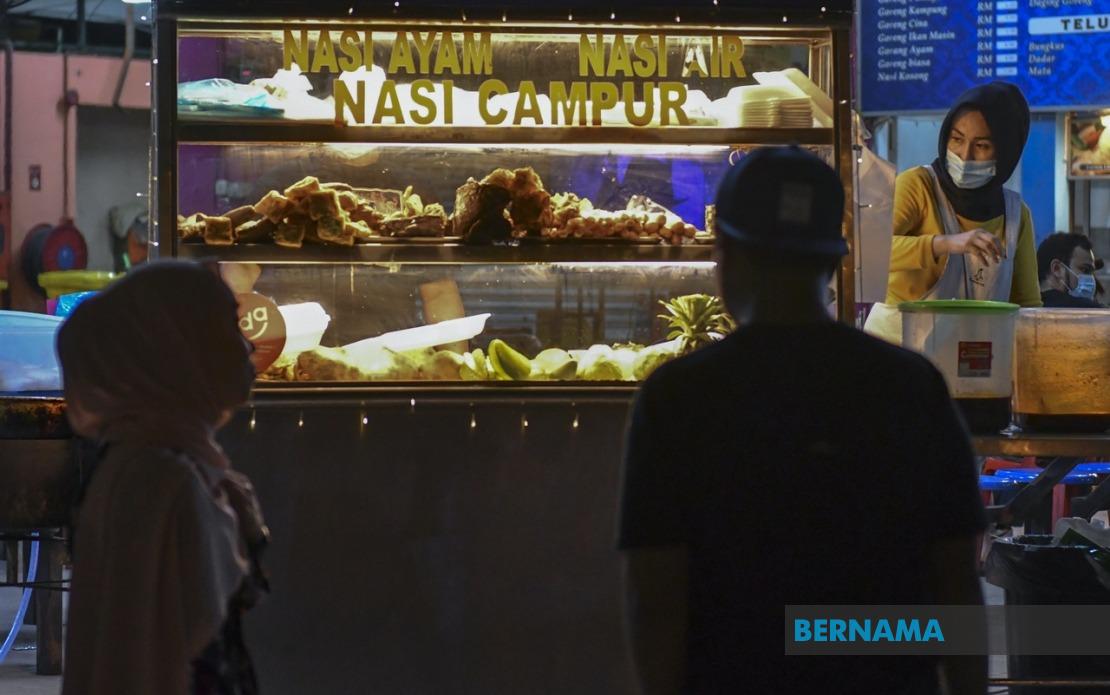
The Kelantan state government has announced plans to escalate its monitoring and inspection regime for food premises throughout the state, responding to widespread online allegations suggesting certain eateries may not be meeting halal requirements. The decision comes as viral social media posts have raised public concern about the authenticity of halal certification at several food establishments in the state, with particular attention drawn to outlets operated by non-Muslim entrepreneurs that serve significant Muslim customer bases.
Mohd Asri Mat Daud, chairman of the Kelantan State Islamic Development, Dakwah, Information and Regional Relations Committee, confirmed that the state government is undertaking preliminary investigations to establish the veracity of the allegations before determining what enforcement actions may be necessary. He emphasised that while the initial phase involves fact-finding, the state is prepared to move swiftly to more frequent monitoring and inspections should the allegations prove substantiated. This measured approach reflects the gravity with which state authorities regard potential breaches of halal standards in a Muslim-majority state where such compliance carries deep religious and cultural significance.
The administrative framework for investigating these matters sits clearly within the jurisdiction of the Kelantan Islamic Religious Affairs Department, Mohd Asri explained. His office will function as a coordination point between the state government's broader policy apparatus and the enforcement body responsible for monitoring halal compliance. This division of responsibilities underscores the structured manner in which Kelantan intends to handle the controversy, avoiding reactive or ad hoc responses while ensuring systematic investigation of the allegations.
To date, Mohd Asri noted that no formal complaints regarding halal violations have reached the state government through official channels, despite the considerable attention garnered by social media posts. This distinction between viral allegations and formal filed complaints is significant, as it indicates the state government is taking a deliberate approach to verification before deploying enforcement resources. Any complaints that are submitted will be processed according to established procedures, ensuring that investigations maintain consistency with existing regulatory frameworks and that due process is observed throughout.
The state official issued a pointed reminder to food premise operators that pursuing profit margins cannot come at the expense of shariah compliance. Such negligence, he warned, corrodes the trust that Muslim consumers place in the halal ecosystem. This message carries particular weight in Kelantan, which has long positioned itself as a centre of Islamic learning and practice in Malaysia. When operators cut corners on halal standards, the reputational damage extends beyond individual businesses to the broader perception of religious compliance across the state's food industry.
Mohd Asri simultaneously appealed to the general public to exercise greater vigilance regarding the halal status of food premises they patronise. This call for consumer awareness reflects an implicit acknowledgement that regulatory authorities alone cannot maintain comprehensive oversight of the entire food service sector. By encouraging individuals to verify certification and make informed dining choices, the state government effectively enlists the public as a decentralised monitoring network, amplifying enforcement capacity beyond what government agencies can achieve independently.
The state government is simultaneously promoting Malaysia's formal Halal Certification programme as a solution to compliance concerns. Mohd Asri highlighted that the government aims to process certification applications within thirty days, provided applicants demonstrate readiness and adherence to prescribed guidelines. This proactive stance—combining enforcement threat with procedural assistance—seeks to incentivise operators to obtain legitimate certification rather than operate in regulatory grey zones. The thirty-day target also signals governmental commitment to removing bureaucratic obstacles that might discourage operators from formalising their halal status.
The entire matter was triggered when a Facebook user publicly disclosed information questioning the halal certification status of several food premises operated by non-Muslim proprietors. The post apparently resonated significantly with audiences, generating substantial engagement and sparking diverse public reactions across social media platforms. This incident exemplifies the power of social media to rapidly mobilise public opinion on religious and cultural matters, often outpacing traditional official communication channels and creating political pressure for swift governmental response.
The controversy touches on broader dynamics within Malaysian society regarding halal certification, consumer trust, and religious compliance in commercial contexts. For states like Kelantan, where Islam occupies a particularly prominent position in governance and cultural identity, such allegations carry heightened sensitivity. The state's response—balancing investigation, enforcement preparation, and incentivisation of legitimate certification—reflects an attempt to uphold religious standards while maintaining fair treatment of all business operators and acknowledging practical limitations of oversight capacity.
Looking forward, this episode will likely influence how both operators and consumers interact with halal certification systems across Kelantan. Businesses may face increased pressure to formalise their halal status, while customers may become more vigilant in verifying credentials. The state government's commitment to more frequent inspections, if implemented consistently, could establish new compliance benchmarks for the broader region, potentially influencing how other Malaysian states approach halal certification oversight in their food services sectors.

