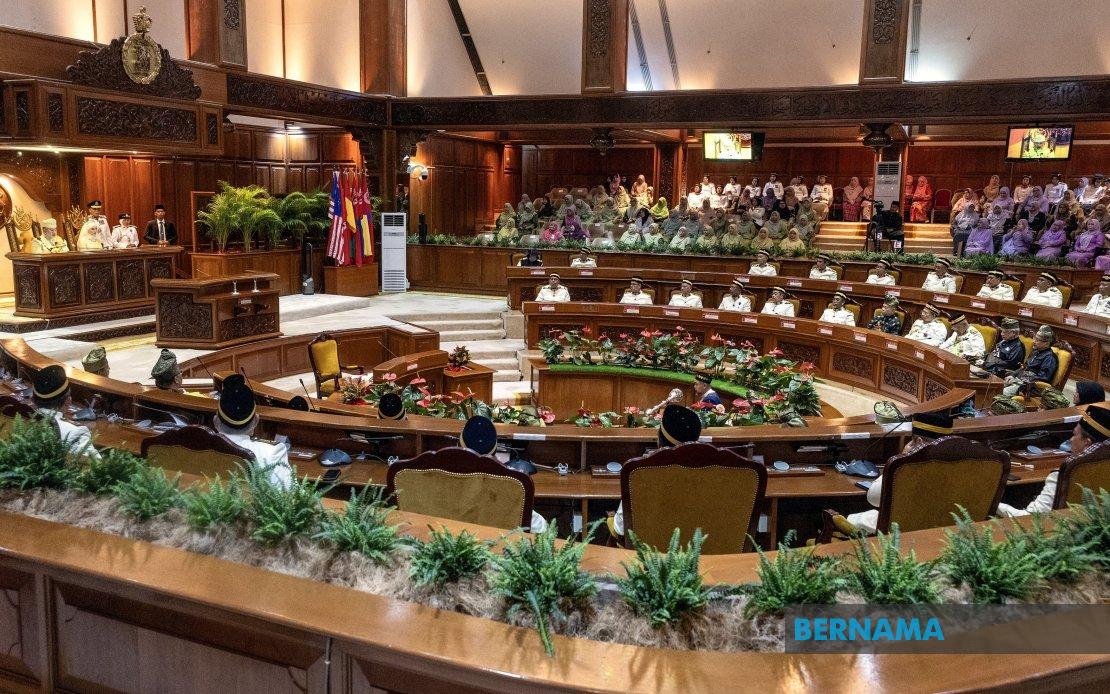
The Kelantan government is preparing to introduce sweeping changes to its Syariah criminal legislation by tabling the Syariah Offences (Kelantan) Bill 2026 at the state assembly next Tuesday. The initiative represents a carefully considered response to a significant constitutional setback, marking an important moment in the ongoing tension between state religious autonomy and federal legislative supremacy in Malaysia's framework of divided powers. Deputy Menteri Besar Datuk Dr Mohamed Fadzli Hassan announced the move following the state executive council meeting in Kota Bharu, signalling the government's determination to restore its legal footing on Islamic criminal matters.
The new bill emerges directly from the Federal Court's landmark February 2024 decision, which fundamentally reshaped the landscape of Syariah criminal law across Malaysia. In that watershed ruling, delivered by an 8-1 majority, the court invalidated 16 of 18 provisions challenged in the Kelantan Syariah Criminal Code (I) Enactment 2019. The bench found that the state legislature had ventured beyond its constitutional remit by legislating on offences that Parliament, as the federal authority, had already claimed jurisdiction over. The case originated from a constitutional challenge filed by Kelantan lawyer Nik Elin Zurina Nik Abdul Rashid, and its ripple effects sparked nationwide debate about how Malaysia's constitutional architecture allocates legislative powers between centre and periphery in matters touching Islam and Syariah law.
Understanding the constitutional constraints that now bind Kelantan's legislative ambitions is essential to appreciating what the new bill attempts to accomplish. The Federal Court's judgment did not suggest that states lack any role in Syariah criminal regulation; rather, it clarified that states must confine themselves to matters genuinely within their competence. The ruling reflected a legal principle known as the "pith and substance" test—a tool courts use to determine whether a law's true character falls within the legislature's jurisdiction, even if its language appears to overlap with another authority's domain. Kelantan's drafting committee, which has been working since mid-2024, has taken this constitutional lesson to heart and explicitly structured the new bill around this principle.
The composition of the drafting team reveals how seriously Kelantan has approached the task of building a constitutionally sound framework. The Committee for the Amendment of the Kelantan Syariah Criminal Code (I) Enactment 2019 brought together civil and Syariah legal practitioners, university academics, constitutional law specialists, and serving Syariah judicial officers. This multidisciplinary approach sought to harmonise doctrinal Islamic jurisprudence with the practical exigencies of Malaysian federalism and contemporary constitutional doctrine. The draft was further refined through consultation with the Kelantan Council of Ulama operating under the Kelantan Islamic Religious and Malay Customs Council (MAIK), ensuring that the legislation's religious substance would withstand scrutiny from the Islamic establishment while also satisfying constitutional requirements.
The Syariah Offences (Kelantan) Bill 2026, in its proposed form, contains nine distinct parts encompassing 62 clauses and one schedule—a considerably more intricate structure than many state-level legislation. This granular architecture reflects the attempt to navigate between the rocks of constitutional limitation and the hard place of maintaining robust Syariah criminal provisions. The bill incorporates what officials characterise as "several new and reformative provisions," suggesting that Kelantan views this exercise not merely as defensive recalibration but as an opportunity to modernise and improve its Islamic legal code. The emphasis on religious obligations within the statutory framework attempts to root the law firmly in Islamic principles, potentially strengthening its constitutional credentials by framing it as emanating from religious substance rather than secular policy objectives.
For Malaysian observers and policymakers, the Kelantan initiative carries broader implications for how Islamic law develops within a federal constitutional democracy. The 2024 Federal Court judgment raised difficult questions about the legitimacy of state-level Syariah criminal regimes in a system where Parliament claims superior authority. Kelantan's response—rather than capitulating or ignoring the ruling—demonstrates a commitment to working within the constitutional framework, even at the cost of legislative retrenchment. This approach could serve as a template for other states, particularly Terengganu and Perlis, which have similarly attempted to expand their Syariah criminal jurisdictions in recent years and may face comparable constitutional vulnerabilities.
Deputy Menteri Besar Mohamed Fadzli's expressed hope that all assemblymen will support the bill underscores the political dimensions of this exercise. While Kelantan operates under Parti Islam Se-Malaysia (PAS) governance, assembling consensus around a substantially rewritten legal code touches on deep questions about Islam's role in Malaysian federalism and the state's religious authority. The involvement of the Council of Ulama signals an attempt to build legitimacy beyond mere legislative votes, positioning the bill as an expression of Islamic consensus rather than partisan political preference. This framing becomes especially important given the constitutional precarity of the legislation—a bill that appears too narrowly calibrated to Islamic substance, without broader political buy-in, risks being characterised as merely procedural compliance with an unwelcome court judgment.
The timeframe for developing this legislation—roughly eighteen months from mid-2024 to the August 2025 presentation—reflects the complexity of harmonising competing legal values. Constitutional lawyers working on the bill had to absorb not only the Federal Court's specific holdings but its broader methodological approach to federalism. They needed to distinguish clearly between matters intrinsically federal (such as offences involving federal institutions or national security) and those that might plausibly be characterised as matters of state religious administration. This boundary-drawing exercise, while conceptually straightforward, becomes practically difficult when applied to Syariah offences involving personal conduct and moral regulation.
For the Southeast Asian region more broadly, Kelantan's legislative recalibration matters because Malaysia remains the most institutionally developed democracy in the region with a constitutionally enshrined Syariah law framework. How Malaysia resolves tensions between religious legislative authority and federal constitutional supremacy influences thinking about religious law's place in constitutional democracies across the region. Thailand's ongoing constitutional debates about Buddhism's political role, Indonesia's decentralised Syariah implementation, and Brunei's absolute monarchy with Islamic law all find reference points in Malaysia's federalist approach. Kelantan's effort to square the constitutional circle suggests that interactive navigation between legal systems remains possible, though requiring considerable institutional expertise and political patience.
The presentation next Tuesday will be closely watched by constitutional lawyers, Islamic scholars, and federalism experts. The eventual passage or revision of the bill will indicate whether the Federal Court's judgment prompted genuine legislative reconsideration or merely tactical redrafting. If passed substantially as drafted, the bill would represent a measured accommodation to constitutional constraints; significant amendments during assembly debate might reveal either technical improvements or fundamental disagreement about the appropriate scope of state religious authority. Either outcome contributes to an evolving conversation about how Malaysia's multi-layered legal systems can function coherently within a federal constitutional framework that privileges Parliament's authority while recognising states' religious responsibilities.

