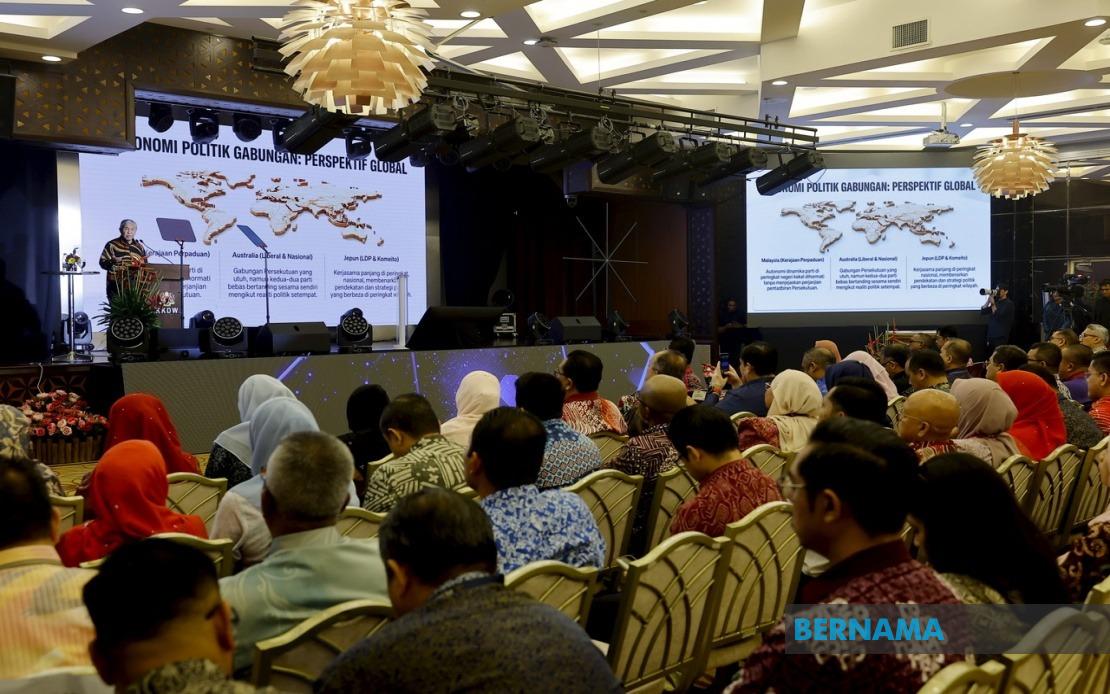
The Community Development Department (KEMAS) has unveiled an ambitious expansion roadmap for its special needs early education initiative, with Deputy Prime Minister Datuk Seri Dr Ahmad Zahid Hamidi announcing that at least one Tabika Tunas Istimewa facility will operate in every district across the country within the next three years. The initiative represents a substantial commitment to widening access to specialized kindergarten services for children with developmental needs, addressing a critical gap in rural Malaysia where such provisions remain scarce. The programme's emphasis on maintaining an affordable fee structure of RM100 per month underscores the government's intent to democratize access to special needs education, ensuring cost does not become a barrier for low-income families seeking appropriate developmental support for their children.
Currently, KEMAS operates 19 classes across the country offering tailored early childhood education to children with special needs. The expansion strategy calls for establishing up to 132 additional classes through a combination of new facility construction and upgrades to existing infrastructure. This two-pronged approach acknowledges both the need for entirely new institutions in underserved areas and the potential to enhance current spaces to accommodate more children. By 2027, the total programme footprint will grow to 151 operational classes, representing a nearly eightfold increase in capacity. The staggered rollout suggests a methodical implementation process designed to maintain educational quality while scaling operations across Malaysia's diverse geography, from densely populated urban districts to remote rural areas where specialized services remain virtually nonexistent.
Ahmad Zahid framed the expansion within a broader philosophy of rural community development that prioritizes tangible improvements in people's daily lives. His statement that government performance should ultimately be measured by the concrete benefits it delivers to citizens reflects a shift in policy emphasis toward outcomes-based evaluation rather than purely bureaucratic metrics. Within this framework, expanding access to special needs education becomes not merely a social welfare measure but a demonstration of government responsiveness to genuine community needs. The initiative aligns with Malaysia's stated commitment to inclusive development, recognizing that families in rural areas have historically faced substantial barriers in accessing specialized educational services for children with developmental challenges.
The affordability mechanism embedded within the programme carries particular significance for Malaysian households. Monthly fees capped at RM100 represent a significant reduction compared to private special needs educational facilities, which often charge substantially more. This pricing structure potentially opens access to a broader socioeconomic cohort, particularly among B40 and M40 households that form the backbone of rural communities. However, the sustainability of these fees at such levels will depend on adequate government funding allocation to ensure facilities receive sufficient resources for qualified staffing, therapeutic services, and appropriate learning materials without compromising educational quality.
The expansion programme must navigate considerable logistical and capacity-building challenges. Establishing 132 new classes across Malaysia's 150 districts within three years demands substantial capital investment in building infrastructure, procurement of educational materials, and recruitment of trained educators specializing in special needs instruction. Malaysia currently faces a documented shortage of special education professionals, making the human resource dimension particularly critical. KEMAS will need to develop comprehensive training programmes to build a workforce capable of delivering quality specialized education across the programme's expanded network.
Ahmad Zahid's announcement also connects to the government's broader asset optimization strategy. The direction that all Regional Development Authorities (LKW) achieve a Return on Assets target of four to six per cent, with Asset Activation Plans to be prepared within 100 days, suggests that KEMAS expansion may receive institutional backing through enhanced efficiency in government asset deployment. This performance-oriented mandate reflects current governance approaches emphasizing measurable returns on public investment. However, applying commercial returns metrics to social welfare programming requires careful calibration to ensure that pursuit of financial efficiency does not compromise the fundamental educational mission.
The Rural Economic Council Executive Committee's parallel decision to strengthen the Sustainable Village Programme through a new cooperatives task force indicates coordinated rural development efforts across multiple government agencies. By addressing governance structures, market access, branding strategies, and network building for cooperative enterprises, this initiative creates complementary support systems that could enhance economic opportunities for families in communities where KEMAS facilities operate. This integrated approach recognizes that educational access functions most effectively within broader contexts of economic opportunity and community development.
For Southeast Asian readers and Malaysian stakeholders, the KEMAS expansion carries implications extending beyond individual family circumstances. Southeast Asia faces substantial challenges in providing inclusive education across economic strata, with many children with disabilities remaining outside formal education systems. Malaysia's commitment to district-level coverage provides a regional benchmark for inclusive education provision. Success in executing this programme could strengthen Malaysia's position as a model for special needs education accessibility within the region, while also generating practical knowledge about scaling specialized services across geographically dispersed populations.
Implementation challenges warrant close monitoring. The three-year timeline represents an aggressive expansion schedule, and international evidence suggests that scaling specialized educational services while maintaining quality standards poses genuine difficulties. Communities must be engaged in facility planning to ensure appropriate location selection and local ownership. Teacher recruitment and training pipelines require immediate development. Parental awareness campaigns will be necessary to ensure eligible families understand and access available services. Quality assurance mechanisms must be embedded from the programme's inception rather than retrofitted after expansion occurs.
The financial architecture supporting this expansion remains partially unclear from current announcements. While the RM100 monthly fee structure is specified, the full government funding allocation required to establish and operate 132 new classes has not been disclosed. Given that special needs education requires higher per-pupil expenditure than mainstream provision due to smaller class sizes, specialized staffing, and therapeutic services, accurate budgeting becomes essential. Inadequate funding would constrain the programme's actual impact regardless of announced expansion targets.
Stakeholder engagement will prove critical to successful implementation. Parents of children with special needs must be consulted about facility locations, operational hours, and specific services offered. Existing KEMAS staff require clear communication about expansion timelines and their role within the expanded structure. Local government authorities and education departments must coordinate planning to avoid duplication and ensure complementary service provision. Community organizations serving families with disabilities should participate in programme design to ensure responsiveness to real needs rather than assuming a top-down service model.
The KEMAS expansion programme ultimately reflects recognition that early intervention services for children with special needs produce significant long-term benefits for both individuals and societies. Early childhood development programmes targeting children with disabilities have demonstrated strong returns in terms of improved developmental outcomes, educational attainment, and eventual workforce participation. By committing to district-wide coverage, Malaysia positions itself to capture these benefits across its population. However, converting this announcement into sustained reality will require sustained political commitment, adequate funding, quality workforce development, and genuine community engagement throughout the implementation period.

