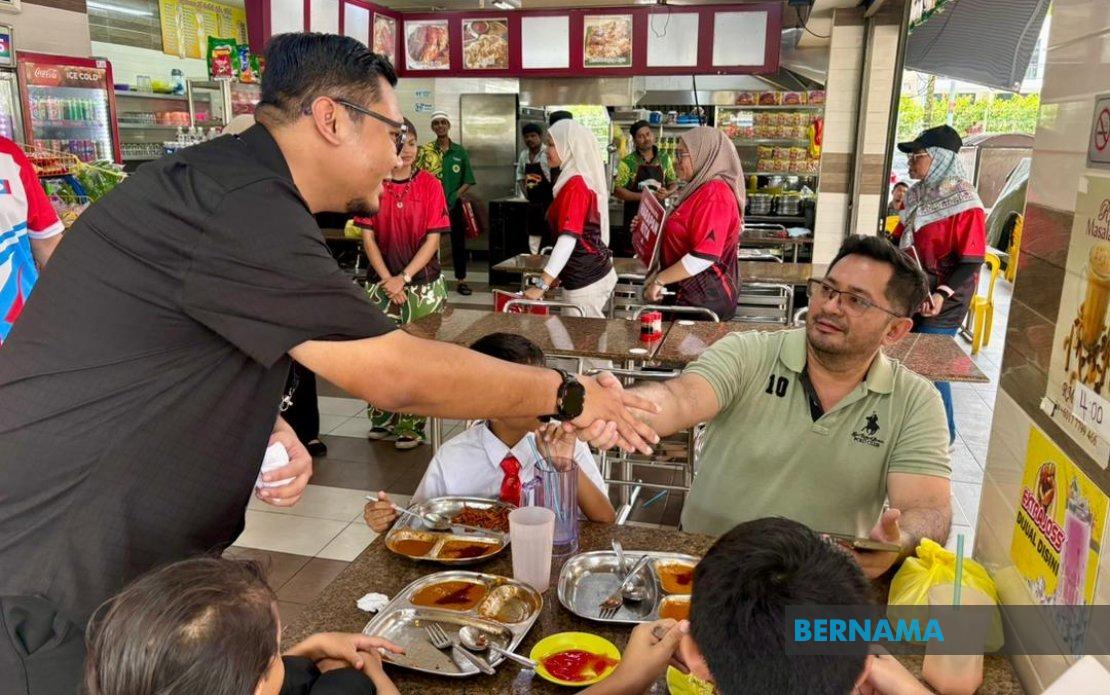
Muhammad Faezuddin Mohd Puad, the Pakatan Harapan candidate contesting the Kempas seat in the 16th Johor State Election, is anchoring his campaign on two interconnected issues that resonate with many Malaysian voters: skills development for school leavers and the chronic strain on public healthcare services. Speaking after grassroots engagement in Taman Damansara Aliff, the 35-year-old Johor Angkatan Muda Keadilan chief outlined an agenda that moves beyond headline promises to address the tangible concerns of ordinary constituents.
The pathway for Sijil Pelajaran Malaysia (SPM) graduates who do not excel academically has long been a blindspot in Malaysia's education discourse, with many capable young people from disadvantaged backgrounds finding themselves without clear career direction. Muhammad Faezuddin's emphasis on Technical and Vocational Education and Training (TVET) acknowledges a critical gap in the country's skills ecosystem. Rather than treating these opportunities as second-tier alternatives, his framing positions vocational pathways as legitimate and transformative, particularly for lower-income families where university education may remain financially prohibitive. This aligns with Malaysia's broader skills shortage in technical sectors and reflects growing recognition across Southeast Asia that manufacturing, construction, and service industries require a more robust pipeline of trained workers.
The candidate's specific targeting of SPM graduates from low-income households reflects understanding of Malaysia's structural inequalities. While top-performing students typically have access to private coaching, mentorship networks, and parental financial support to navigate post-secondary education, those from modest means often lack such scaffolding. By committing to connect these graduates with TVET opportunities that lead directly to employment or entrepreneurship, Muhammad Faezuddin addresses both immediate economic anxiety and longer-term social mobility concerns. This resonates particularly in urban constituencies like Kempas, where many working-class families struggle with cost-of-living pressures while watching their children's career prospects remain constrained.
Parallel to his vocational training agenda, the candidate has identified healthcare facility enhancement as a pressing priority, specifically targeting the Kempas Health Clinic. This focus on primary healthcare infrastructure reflects genuine service delivery gaps that persist across Malaysia's urban and semi-urban areas. Long waiting times at government clinics have become symptomatic of broader resource constraints in the public health system, creating particular hardship for elderly patients and those with chronic conditions who cannot afford private practitioners. Muhammad Faezuddin's proposal to upgrade existing facilities and build a new clinic, should he secure the mandate, directly addresses this pain point without requiring citizens to assume additional healthcare costs.
The elderly demographic's healthcare accessibility challenges deserve particular emphasis. Many senior citizens in Kempas and similar constituencies depend entirely on government clinics for medical care, yet spend entire mornings in queues simply to see a nurse or doctor. This inefficiency not only affects health outcomes but also diminishes dignity and independence for vulnerable populations. By prioritizing clinic expansion and modernization, a representative can demonstrate tangible responsiveness to constituent welfare rather than grand policy pronouncements. This ground-level approach to governance appeals to voters fatigued by politicians who maintain distance between themselves and their constituents.
Muhammad Faezuddin has also highlighted feedback from residents regarding accessibility of elected representatives themselves. The complaint that current officeholders maintain excessive protocol barriers reflects a deeper democratic concern: that state representatives have become insulated from those they serve. His commitment to fostering approachable governance without procedural formality directly contests this perception, though whether such promises survive the transition from candidate to incumbent remains an enduring political question. Nonetheless, this emphasis on constituent accessibility serves as a counterpoint to voter cynicism about representative democracy in Malaysia.
The electoral contest for Kempas presents a three-way competition that could fragment votes across ideological lines. Muhammad Faezuddin faces incumbent Datuk Ramlee Bohani from Barisan Nasional, the long-standing coalition that continues to hold significant ground in Johor despite nationwide voter volatility. Competing against these two is Salamahafifi Mohd Yusnaieny representing Bersama, a smaller coalition that has struggled to establish significant presence in state elections. This configuration suggests that the race may ultimately hinge on whether Pakatan Harapan can consolidate anti-incumbent sentiment while maintaining coalition discipline.
Johor state elections historically reflect distinct dynamics from federal contests, with local governance capacity and constituent service often outweighing national political narratives. Voters evaluate state representatives primarily on their ability to address infrastructure, services, and development allocation. In this context, Muhammad Faezuddin's focus on concrete, implementable proposals—rather than ambitious but vague pledges—demonstrates strategic campaign positioning. His emphasis on vocational training and healthcare clinics speaks to competence and practical problem-solving rather than ideological warfare.
The July 11 polling date and July 7 early voting period provide candidates limited time to translate campaign promises into voter conviction. For Muhammad Faezuddin, the challenge involves demonstrating that his initiatives have been seriously researched and costed, rather than representing merely aspirational thinking. Voters in Kempas, many of them young families with SPM-aged children or aging parents navigating healthcare systems, possess lived experience that allows them to evaluate the feasibility and sincerity of proposed interventions. Whether his grassroots outreach and constituent-focused agenda can translate into sufficient support amid a three-way contest remains the central question as the election approaches.

