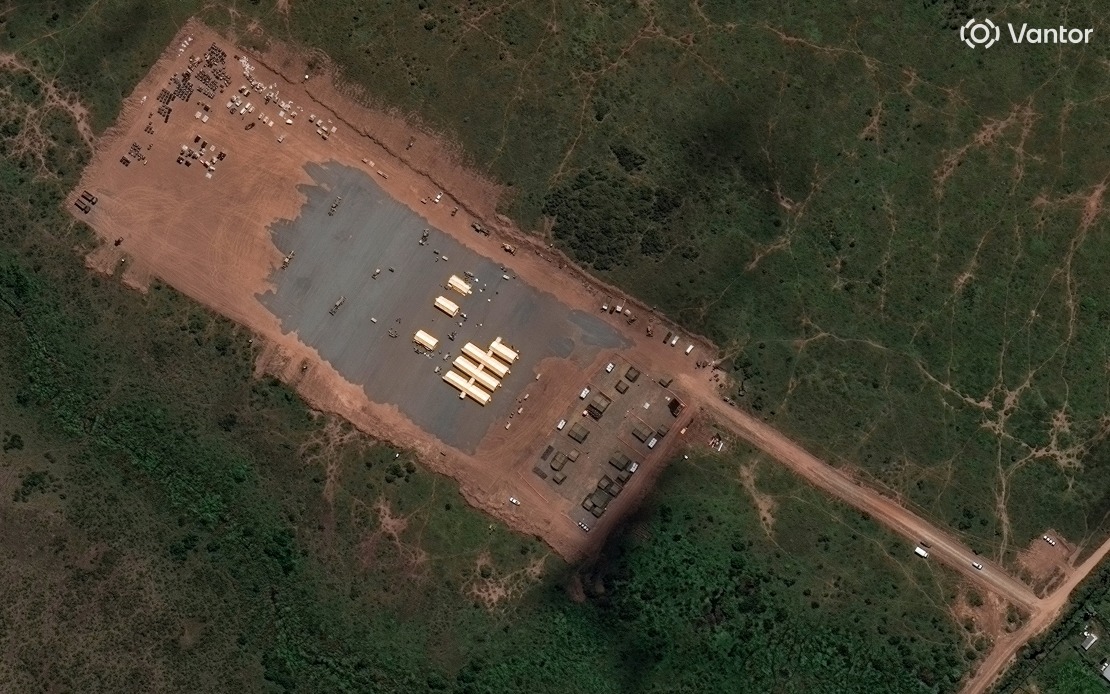
A Kenyan High Court has taken the extraordinary step of finding the country's health minister in contempt of court for pressing ahead with construction of a disputed Ebola quarantine facility despite explicit judicial orders to halt the project. High Court Judge Patricia Nyaundi delivered the ruling on Monday, determining that Aden Duale had systematically ignored court directives issued on May 28 and reconfirmed on June 2, continuing to oversee work at the controversial installation in direct violation of those orders. The judge has summoned Duale to appear before the bench on Tuesday to respond to the contempt finding and face potential sanctions, marking an unusually confrontational moment between Kenya's executive and judicial branches over a significant public health matter.
The facility in question sits at Laikipia Air Base, situated approximately eight kilometres west-northwest of the town of Nanyuki and roughly 200 kilometres north of Nairobi. The installation is designed as a 50-bed quarantine and isolation centre, ostensibly created to house Americans who might have been exposed to the Ebola virus during emergency response operations connected to outbreaks in the Democratic Republic of the Congo and neighbouring affected regions. According to the government's rationale, the facility represents a prudent precaution given Kenya's strategic role as a major transport, diplomatic and commercial crossroads in East Africa, positioning the country as a potential epidemiological flashpoint should the virus spread from its current geographic foothold.
What began as a technical health initiative has evolved into one of Kenya's most contentious public policy disputes, attracting sustained legal challenges, street demonstrations and vociferous political opposition. The Katiba Institute, an organisation focused on constitutional rights, filed the original petition that prompted the High Court to suspend the project, raising fundamental questions about whether the initiative complies with Kenya's constitutional framework and transparency requirements. The institute contended that the facility's establishment lacked adequate public consultation and failed to address legitimate health and governance concerns, essentially arguing that executive action had bypassed established procedural safeguards that ought to govern such decisions.
The political dimensions of the controversy expanded dramatically when President William Ruto publicly revealed that he had authorised the facility following a direct request from United States President Donald Trump. Ruto framed the arrangement as an extension of a longstanding bilateral health partnership between the two nations, effectively positioning Kenyan sovereignty alongside security commitments and diplomatic obligations. This disclosure transformed what might have been a technical debate into a question of national agency, with critics arguing that Kenya was essentially subordinating its own institutional processes to external pressure, whilst supporters countered that international cooperation on public health threats transcends narrow nationalist concerns.
Government representatives have mounted a vigorous defence of the project, insisting that it forms an essential component of Kenya's broader Ebola preparedness architecture. They emphasise the epidemiological risks that Kenya faces given its geographic proximity to affected areas and its role as a regional transportation hub, where the rapid movement of people could facilitate disease transmission across borders. This argument resonates with public health officials who view the facility as defensive infrastructure in an inherently dangerous landscape, a position reinforced by the United States Embassy in Nairobi, which has consistently maintained that the installation poses no threat to surrounding communities and represents a contribution to strengthening regional capacity for disease detection, isolation and outbreak response.
The legal battle has unfolded against a backdrop of growing unrest in Laikipia County, where communities surrounding the air base have mounted sustained opposition campaigns. Residents and local leaders have organised demonstrations expressing both suspicion about the facility's true purpose and anger at what they perceive as government indifference to their concerns and judicial rulings. The protest movement has turned violent on multiple occasions, with police, eyewitnesses and human rights monitors documenting at least three deaths linked to demonstrations against the project, raising the human cost of this governance dispute and intensifying pressure on authorities to resolve the underlying conflict.
The contempt finding by Judge Nyaundi represents a significant escalation, shifting the dispute from abstract constitutional questions into a direct confrontation between the executive and judiciary. By finding Duale personally in contempt rather than merely suspending the project, the court has introduced criminal and coercive dimensions to the conflict, creating the possibility of sanctions or imprisonment if the minister persists in non-compliance. This development suggests that Kenya's judicial system is willing to enforce its orders through mechanisms traditionally reserved for severe violations of court authority, signalling deep institutional tension over the government's continued pursuit of the facility despite multiple orders to cease.
For Malaysia and other Southeast Asian nations, the Kenya dispute offers instructive lessons about the governance challenges that accompany international health security arrangements. As countries in the region contemplate similar arrangements with external partners—whether related to pandemic preparedness, disease surveillance or medical research—the Kenyan case demonstrates how such initiatives can become flashpoints for constitutional concerns, public trust deficits and political controversy. The incident underscores the importance of robust domestic consultation mechanisms, transparent governance processes and respect for judicial authority when undertaking projects with both national and international dimensions.
The unfolding contempt proceedings against Duale will test not only Kenya's constitutional framework but also the practical limits of judicial power to constrain executive action on matters touching on national security and international relations. If the court follows through with sanctions, it risks precipitating a constitutional crisis that could weaken the judiciary's authority; if it backs down, it undermines the credibility of its own orders. The resolution of this dilemma will have implications extending beyond Nairobi, signalling to other African and Asian governments whether courts can effectively police executive overreach in contexts involving international health cooperation and security commitments.

