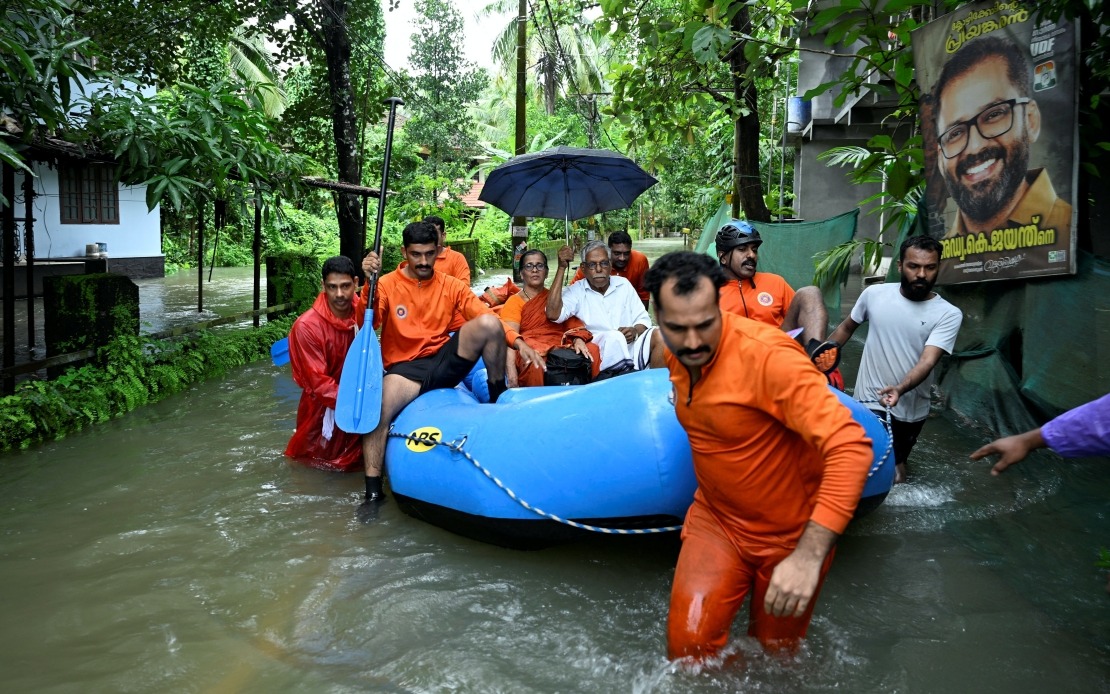
The death toll from relentless monsoon downpours sweeping through Kerala has climbed to 26, with state authorities warning of further casualties as heavy rains persist across the southern Indian state. Chief Minister V D Satheesan disclosed the grim toll during a press briefing on Wednesday following an emergency meeting convened to assess the unfolding disaster. Beyond the fatalities, the chief minister reported that 11 others have sustained injuries while four people remain unaccounted for, painting a stark picture of the monsoon's destructive force across multiple districts.
The meteorological outlook offers little respite for the beleaguered state. India's Meteorological Department issued an orange alert on Wednesday, signalling the likelihood of widespread and intense rainfall across Kerala, coastal Karnataka, and Telangana from August 5 through August 11. This extended forecast means the crisis will likely intensify before conditions stabilize, leaving disaster management officials scrambling to expand relief operations and prepare for additional displacement and casualties in the coming days.
The scale of human displacement underscores the severity of the monsoon emergency. Approximately 27,048 people have been driven from their homes by floodwaters and related hazards, representing a significant population disruption across the state. The state government has responded by establishing 462 relief camps strategically positioned to shelter these displaced residents, though the camps themselves face challenges as water continues to rise in certain localities and fresh evacuations may be necessary.
Northern Kerala districts have borne the brunt of the deluge. Kozhikode and Kannur, particularly their mountainous high-range areas, have experienced torrential rainfall since August 1, unleashing a cascade of flooding and devastating landslides that have razed structures and severed communication lines. In low-lying regions, floodwaters have shown little sign of receding, leaving residential areas submerged and families stranded or confined to upper floors of their homes. The prolonged inundation compounds misery by preventing normal life activities and increasing the risk of waterborne disease outbreaks within vulnerable populations.
Agricultural communities face ruinous losses that will reverberate through the state's economy. The state government has documented crop damage across 1,882 hectares of cultivated land, impacting 23,537 farming families who depend on their fields for survival and livelihood. For a state where agriculture remains a significant economic pillar, particularly in rural areas, these losses threaten food security and household incomes. Many farmers have lost not merely standing crops but also seeds, tools, and stored harvests that represent months of investment and labour.
In response to the catastrophe, Chief Minister Satheesan announced a comprehensive relief package designed to assist affected families. The measures include enhanced monetary compensation for those who have lost family members, particularly targeting households where the primary earner has perished. Compensation frameworks have also been expanded for those who have lost homes and personal property, recognizing that rebuilding lives extends beyond immediate shelter to replacing destroyed possessions and reconstructing livelihoods.
The monsoon crisis in Kerala carries implications for broader disaster preparedness across South Asia. As climate change intensifies precipitation patterns during seasonal monsoons, states and nations throughout the region must grapple with increasingly severe flooding events. Kerala's experience demonstrates both the institutional capacity of Indian states to mobilize rapid relief operations and the fundamental inadequacy of even sophisticated emergency systems when faced with the scale of contemporary monsoon events. The state's extensive relief camp network, while commendable, exists because such camps have become a recurring necessity rather than an exceptional measure.
For Malaysia and other Southeast Asian nations, Kerala's crisis serves as a cautionary case study in monsoon vulnerability. Though the mechanisms differ, both regions experience seasonal precipitation extremes that can overwhelm drainage systems and trigger landslides in mountainous terrain. Malaysian authorities monitoring the Kerala situation may extract lessons regarding early warning systems, evacuation protocols, and the coordination required between state and national relief agencies during large-scale displacement events.
The human costs continue mounting as rescue and recovery operations struggle against rising water levels and treacherous terrain. Each passing day without significant rainfall reduction increases the likelihood of additional casualties, particularly among those isolated in remote areas awaiting rescue. The missing persons remain a source of anguish for families and a reminder that the official death toll, grim as it stands, may ultimately rise further as search efforts continue.

