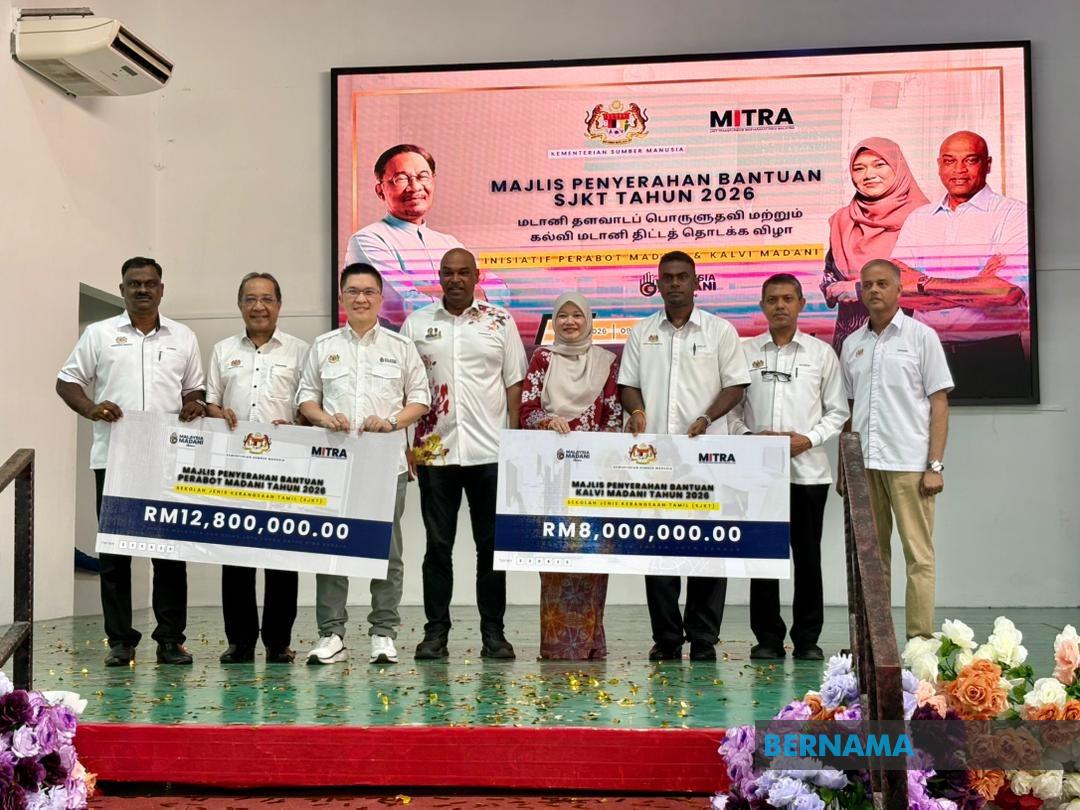
The Ministry of Human Resources has announced a comprehensive intervention strategy to address employment losses stemming from ongoing global supply chain disruptions, deploying vocational training and job placement services to help displaced workers transition to new opportunities. At an event in Johor Bahru on June 23, Human Resources Minister Datuk Seri R. Ramanan outlined how affected individuals from the manufacturing, services and construction sectors would gain access to reskilling courses through Technical and Vocational Education and Training (TVET) programmes, with coordinated employment assistance channelled via the Social Security Organisation's MYFutureJobs platform.
The government's response reflects growing recognition that the protracted supply chain disruptions affecting global trade require domestic workforce adaptation strategies. Rather than relying solely on traditional unemployment benefits, the initiative aims to create direct pathways for displaced workers to acquire skills aligned with emerging labour market demand. This approach acknowledges that many workers caught in sectors experiencing structural adjustment may lack qualifications for alternative employment, making targeted upskilling essential for sustainable job transitions.
Under the initiative, job matching services will be deployed to ensure that workers entering TVET programmes receive placements suited to their capabilities and aspirations. Ramanan emphasised that the programme design prioritises quality matching between worker skills and employer requirements, moving beyond simply filling vacancies. This reflects lessons from earlier workforce transitions in advanced economies, where poorly matched placements often resulted in job dissatisfaction and early exits from retraining investments.
Beyond the immediate reskilling component, the ministry has simultaneously launched two education-focused initiatives targeting Tamil vernacular schools, signalling a broader commitment to skill development across Malaysia's diverse communities. The MADANI Furniture Initiative commits RM12.8 million to equip 361 government-aided Tamil vernacular schools (SJKT) with modern classroom furniture and equipment, directly benefiting 39,692 pupils and 5,290 teachers across the national education system.
The furniture initiative proceeds in phases from June through August, supplying fourteen categories of high-quality equipment including desks, seating, storage cabinets and ventilation fans to participating institutions. This investment addresses longstanding infrastructure gaps in vernacular schools, which have historically received less capital investment than national schools. Improved classroom environments can enhance learning outcomes and student attendance, particularly in communities where educational infrastructure has lagged.
Complementing the furniture upgrade, the separately funded KALVI MADANI Programme allocates RM8 million specifically to benefit nearly 10,410 Indian pupils across 315 selected Tamil vernacular schools. The programme encompasses multiple support dimensions: subsidised tuition classes providing academic reinforcement, nutritional assistance ensuring students can concentrate on learning, comprehensive learning materials and digital devices facilitating technology-enabled education, plus enhanced teacher welfare provisions recognising educator contributions.
For Malaysia's workforce policy context, the dual focus on adult worker reskilling and educational investment in vulnerable student populations reflects integrated thinking about skill development across life stages. Supply chain disruptions affecting manufacturing and services sectors create immediate dislocation among current workers, while simultaneous investment in Tamil vernacular education builds long-term human capital capacity among communities historically underrepresented in technical and professional occupations.
The initiatives carry particular significance for Malaysian Southeast Asian positioning. As regional economies face intensifying supply chain reconfiguration—driven by geopolitical tensions, nearshoring strategies and technological change—workforce adaptability becomes a competitive advantage. Countries developing rapid, effective reskilling infrastructure may better retain and redeploy labour compared to those facing structural unemployment during transition periods.
The programme's targeting of construction, manufacturing and services sectors reflects sectors particularly vulnerable to supply chain volatility. Construction workers face disruption from material cost fluctuations and project delays; manufacturing workers experience production relocations and automation impacts; services sector workers encounter demand shifts as consumer spending adjusts to economic pressures. TVET pathways can direct these workers toward healthcare, renewable energy, digital services and other growth sectors less dependent on traditional supply chains.
Implementation success will depend substantially on coordination between the Human Resources Ministry, education authorities, PERKESO and participating employers. Effective job matching requires real-time labour market intelligence about emerging skill demands, employer participation in curriculum design, and ongoing monitoring of placement outcomes and wage trajectories for programme graduates. These elements distinguish genuinely transformative reskilling from temporary income support programs.
For Malaysia's regional peers grappling with similar supply chain pressures, this initiative offers a model combining immediate worker support with longer-term human capital development. Countries across Southeast Asia face comparable manufacturing disruptions and services sector volatility, suggesting wider applicability for coordinated reskilling and educational investment strategies targeting vulnerable populations.
The announcement reflects broader KESUMA priorities under the current administration to modernise Malaysia's vocational education system and expand access to skills training. Combined with recent expansions of TVET pathways and employer partnerships, these initiatives position technical and vocational qualifications as equivalent to traditional academic credentials for career advancement—a cultural shift necessary for sustained workforce adaptability in volatile global economic conditions.