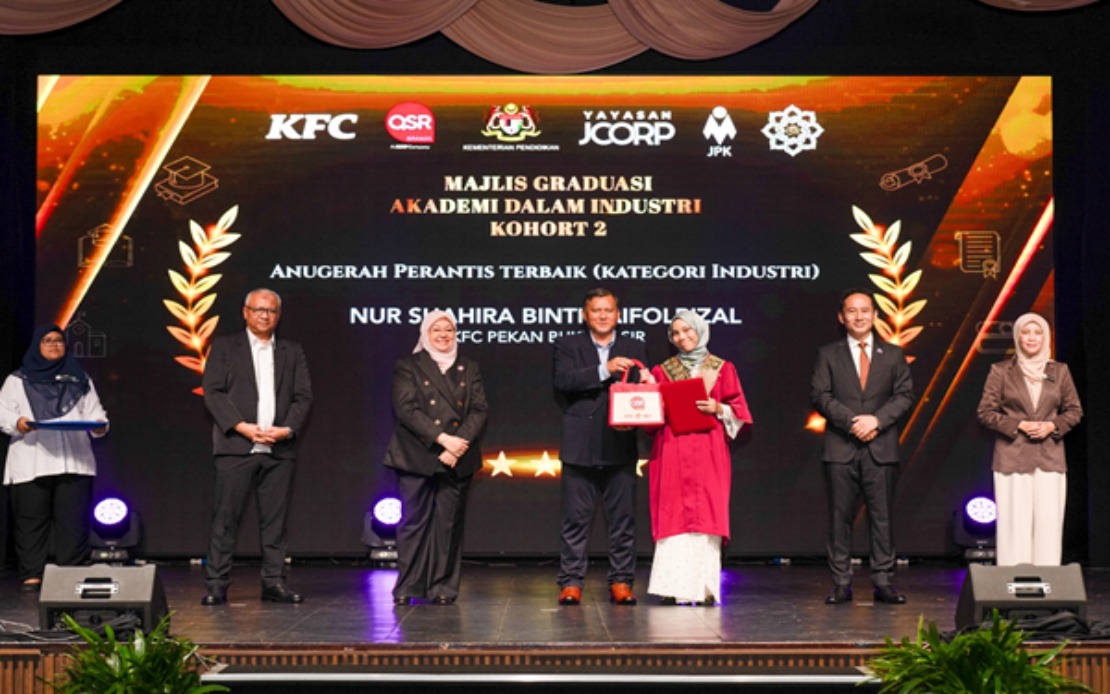
KFC Malaysia, operating under QSR Brands, has certified another cohort of 37 graduates through its apprenticeship and dual-training initiative in collaboration with Yayasan JCorp, marking continued progress in bridging Malaysia's technical skills gap through workplace-based education. The second intake, known as Cohort 2, represents a significant expansion of a programme designed to provide young Malaysians with both formal qualifications and practical industry experience before entering the workforce, addressing longstanding challenges in vocational education pathways across Southeast Asia's largest economy.
The initiative underscores a broader shift in how Malaysian employers and education policymakers are approaching workforce development. Rather than treating classroom learning and workplace experience as separate endeavours, KFC Malaysia has structured its approach to integrate formal vocational certification with hands-on training in actual restaurant environments. This dual-track method allows participants to earn recognized qualifications—specifically the Malaysian Skills Certificate at Levels 2 and 3—while simultaneously mastering the operational demands of fast-food service, food preparation, and customer engagement in genuine commercial settings.
Ministry of Education Technical and Vocational Education and Training director Zulkernai Fauzi characterised the programme as a benchmark model for industry-education collaboration, emphasizing that this approach aligns with Malaysia's strategic direction for technical and vocational training. His endorsement carries weight in policy circles, suggesting potential for scaling similar frameworks across other sectors and educational institutions. The recognition from government technical education leadership indicates that programmes combining real-world apprenticeship with certified learning outcomes are increasingly viewed as essential to producing workforce-ready graduates rather than school-leavers requiring additional transition training.
The Cohort 2 graduates underwent their training exclusively at KFC restaurants in Johor Bahru, where they completed a vocational syllabus focused on fast-food preparation and service operations. Their curriculum encompassed restaurant operations management, customer service protocols, food preparation techniques, and compliance with workplace safety and hygiene standards. This grounding in actual commercial environments means graduates exit the programme with demonstrated competency rather than theoretical knowledge alone, a distinction that carries significant employment value in Malaysia's service and hospitality sectors.
Results from the second cohort demonstrate the programme's academic rigor and effectiveness. The graduates achieved a perfect 100 per cent pass rate in Vocational Stream Subjects (MPAK) examinations and in both SKM Level 2 and Level 3 assessments. Additionally, 95 per cent of participants successfully completed the Sijil Pelajaran Malaysia (SPM) examination, Malaysia's national secondary school qualification. These performance metrics suggest that combining apprenticeship with formal examinations does not compromise academic standards; rather, it appears to enhance student engagement and motivation through direct application of learned concepts.
Each graduate received five separate qualifications upon completion: the Vocational Sijil Pelajaran Malaysia (SPMV), Malaysian Skills Certificates at both levels, a programme completion certificate, and a certificate of appreciation from QSR Brands. This multi-credential approach enhances graduate employability both within QSR Brands operations and across the broader hospitality and food-service sectors regionally. Employers increasingly recognize that multiple, industry-specific certifications provide clearer evidence of competency than traditional secondary school qualifications alone.
The ADI programme itself, formally introduced in June 2023, represents the first strategic collaboration of its kind within Malaysia's quick-service restaurant sector, involving KFC Malaysia, the Department of Skills Development under the Ministry of Human Resources, and the Ministry of Education. This tri-partite structure—combining private enterprise, dedicated skills development authority, and education ministry oversight—creates institutional accountability and ensures alignment between industry labour demands and curriculum design. For regional observers, the model demonstrates how multinational corporations operating in Southeast Asia can contribute meaningfully to human capital development beyond corporate training silos.
Zulkernai Fauzi's statement regarding expansion potential suggests Malaysian policymakers view the ADI model as transferable across sectors, though significant logistical and institutional barriers would need addressing. Scaling apprenticeship programmes requires employer commitment, standardized curricula development, and regulatory frameworks ensuring quality and consistency across multiple organizations. The success of KFC Malaysia's initiative may catalyze similar programmes in manufacturing, tourism, retail, and other service sectors facing chronic skills shortages.
Yayasan JCorp chairman Rozaini Mohd Sani emphasized the programme's role in democratizing opportunity regardless of socioeconomic background, positioning vocational pathways as legitimate alternatives to academic tertiary education. This messaging is strategically important for Malaysia and the wider region, where secondary school leavers often face binary choices between university or unemployment. By demonstrating viable, credentialed career pathways through apprenticeship, programmes like ADI challenge educational hierarchies and redirect youth toward sectors facing labour shortages.
QSR Brands' chief human resources officer Dr Sharifah Musainah Syed Alwi emphasized that the programme's value extends beyond credential distribution to genuine capability building in operational environments. Her statement reflects corporate recognition that certification without demonstrated workplace competency carries diminishing returns in competitive labour markets. For Malaysian employers, this distinction matters increasingly as skilled migration and regional competition for talent intensify.
The first cohort, consisting of 23 students who completed their industrial training in March 2025, established the programme's credibility and operational viability. The second cohort's size indicates growing employer and educational institution confidence in the model. With 60 total graduates trained through KFC Malaysia to date, the programme has moved beyond pilot status toward sustainable operations, though achieving meaningful workforce impact would require accelerated expansion and replication across additional QSR Brands locations and other organizations.
For Malaysian stakeholders, the ADI programme's progression suggests vocational education is gradually gaining policy priority and corporate investment previously concentrated on academic pathways. However, sustaining momentum requires addressing pervasive social bias against vocational qualifications, ensuring graduate employment outcomes justify participant time investment, and creating transparent credential recognition across employers and industries. The programme's continued success will signal whether Malaysia can meaningfully transform its technical education landscape through strategic public-private collaboration.

