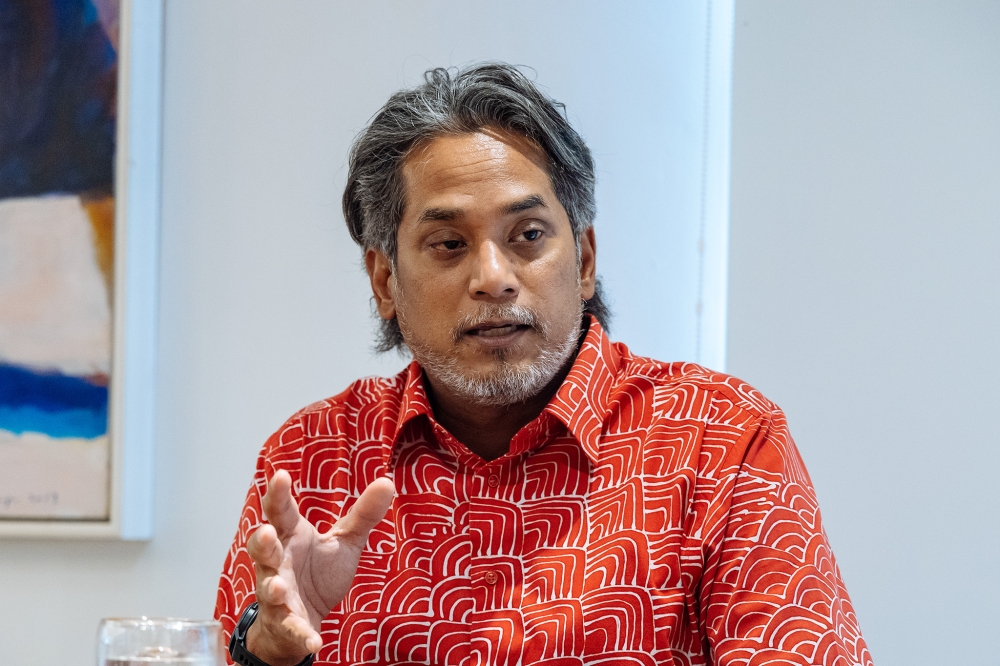
Former Umno Youth leader Khairy Jamaluddin has emerged as a serious contender for the Barisan Nasional nomination to contest the Rembau state assembly seat in Negeri Sembilan, triggering speculation about whether his political trajectory might extend to the highest executive position in the state. The development represents a significant repositioning for Khairy, whose career at both federal and party levels has undergone substantial transformation since his departure from the Youth chief's post, and signals the coalition's continued efforts to deploy high-profile names to shore up its electoral performance in the state ahead of the next general election.
Khairy's potential candidacy in Rembau aligns with longstanding patterns in Malaysian politics whereby prominent national figures transition to state-level contests to strengthen coalition performance in specific regions or to consolidate power bases ahead of broader political calculations. Negeri Sembilan has historically been a BN stronghold, though the coalition's dominance has faced periodic challenges, making the deployment of recognisable personalities part of a broader strategic approach to maintaining control of critical state assembly seats. The Rembau constituency itself carries particular significance within the state's political geography, and securing it through a credible candidate remains a priority for the coalition's electoral planning.
The speculation about Khairy potentially becoming the menteri besar candidate introduces a more ambitious dimension to these discussions. Such a development would require not only his successful election to the state assembly but also demonstrable support among fellow BN representatives to secure the top executive position. In Malaysian constitutional arrangements, the menteri besar is typically elected by the state assembly majority, and while party leaders occasionally position allies for such roles, the process involves negotiation with coalition partners and consideration of internal party dynamics. The emergence of Khairy as a possible contender suggests that party strategists believe his national profile and political credentials could prove advantageous in state-level contests.
Khairy's background as Umno Youth chief provides him with established party credentials and demonstrated organizational experience, factors that traditionally carry weight in selection processes for prominent candidacies. His time leading the youth wing exposed him to party machinery and grassroots networks across multiple states, including Negeri Sembilan, providing a foundation of familiarity and relationships that parties typically value when deploying candidates to unfamiliar constituencies. Additionally, his education and communication skills, honed through years of high-profile roles, position him to appeal to diverse segments of the electorate that BN seeks to retain or recapture.
The timing of these reports reflects broader political considerations affecting Umno and the Barisan Nasional coalition. National political circumstances, internal party dynamics, and calculations about which constituencies offer optimal prospects for recruitment of prominent figures all influence candidate selection processes. Negeri Sembilan's political trajectory and the coalition's recent performance in state contests would form part of the strategic assessment determining whether deploying Khairy in Rembau serves the coalition's overall interests. The decision also reflects assessments about which seats require reinforcement through high-profile candidacies versus those where locally-rooted candidates might prove equally or more effective.
For Malaysian voters in Negeri Sembilan and observers of national politics, the potential candidacy raises questions about how established figures navigate transitions between federal and state politics. Career patterns in Malaysian political life often involve movement between different levels of government, and Khairy's circumstances would illustrate whether prominent national personalities can successfully establish themselves in state assembly politics. Such transitions require not only nominal candidacy but genuine engagement with local constituencies, understanding of state-specific issues, and ability to connect with voters across diverse demographic categories within the state.
The potential implications for Negeri Sembilan's political future extend beyond immediate electoral calculations. Should Khairy be selected as a state assembly candidate and subsequently elected, followed by elevation to menteri besar, the state would gain an executive leader with substantial national political experience and federal government connections. These factors could shape how the state government approaches its development agenda, engagement with federal authorities, and positioning within broader coalition dynamics. Conversely, reliance on figures brought in from outside the state raises recurring questions about whether such arrangements serve local constituencies or primarily reflect national party interests.
Regional Southeast Asian observers would likely view Khairy's potential repositioning through the lens of succession planning and leadership renewal within major Malaysian political formations. Umno's ongoing organisational evolution and its efforts to maintain electoral competitiveness across different state contexts form part of broader patterns affecting the coalition's long-term viability. The treatment of prominent figures like Khairy in electoral contests signals to party members and supporters how the organisation values different leaders and what paths remain available for ambitious politicians within the Umno structure.
The coming months will clarify whether Khairy proceeds as a BN candidate in Rembau, and whether such candidacy translates into electoral success followed by further advancement. Such developments would carry implications not only for Negeri Sembilan's immediate governance but also for broader patterns in how Malaysian political organisations manage leadership transitions and deploy resources across different electoral contexts.

