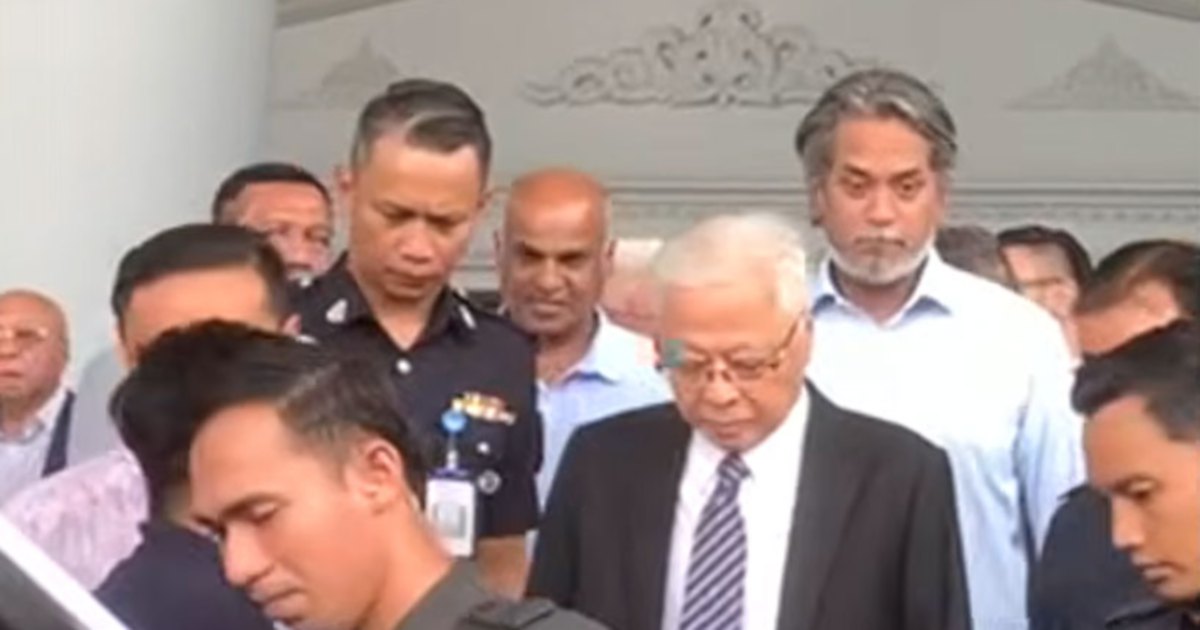
Khairy Jamaluddin, the former chief of Umno's youth wing, made a notable appearance at the Kuala Lumpur Court Complex today to stand beside former prime minister Datuk Seri Ismail Sabri Yaakob during his charge proceedings, a gesture that immediately became the focal point of political observers and courtroom watchers alike.
The presence of the prominent Umno figure at the hearing underscores the continuing complexities within Malaysia's political establishment as it navigates an array of legal challenges involving senior leadership figures. Khairy's decision to attend sends a clear message of solidarity at a time when high-profile court cases involving politicians have become increasingly visible to the Malaysian public, raising questions about factional alignments within the ruling party.
Ismail Sabri, who served as Prime Minister between August 2021 and November 2022, has faced legal proceedings in recent months that have drawn sustained media and public interest. The appearance of such prominent political figures at court hearings reflects the intertwined nature of Malaysia's political and legal landscapes, where judicial proceedings involving senior politicians often carry symbolic weight extending beyond the immediate courtroom proceedings.
Khairy's attendance represents a particularly significant show of support given his own high profile within Umno circles and his influence among younger party members and professionals. His presence suggests that networks of political loyalty continue to operate across different factional lines within the party, even as various leaders face their own legal scrutiny and face distinct challenges to their political standing.
The symbolism of such courtroom appearances cannot be understated in Malaysia's political context, where public demonstrations of support or distance from embattled figures often serve as barometers of shifting political alliances and factional strength within major parties. The fact that Khairy's presence drew considerable attention from observers at the court complex indicates how closely the Malaysian political establishment continues to monitor such developments.
For the broader Malaysian public and Southeast Asian observers, these proceedings underscore the ongoing reckoning with accountability that has characterized Malaysian politics in recent years. The legal system's engagement with senior political figures represents an important dimension of Malaysia's democratic processes, even as questions persist about consistency, fairness, and the political dimensions of prosecutorial decisions.
The court complex appearance also highlights how personal political networks and relationships remain crucial to understanding factional dynamics within Umno, despite the party's efforts to project unity and institutional strength. Such gestures of solidarity often carry practical implications for political positioning, particularly as Malaysia approaches future electoral cycles and leadership transitions within the party.
Khairy's presence at the proceedings carries additional weight given his reputation as a politically astute operator capable of reading political terrain and making calculated moves that resonate with multiple constituencies within Umno. His attendance suggests a deliberate choice to associate with Ismail Sabri at a politically sensitive moment, potentially signalling broader support networks that extend beyond formal party structures.
The interplay between legal proceedings and political theatre in Malaysia continues to shape public perception of governance and accountability. While the courts must function independently of political considerations, the visible presence of major political figures at proceedings inevitably carries implications for how such cases are perceived by the Malaysian electorate and international observers monitoring the country's institutional development.
For those tracking Umno's internal dynamics and Malaysia's political trajectory, such courtroom moments provide valuable insight into relationship patterns and shifting alliance configurations that often remain opaque to outside observers. Khairy's calculated attendance represents the kind of political signal-sending that characterizes much of behind-the-scenes Malaysian politics.
The significance of his appearance extends to questions about how Malaysia's political elite manages the tension between supporting colleagues facing legal challenges and maintaining public commitments to accountability and the rule of law. These competing imperatives often create uncomfortable situations for politically connected figures attempting to navigate both loyalty and principle.
Moving forward, observers will likely interpret such court attendances as indicators of political positioning ahead of potential party leadership contests and factional realignments. Khairy's presence today adds another data point to Malaysia's evolving political narrative, reflecting the complex relationships that continue to define the country's highest circles of power and influence despite the significant legal challenges now confronting them.

