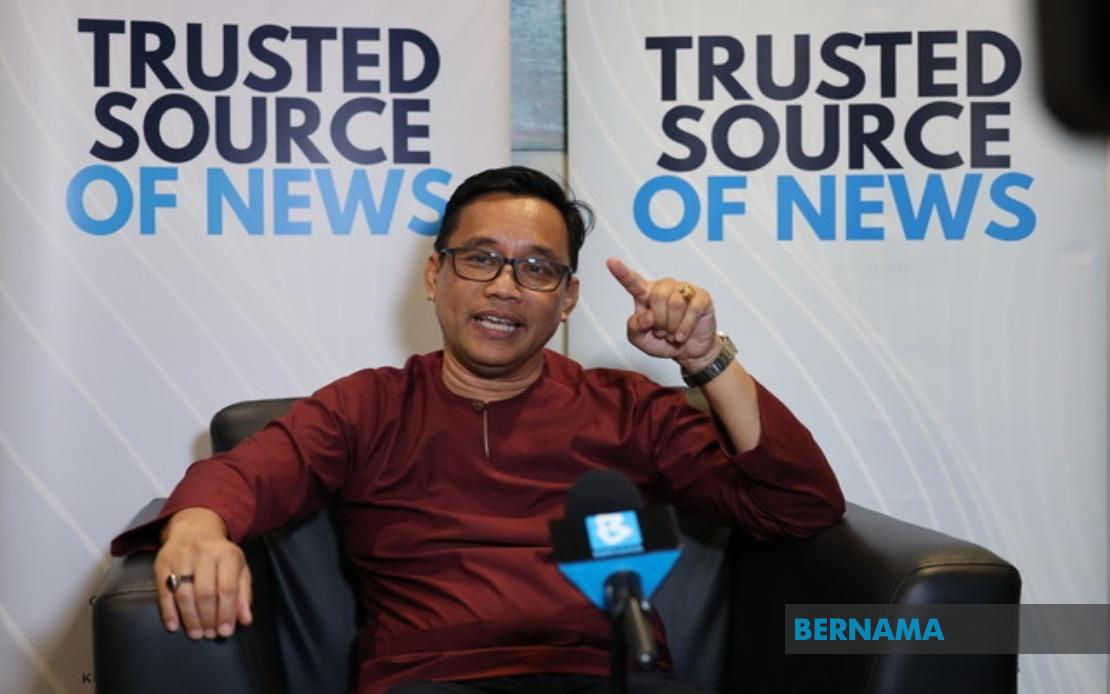
Packaging his candidacy as an unfinished mission rather than a redemption arc, Pakatan Harapan's Mohd Khuzzan Abu Bakar is returning to contest the Semerah state seat in Johor's 16th election cycle. The 58-year-old former Johor Youth, Sports, Culture and Heritage Committee chairman frames his comeback not as an attempt to reverse his previous electoral loss, but as a deliberate effort to resurrect development initiatives that stalled when the coalition lost control of the state administration in 2020. His articulation of continuity over vindication signals a strategic recalibration of how opposition figures approach voters who have experienced interrupted public services and incomplete projects.
Semerah residents have endured a multi-year gap in infrastructure delivery, and Khuzzan has identified specific pain points that resonate with constituency concerns. The restoration of the Taman Sri Sulong Youth Mini Complex ranks among his priority commitments, alongside tackling chronic water supply deficiencies that have plagued Semerah and managing the flash flood hazards that periodically devastate neighbouring Batu Pahat and Tanjung Laboh. These are not aspirational promises but targeted responses to documented service failures, grounding his electoral pitch in tangible local grievances rather than broader political messaging.
Personal ties to the constituency form a cornerstone of Khuzzan's electoral appeal. Born in Jalan Mesjid, Batu Pahat, and married to a Semerah woman, he positions himself as organically embedded within the community rather than parachuted into it. This biographical alignment serves multiple functions: it establishes legitimacy grounded in shared origin and family connection, it demonstrates long-term commitment beyond election cycles, and it counters potential accusations that opposition politicians exploit constituencies during campaign periods before disappearing. For Malaysian voters who have grown sceptical of transactional politics, this genealogical connection carries weight.
Beyond infrastructure repair, Khuzzan emphasises youth economic opportunity as a forward-looking agenda. He identifies job creation for young people as essential, particularly in recognition of Johor's trajectory toward investment-intensive and technology-driven sectors. This positioning aligns Pakatan Harapan's messaging with Malaysia's broader developmental aspirations, suggesting the coalition understands the state's economic evolution and can facilitate youth integration into emerging industries. The emphasis on future-facing initiatives balances his focus on completing past projects, creating a narrative arc from correcting legacy failures to building prosperity.
The campaign itself reflects evolving Malaysian political mobilisation strategies. Khuzzan acknowledges surprising success engaging senior citizens through TikTok, indicating that digital-age platform stratification along generational lines has collapsed in Malaysia's political sphere. His integration of social media channels including Instagram and Threads demonstrates adaptation to voter communication preferences that transcend age demographics. This multimedia approach is supported by ground-level youth-focused engagement encompassing e-sports tournaments, sepak takraw competitions, and carrom activities, alongside targeted digital literacy programmes emphasising artificial intelligence and technology exposure. The fusion of entertainment, skill-building, and policy education represents a more sophisticated campaign architecture than traditional rallies and ceramahs.
Economic policy proposals reflect Khuzzan's banking sector background, particularly his diagnosis of structural weaknesses in Malaysia's microcredit ecosystem. While financing vehicles like TEKUN Nasional and Amanah Ikhtiar Malaysia (AIM) provide capital access, many entrepreneurs lack complementary financial management guidance necessary to deploy loans productively. His proposal to embed structured financial counselling alongside credit provision addresses a documented gap in the SME support infrastructure. This represents technocratic policy thinking focused on implementation mechanics rather than headline initiatives, potentially appealing to voters frustrated by programmes that fail to deliver promised outcomes due to execution deficiencies.
The 2022 Johor election took place amid economic uncertainty following pandemic disruption, and Khuzzan characterises this cycle as operating within a fundamentally altered political environment. He anticipates elevated voter participation, particularly from Johoreans employed in Singapore whose cross-border commute to work previously deterred polling station attendance. This projection reflects recognition that economic recovery and stabilisation may unlock latent voter mobilisation, changing the electoral mathematics compared to the preceding contest. The Semerah constituency comprises 47,431 registered voters, with nearly 37.4 percent aged between 18 and 39, indicating a substantial cohort of voters whose political consciousness developed after Pakatan Harapan's initial Johor tenure.
The broader Johor state election encompasses 172 candidates competing across 56 seats, with voting scheduled for 11 July and advance polling on 7 July. This configuration means Semerah contests within a competitive landscape where Pakatan Harapan must simultaneously defend previous strongholds while recovering lost ground. The 2022 result, in which Barisan Nasional's Mohd Fared Mohd Khalid secured Semerah with a 4,041-vote majority, establishes the incumbent's baseline support but does not definitively forecast 2024 performance given potential shifts in voter sentiment and participation patterns.
Khuzzan reports encouraging reception particularly from lower-income constituencies and recipients of the e-Kasih social assistance scheme, suggesting that targeted outreach to economically vulnerable segments has generated positive response. This engagement pattern indicates that Pakatan Harapan's messaging resonates among voters experiencing economic pressure, potentially reflecting frustration with Barisan Nasional's governance record or receptivity to alternative developmental propositions. The B40 demographic's engagement with the candidate signals potential receptivity to the coalition's policy platform among Malaysia's most economically constrained households.
For Malaysian and Southeast Asian observers, the Johor election represents a broader test of opposition party sustainability and the capacity of major political coalitions to recover electoral ground after losing state government control. Pakatan Harapan's strategy in Semerah exemplifies how opposition politics must balance accountability for past unfulfilled commitments with forward-looking initiatives and personal credibility. The integration of digital campaign infrastructure, targeted youth mobilisation, and technocratic economic policy proposals reflects how Malaysian political competition is increasingly sophisticated in its voter engagement and programme formulation. Khuzzan's candidacy is less about individual personality and more about institutional repositioning of how Pakatan Harapan presents itself to constituencies that experienced both its governance and its absence.

