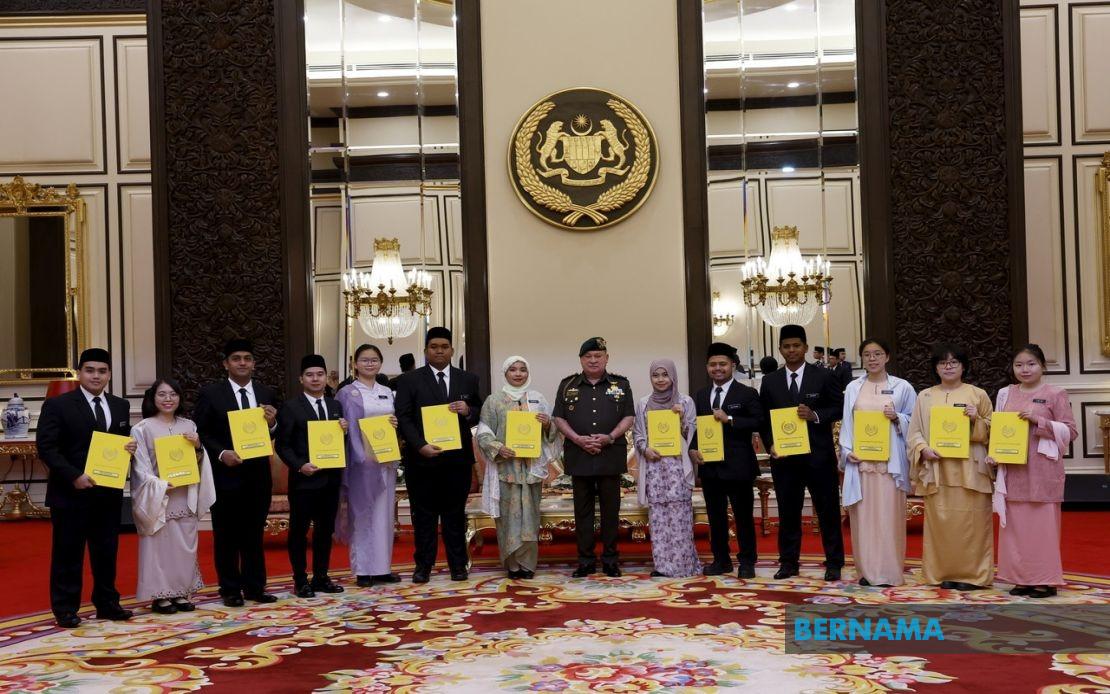
His Majesty Sultan Ibrahim, King of Malaysia, bestowed the 2026 Yang di-Pertuan Agong Scholarships upon 14 accomplished scholars during a formal investiture ceremony held at Istana Negara in Kuala Lumpur on June 24. The recipients represent Malaysia's brightest minds embarking on advanced postgraduate research journeys, with their studies funded through one of the nation's most generously endowed scholarship programmes.
The distinction of these awards reflects the rigorous selection process and exceptional qualifications demanded of applicants. Half the cohort will pursue doctoral degrees at both local and international institutions, while the remaining scholars undertake Master's programmes focused on original research contributions. This balanced distribution underscores Malaysia's commitment to nurturing expertise across multiple academic disciplines and research fields.
Geographically, the scholarship recipients demonstrate Malaysia's dual commitment to developing world-class research capacity domestically and fostering international academic partnerships. Four scholars will continue their studies at prestigious universities beyond Malaysia's borders, gaining exposure to global research methodologies and international academic networks. The remaining ten recipients will strengthen research capabilities at Malaysia's premier research universities, ensuring that advanced scholarship and innovation remain anchored within the nation's institutional fabric.
Tan Sri Wan Ahmad Dahlan Abdul Aziz, Director-General of the Public Service, emphasised the BYDPA's significance within Malaysia's broader scholarship ecosystem during remarks to assembled media. He highlighted that the scholarship programme allocates substantially more funding than competing government-supported schemes, positioning it as the most generously resourced opportunity available to Malaysian postgraduate scholars. This financial commitment reflects the government's determination to remove economic barriers preventing talented individuals from accessing advanced research training.
The BYDPA's prestige extends beyond mere financial generosity; it represents institutional recognition of scholarly excellence and potential for meaningful research contribution. Recipients selected for these awards undergo stringent vetting processes evaluating not only academic credentials but demonstrated research capacity, intellectual curiosity, and potential to advance knowledge in their respective disciplines. The programme thus serves as a talent identification and development mechanism, identifying promising researchers early in their careers and providing support for trajectories that will benefit Malaysia's knowledge economy.
The ceremony's significance resonates particularly for Malaysia's regional position within Southeast Asia's academic landscape. As countries across the region compete for research talent and international academic prestige, scholarships like the BYDPA function as strategic investments in human capital. By enabling Malaysian scholars to pursue advanced qualifications at world-leading institutions while simultaneously strengthening domestic research universities, the programme attempts to balance brain-drain concerns with genuine international competitiveness.
For the 14 individual recipients, this recognition marks a transformative moment in their professional trajectories. The financial security provided by comprehensive scholarship funding enables scholars to concentrate entirely on research endeavours without the distracting pressures of employment or income generation that often compromise doctoral work quality. Beyond financial provision, the award's prestige enhances career prospects substantially, signalling to employers, research institutions, and international academic networks that these individuals have already demonstrated exceptional capability and promise.
The involvement of senior public administration officials, including the Comptroller of the Royal Household, underscores the ceremony's importance within Malaysia's institutional frameworks. Such high-level participation signals that scholarship programmes merit careful government attention and priority resource allocation. The presence of these officials also reflects the interconnection between Malaysia's educational development agenda and broader public service objectives, positioning postgraduate research capability as integral to national development priorities.
The 2026 cohort's selection occurs within a context of evolving global research hierarchies and intensifying competition for academic talent. Universities worldwide increasingly recognise that doctoral and Master's researchers generate significant research output, attract external funding, and enhance institutional rankings. By investing substantially in Malaysian scholars pursuing advanced qualifications, the BYDPA programme positions Malaysian universities more competitively within international research assessment frameworks while expanding the nation's research knowledge base across multiple disciplines.
Looking forward, these 14 scholars represent potential contributors to Malaysia's innovation ecosystem across coming decades. Many will likely pursue academic careers, establishing research groups and training subsequent generations of scholars. Others may transition into corporate research and development, government research institutions, or technology-driven enterprises. The programme's long-term value extends beyond immediate scholarship recipients to encompass broader societal benefits flowing from enhanced research capacity and expertise.