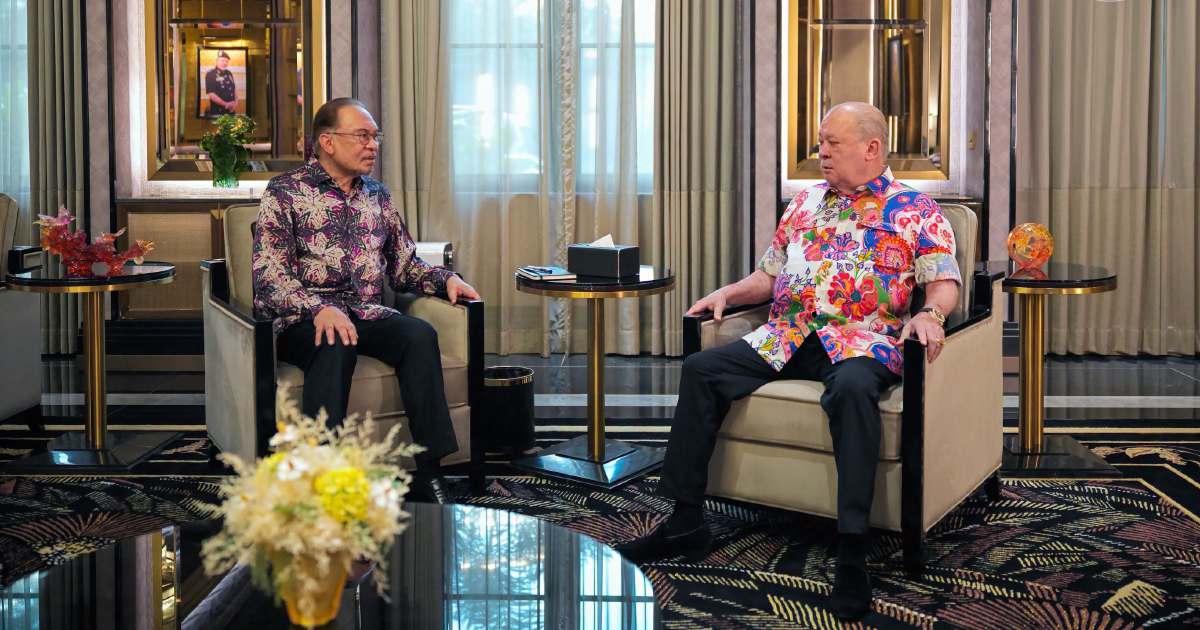
His Majesty Sultan Ibrahim, King of Malaysia, conducted an audience with Prime Minister Datuk Seri Anwar Ibrahim at Istana Bukit Tunku in Kuala Lumpur, a customary engagement held in advance of tomorrow's 69th National Day celebrations. The meeting represents part of the formal state protocols that typically precede significant national observances, allowing the constitutional monarch to engage with the head of government ahead of the country's most important annual commemoration.
The timing of the audience reflects Malaysia's established traditions surrounding National Day, when senior state officials typically convene with the reigning monarch to discuss matters of national importance and coordinate ceremonial proceedings. Such engagements serve both diplomatic and constitutional functions, enabling the King to remain apprised of government initiatives while reinforcing the institutional relationship between the Palace and the executive branch during crucial national moments.
National Day celebrations carry particular significance for Malaysia as they commemorate the nation's independence and sovereignty. The 69th iteration of this observance demonstrates the country's continued commitment to honouring its foundational principles and national identity. For Malaysian readers, these annual celebrations represent more than mere ceremonial events—they function as pivotal moments for national reflection and unity across the country's diverse communities.
The formal nature of the audience conducted at Istana Bukit Tunku, the official residence of the Yang di-Pertuan Agong, underscores the ceremonial weight attached to pre-celebration consultations. This location holds significant symbolic value within Malaysia's constitutional framework, serving as the seat of royal authority and the venue through which matters of state are traditionally administered and discussed between the monarchy and government leadership.
For Anwar Ibrahim specifically, the audience affirms his position as Prime Minister and his direct working relationship with the constitutional head of state. Such formal engagements become particularly important during transitional or significant political periods, as they demonstrate continuity of governance structures and the functional cooperation between different branches of Malaysia's governmental system. The meeting provides an opportunity for the Prime Minister to brief His Majesty on preparations for the forthcoming celebrations and any related matters requiring royal attention.
Regionally, Malaysia's National Day observances often extend beyond domestic boundaries, with neighbouring Southeast Asian nations acknowledging the milestone. The 69th celebration carries relevance for the broader ASEAN community, particularly among countries sharing similar independence narratives and constitutional monarchies. How Malaysia marks this occasion reflects its confidence in national stability and institutional functioning at a time when regional dynamics continue to evolve.
The strategic positioning of this audience immediately preceding the celebrations suggests that both the Palace and the government view comprehensive coordination as essential. This coordination likely encompasses ceremonial arrangements, security protocols, and messaging priorities for the celebration itself. The advance engagement allows for alignment between constitutional and executive functions, ensuring that National Day proceedings reflect unified national representation rather than fragmented or competing narratives about the nation's direction and priorities.
From a governance perspective, such audiences also provide informal channels for discussion beyond formal cabinet structures. These private engagements between the King and the Prime Minister often address matters that may not require public announcement yet carry strategic importance for government planning. The confidential nature of such audiences preserves their utility as venues for frank, unfiltered consultation between constitutional heads.
Looking ahead, the 69th National Day celebrations will likely feature the customary pageantry, military displays, and participatory events that have characterized Malaysian independence commemorations for decades. The audience between the King and Prime Minister serves as an important preparatory step, establishing shared understanding about ceremonial priorities and national messaging for the festivities. For Malaysian citizens across all states and backgrounds, tomorrow's celebrations represent an opportunity for collective expression of national pride and belonging, a function that requires coordination between all levels of government and the constitutional monarchy.
The continued observance of such formal protocols between the Palace and the government demonstrates Malaysia's commitment to constitutional governance and institutional respect, values that have underpinned the nation's relative stability since independence. Even as political circumstances change and new administrations take office, these ceremonial engagements remain consistent markers of how the state's various institutions relate to and coordinate with one another during moments of national significance.

