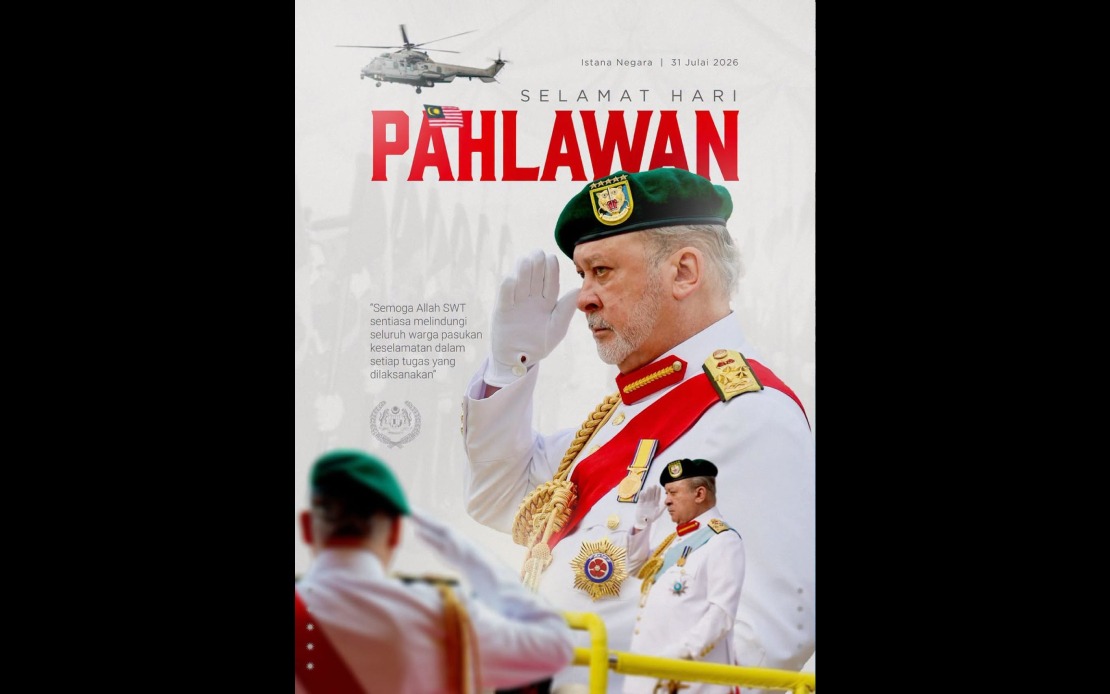
His Majesty Sultan Ibrahim, King of Malaysia, marked Warriors' Day on July 31 by delivering a heartfelt message of gratitude to members of the Malaysian Armed Forces and Royal Malaysia Police, acknowledging their pivotal role in safeguarding the nation's security and stability. The gesture, shared through the official Sultan Ibrahim Sultan Iskandar Facebook page, underscored the Crown's continued recognition of the armed services even as the monarch addresses health concerns requiring medical intervention.
In his Warriors' Day address, His Majesty emphasised the enduring importance of the security forces' contributions to national defence and public safety. The King's message transcended ceremonial formality, offering a personal affirmation that the sacrifices made by military personnel and police officers would be permanently etched in the nation's collective memory. This acknowledgment carries particular resonance during a period of evolving security challenges across Southeast Asia, where Malaysia's defence capabilities and peacekeeping contributions remain strategically significant for regional stability.
The monarch's statement specifically invoked divine protection over all security personnel engaged in their respective duties. The phrase reflected traditional royal messaging that interweaves institutional appreciation with spiritual blessing, a practice deeply rooted in Malaysian constitutional monarchy traditions. For serving military and police personnel, such royal recognition serves both ceremonial and psychological purposes, reinforcing the legitimacy and public valuation of their professional contributions.
Notably, Sultan Ibrahim's Warriors' Day acknowledgement came amid a period of medical management requiring his temporary withdrawal from public ceremonial duties. Istana Negara revealed that the King would undergo follow-up treatment addressing musculoskeletal pain centred in his back and hip regions. Medical specialists had recommended a preparatory rest period to optimise conditions for the subsequent therapeutic intervention, necessitating the cancellation of the King's scheduled attendance at the Warriors' Day Parade held at Dataran Pahlawan Negara in Putrajaya on the same date.
This health-related absence represented a pragmatic prioritisation of the monarch's medical recovery over ceremonial participation. The decision reflected contemporary approaches to royal health management, where transparency regarding medical circumstances has become normalised practice within Malaysian palace communications. Unlike previous eras when royal health matters remained largely opaque, contemporary Istana Negara statements routinely disclose specific medical conditions and treatment timelines, acknowledging public interest in the sovereign's wellbeing.
The Warriors' Day observance itself holds significant institutional meaning within Malaysia's defence and security calendar. The annual commemoration honours the contributions and sacrifices of military and police personnel, serving as a focal point for national reflection on security sector performance and commitment. By extending greetings despite his inability to participate in parade ceremonies, His Majesty ensured that the institutional recognition remained undiminished by his medical circumstances, a nuanced diplomatic gesture affirming that health limitations would not diminish the Crown's appreciation for defence and security contributions.
For the Malaysian Armed Forces and Royal Malaysia Police, the King's message provided important institutional validation during a period when security personnel navigate evolving operational demands. Regional security challenges, ranging from transnational threats to internal stability concerns, place considerable pressure on these agencies. Royal acknowledgment of their sacrifice becomes a meaningful counterweight to the physical and psychological demands inherent in security sector work.
The Warriors' Day parade itself proceeded without royal attendance, with other senior government figures likely presiding over the ceremony. This arrangement ensured continuity of the national commemoration while respecting the King's medical imperatives. Palace protocols accommodate such circumstances through established procedures enabling alternative leadership representations, ensuring that critical state ceremonies maintain procedural integrity even during absences of the principal ceremonial officer.
The dual messaging emerging from Istana Negara—simultaneously extending Warriors' Day greetings while explaining medical treatment necessity—demonstrated sophisticated communication management. Rather than allowing the King's health situation to overshadow the day's commemorative purpose, palace communications strategically foregrounded the royal appreciation message, relegating medical information to contextual explanation. This approach preserved the Warriors' Day significance while transparently addressing the King's attendance impossibility.
Looking forward, the King's musculoskeletal treatment represents a reminder of health realities affecting even the nation's highest office holders. The medical intervention's success will likely influence his schedule for subsequent national events and ceremonial obligations. For the institutional monarchy, managing such health situations with transparency while maintaining uninterrupted institutional functioning remains a critical governance competency.
The Warriors' Day occasion ultimately reinforced that royal acknowledgment of security sector contributions transcends ceremonial attendance. His Majesty's written message, widely distributed through modern digital channels, arguably reached broader audiences than a physical parade appearance might have generated. This inadvertent technological amplification ensured that the royal appreciation for military and police sacrifices resonated throughout the nation and among diaspora communities monitoring Malaysian affairs.

