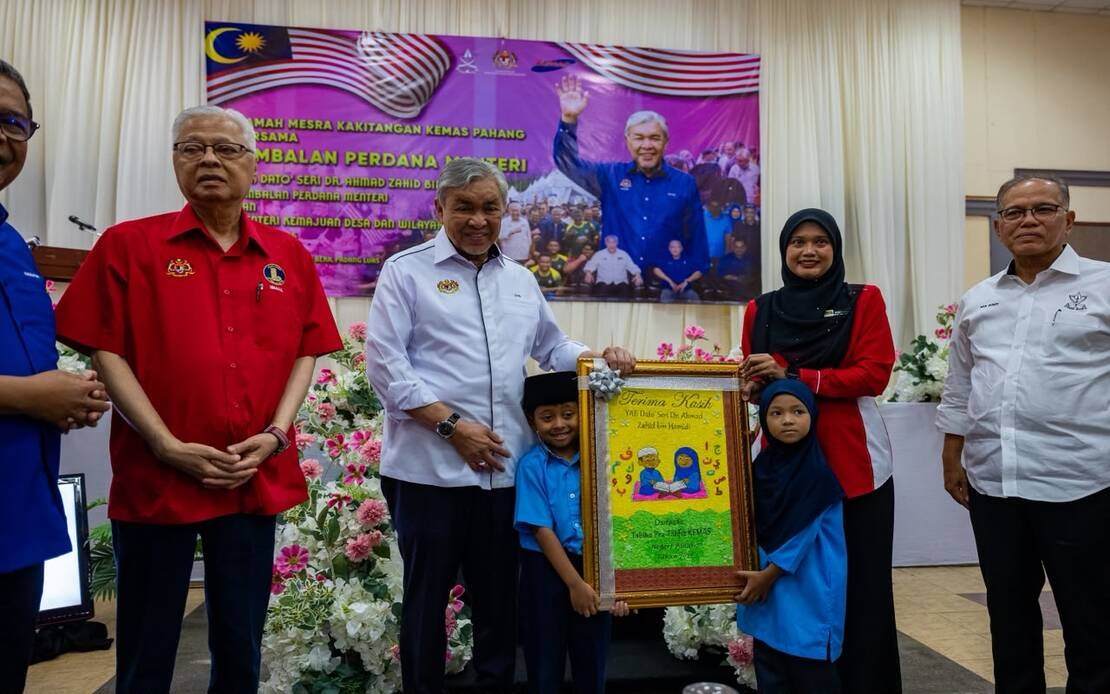
The Rural and Regional Development Ministry (KKDW) is pursuing an ambitious modernisation agenda for KEMAS early childhood programmes, positioning them as crucial gateways to prepare young Malaysians for a technology-driven future while maintaining religious and moral foundations. Deputy Prime Minister Datuk Seri Dr Ahmad Zahid Hamidi announced this strategic direction during the Pahang KEMAS Community Engagement Programme in Bera, signalling a comprehensive recalibration of how Malaysia approaches pre-school education across its network of kindergartens and childcare centres.
The timing of this initiative reflects structural changes in Malaysia's education landscape. The government's decision to lower the mandatory school starting age from seven to six has intensified pressure on KEMAS institutions to deliver more rigorous early learning experiences. These facilities now serve as the primary educational touchstone for children entering the system earlier, making their curriculum design and resource allocation increasingly consequential for long-term student outcomes. KEMAS operates both Tabika (kindergartens) and Taska (childcare centres), institutions that have collectively served approximately 8.4 million children since inception, establishing the department as a cornerstone of grassroots educational development.
At the heart of the ministry's transformation strategy lies technology integration. Ahmad Zahid stressed that KEMAS institutions must adopt Smart Class frameworks and install smartboards in classrooms to familiarise children with digital tools from their earliest years. This reflects broader Southeast Asian trends toward digital literacy in primary education, where early exposure to technology increasingly determines competitiveness in secondary and tertiary learning. By embedding technological competency into KEMAS curricula, the ministry seeks to eliminate the digital divide that often disadvantages rural and lower-income students, a particularly significant concern given KEMAS's heavy concentration in community-based settings throughout Malaysia.
Yet the ministry's vision extends beyond mere technological adoption. Ahmad Zahid explicitly framed modernisation as inseparable from value-building and religious instruction, proposing expansion of Quranic memorisation programmes beginning next year. Currently, KEMAS children focus on memorising selected portions from Juzuk 30 of the Quran; the enhanced programme would add Surah Yasin, Al-Waqiah, Al-Mulk, and As-Sajdah to the curriculum. This expansion represents a deliberate philosophical choice to position religious education not as supplementary but as foundational to character development, reflecting Malaysia's constitutional commitment to Islam while acknowledging the nation's plural society.
Implementing this dual-track approach—technological advancement paired with deepened religious instruction—presents substantial logistical challenges. Ahmad Zahid acknowledged that KEMAS educators themselves require upskilling to deliver structured, effective Quranic memorisation programmes, signalling the ministry's intent to invest in teacher training infrastructure. The capacity to master and teach these surahs demands pedagogical expertise that extends beyond conventional early childhood education credentials, necessitating partnerships with Islamic scholars and educational specialists.
Coordination across government levels emerges as essential to execution. Ahmad Zahid called for closer collaboration between federal authorities, state governments, Members of Parliament, and state assembly representatives to furnish technological infrastructure and resources. He specifically acknowledged Pahang's contributions in securing land titles, providing grants for facility maintenance, and funding renovation projects—recognition that state-level cooperation directly enables federal policy implementation. This vertical integration requirement underscores how early education reform cannot succeed through centralised directives alone but depends on substantive engagement with regional stakeholders.
The political economy of KEMAS modernisation also warrants attention. Securing funding for smartboards, teacher training programmes, and facility improvements demands sustained budgetary commitment across multiple government cycles. Ahmad Zahid's emphasis on political stability and cross-party cooperation hints at awareness that educational transformation requires continuity transcending electoral cycles. In Malaysia's context, where education funding often fluctuates with political shifts, embedding KEMAS improvement into institutional frameworks rather than personality-driven initiatives enhances durability.
From a regional perspective, Malaysia's approach to early education carries implications beyond its borders. Southeast Asian governments grapple with similar challenges—balancing modernisation imperatives with cultural preservation, managing technological disparity, and providing equitable early learning access. KEMAS's six-decade track record serving grassroots communities positions it as a potential model for other nations examining how to leverage existing infrastructure for systemic educational advancement. The integration of religious and secular learning also reflects Southeast Asia's broader negotiation of identity in globalised contexts.
Ahmad Zahid's broader framing merits scrutiny. He described KEMAS's next phase as one where the institution must simultaneously preserve legacy and shape a new generation equipped with strong values, technological literacy, and competitive capacity. This formulation assumes no inherent tension between traditional knowledge transmission and digital-age skill development, yet practitioners often experience these as competing demands. The success of this integration depends on nuanced curriculum design that avoids treating religious education and technological learning as parallel tracks and instead develops synergies between them.
The expansion of memorisation programmes also raises pedagogical questions about optimal early childhood learning methods. While religious instruction holds cultural significance, the educational research community has long debated whether memorisation-focused approaches adequately develop critical thinking and comprehension skills essential for advanced learning. KEMAS's challenge lies in embedding Quranic memorisation within broader cognitive development frameworks that foster understanding alongside retention.
Looking forward, KEMAS faces the substantial task of translating ministerial directives into effective classroom practice across hundreds of facilities nationwide. The success of this transformation will depend on adequate resource allocation, comprehensive teacher development, sustained political commitment, and genuine engagement with the pedagogical complexities of integrating diverse educational objectives. Ahmad Zahid's announcement represents policy intent, but implementation remains the ultimate measure of whether KEMAS can credibly position itself as both guardian of Malaysian values and incubator of future-ready minds.

