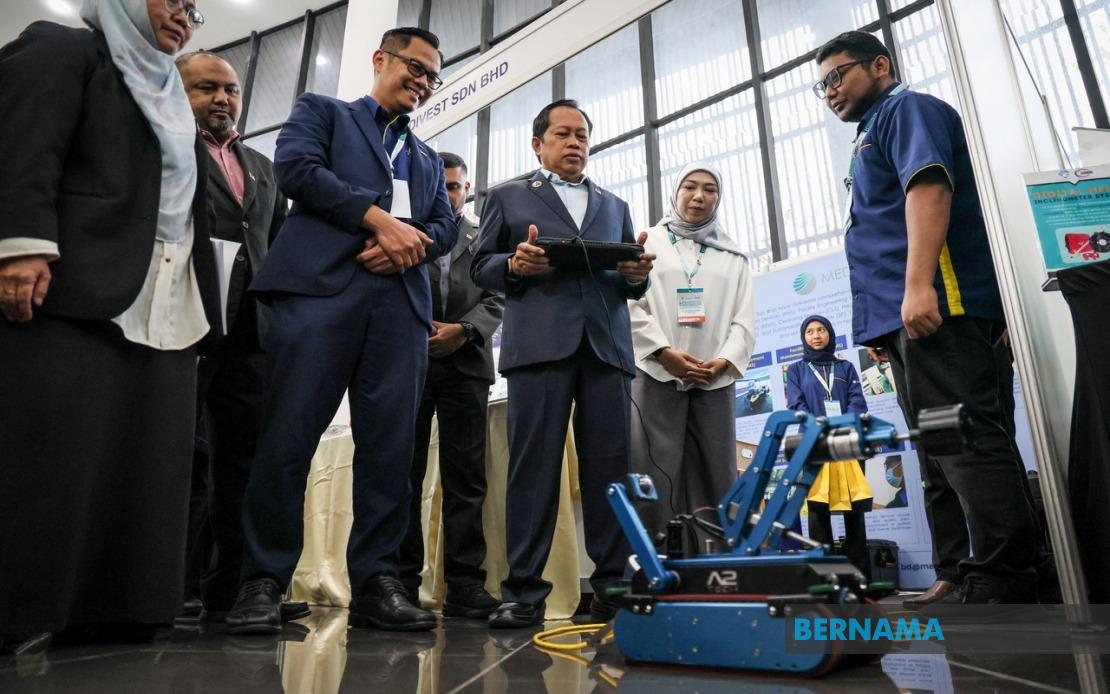
Malaysia's construction sector stands at a crossroads as the Works Ministry actively champions a fundamental shift in how the industry views the lifecycle of built assets. Deputy Works Minister Datuk Seri Dr Ahmad Maslan has issued an urgent call for contractors to transition from focusing exclusively on construction delivery into the more lucrative and underexploited sphere of facility management and maintenance, citing compelling market data that suggests billions of ringgit in untapped commercial opportunity.
The scale of the opportunity is substantial. According to records maintained by the Construction Industry Development Board (CIDB), the facility management and maintenance sector generated RM39.59 billion in declared projects over the three-year window from 2023 to 2025. This volume of work was distributed across 1,541 separate FM and maintenance projects registered during that period, indicating a fragmented but robust market with consistent demand across multiple asset categories and client bases throughout the country.
What renders this opportunity particularly compelling is the sharp mismatch between market size and industry participation. Current figures reveal that only 468 contractors have registered under the F01 and F02 facility management specialisation classifications, a remarkably small number relative to the scale of available work. This imbalance suggests that the sector remains undersupplied, creating genuine business potential for contractors willing to develop expertise, invest in training, and build organisational capacity around FM service delivery.
Ahmad Maslan articulated a vision that extends beyond simple profit maximisation. He highlighted how Malaysian infrastructure—roads, buildings, bridges, and public facilities—has historically suffered from a philosophical gap whereby construction completion marked the effective end of institutional attention. This traditional mindset prioritised capital project delivery while relegating maintenance to a secondary consideration, often resulting in accelerated asset deterioration and reduced economic lifespan for expensive public infrastructure. By repositioning facility management as a core subsector rather than a peripheral support function, the ministry is attempting to inculcate a more holistic approach to asset stewardship.
The economic rationale underpinning this push reflects hard lessons learned across Southeast Asia and globally. When buildings, bridges, and road networks deteriorate prematurely due to deferred or inadequate maintenance, replacement costs far exceed what preventive maintenance would have required. This dynamic creates a false economy where short-term budget savings through construction-focused allocation ultimately generate much larger expenditures downstream. FM contractors who can demonstrate this lifecycle cost advantage to asset owners—whether government agencies, corporations, or institutional clients—position themselves as strategic partners rather than mere service providers.
To formalise and standardise this emerging subsector, CIDB has developed CIS 33:2026, a comprehensive Facility Management Good Practice Guide launched at the Contractors Convention 2026: NexGen Builders event in Butterworth. This framework is designed to provide a systematic, sustainable, and standardised methodology that clarifies FM expectations and best practices across the entire value chain. The guide serves as a common reference point for asset owners, facilities managers, contractors, and other industry stakeholders, facilitating consistency, quality improvement, and professional standards throughout FM service delivery.
For Malaysian contractors, the implications are transformational. Historically, many construction firms have operated on a project-by-project basis, completing delivery and moving immediately to the next contract. FM services offer an alternative business model characterised by longer-term client relationships, recurring revenue streams, and potentially higher profit margins. A contractor that transitions from pure construction into integrated FM offerings can diversify revenue sources, reduce client acquisition costs through relationship deepening, and build valuable institutional knowledge about individual properties and systems.
The sector's attractiveness extends beyond simple commercial considerations. Facility management employment is inherently local and labour-intensive, creating significant job creation potential across Malaysia. Unlike construction, which experiences cyclical demand and geographical concentration, FM work remains geographically distributed and relatively consistent. This stability can support more permanent workforce arrangements and skill development investments that contractors might hesitate to undertake in highly cyclical businesses.
Regional context amplifies the strategic importance of this sector shift. Across Southeast Asia, infrastructure ageing has become a recognised challenge as nations that invested heavily in construction during the 1990s and 2000s now face substantial maintenance backlogs. Singapore, for example, has developed sophisticated FM ecosystems where contractors maintain extensive portfolios of managed properties. Malaysia's deliberate attempt to professionalise and expand its FM sector positions the country to benefit from regional expertise sharing and potentially to develop FM export capabilities serving other ASEAN nations facing similar infrastructure maturity issues.
The ministry's campaign to attract new FM contractors also reflects international best practice in infrastructure management. The World Bank and Asian Development Bank have increasingly emphasised asset management and lifecycle costing in their infrastructure governance recommendations. By encouraging Malaysian contractors to build FM expertise, the Works Ministry is aligning domestic practice with globally-recognised standards, potentially enhancing competitiveness when bidding for multilateral-funded projects or joint ventures with international partners.
However, realising this potential requires sustained commitment from multiple stakeholders. Contractors must invest in training and certification to meet CIS 33:2026 standards. Educational institutions need to develop curricula addressing FM-specific knowledge. Industry associations should facilitate knowledge exchange and best practice dissemination. Client organisations—particularly government agencies—must incorporate FM cost considerations into procurement decisions rather than optimising solely for lowest construction cost.
The transformation that Ahmad Maslan envisions represents a maturation of Malaysia's construction sector, moving beyond the brick-and-mortar focus that characterised post-independence development toward a more sophisticated, lifecycle-oriented approach to built asset management. With RM39.59 billion in projects awaiting FM specialists and only 468 contractors currently registered, the commercial opportunity for pioneers entering this space remains genuinely significant, provided they embrace the systematic, professional standards that CIS 33:2026 establishes.

