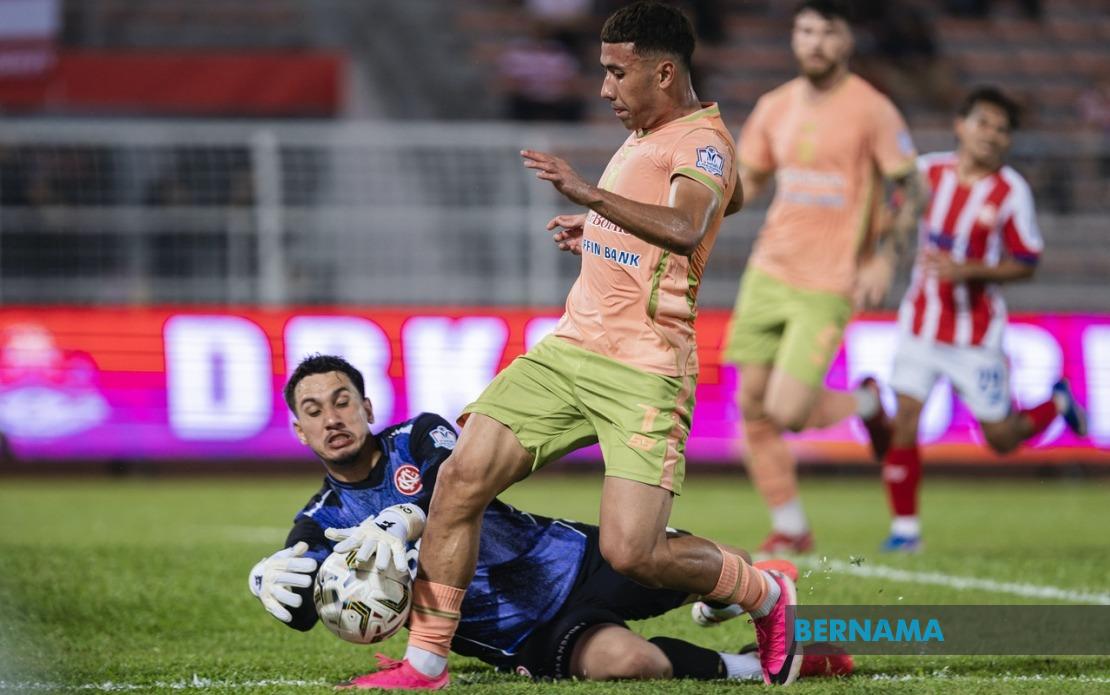
Kuala Lumpur City FC endured a catastrophic start to their 2026-2027 Super League campaign, collapsing to a humiliating 0-6 defeat against Kuching City FC at the Kuala Lumpur Football Stadium in Cheras. The scale of the humiliation, however, paled beside the extraordinary circumstances that precipitated it: the club took the field with only 10 players and a single substitute, leaving head coach Datuk Dollah Salleh confronting what he described as an utterly unprecedented situation in his two decades-plus of professional football management.
The perfect storm that engulfed KL City stemmed from multiple convergent crises. Thirteen players and two team officials were incapacitated by influenza at a critical juncture in the season, while administrative failures in player registration compounded the difficulties. The combination rendered the club unable to field a competitive squad, forcing management to make the difficult decision to proceed with a skeleton team rather than face potential league penalties for non-appearance.
Dollah's public admission of unprecedented distress underscored the severity of the predicament. The veteran tactician, who guided Malaysia's national team during his coaching tenure, revealed that the situation had consumed his thoughts entirely during the days preceding the match. The psychological toll was evident to those around him, yet he recognised that abandoning the fixture would carry consequences far exceeding a single humiliating scoreline. Malaysian Football League regulations impose substantial sanctions on clubs that fail to field teams, threatening KL City's competitive standing in the league table even as they struggled through their opening fixture.
What transpired on the pitch reflected the exhaustion and desperation of a team operating under impossible constraints. During the opening 45 minutes, with both sides effectively playing with ten men after Kuching City's James Okwuosa received a red card in the 44th minute, KL City's depleted squad fought with characteristic commitment. Yet the exertion required to maintain competitive shape with fewer than the minimum number of outfield players proved catastrophically depleting. By the second half, as fatigue compounded the numerical disadvantage, KL City's defensive structure collapsed entirely, culminating in the comprehensive scoreline.
Dollah's strategic response revealed the pragmatism required when conventional tactical approaches become untenable. With virtually no bench options available, the coach essentially abandoned any pretence of attacking intent, instead instructing his players to prioritise damage limitation through defensive solidity. The instruction reflected not tactical cowardice but rather the mathematics of a desperate situation: with no fresh legs to introduce and players already approaching exhaustion, preserving the team's physical and psychological integrity became paramount.
The coach's evident sympathy for his players' predicament emerged clearly during his post-match remarks. Rather than directing criticism toward individuals who had already exceeded reasonable demands by taking the field under such duress, Dollah focused on encouragement and acknowledgment of their maximum effort. This measured response stood in sharp contrast to what might have been reflexive recrimination following such a lopsided defeat, instead recognising that his players' commitment had been absolute despite the systemic failures surrounding them.
KL City's broader institutional difficulties extended well beyond this single match. The club had already been forced to abandon their opening fixture against Negeri Sembilan FC the previous Saturday when their opponents failed to field a team, also citing player registration complications. Rather than awarding KL City the walkover, the Malaysian Football League awarded Negeri Sembilan a 3-0 victory and three points while simultaneously fining KL City RM50,000, a decision that compounded the club's difficulties at the outset of what had already been an administrative nightmare.
However, a critical development provided a glimmer of hope heading forward. Dollah announced that FIFA had lifted the transfer ban previously imposed on KL City, granting the club clearance to register new players for upcoming fixtures. The lifting of this restriction, confirmed by club president, potentially removes one significant impediment to squad reconstruction. This redemptive development provided the coach with tangible grounds for optimism, allowing him to declare emphatically that the registration excuse would no longer be available for forthcoming matches.
The influenza outbreak's role in KL City's misfortune highlights broader vulnerabilities in Malaysian football's organisational infrastructure. While seasonal illness is an occupational hazard for any professional team, the apparent lack of contingency planning or medical protocols suggests gaps in how domestic clubs prepare for such contingencies. The near-simultaneous incapacitation of 13 players and two officials points to inadequate infection control measures or perhaps simply the random misfortune of timing.
Looking ahead to Saturday's encounter against DPMM FC, Dollah faces the psychological challenge of steadying his players after their traumatic opening experience. The availability of new registrations offers concrete hope for squad reinforcement, yet the damage to confidence and morale from the 0-6 demolition cannot be instantly repaired through administrative clearances alone. The coach's determination to move beyond excuses reflects his competitive instincts and refusal to accept that external circumstances should define his team's season trajectory.
The KL City crisis illuminates enduring structural weaknesses within Malaysian professional football, from administrative efficiency in player registrations to health and safety protocols during outbreak situations. For Dollah, who entered this season presumably expecting to manage conventional challenges, the opening fortnight has tested not merely his tactical acumen but his capacity to maintain organisational and psychological coherence when circumstances descend into chaos. His measured public demeanor through genuine turmoil has demonstrated why he earned the trust to coach the national team, yet it remains to be seen whether administrative clarity and improved squad health can resurrect KL City's season before early losses compound into a broader competitive crisis.

