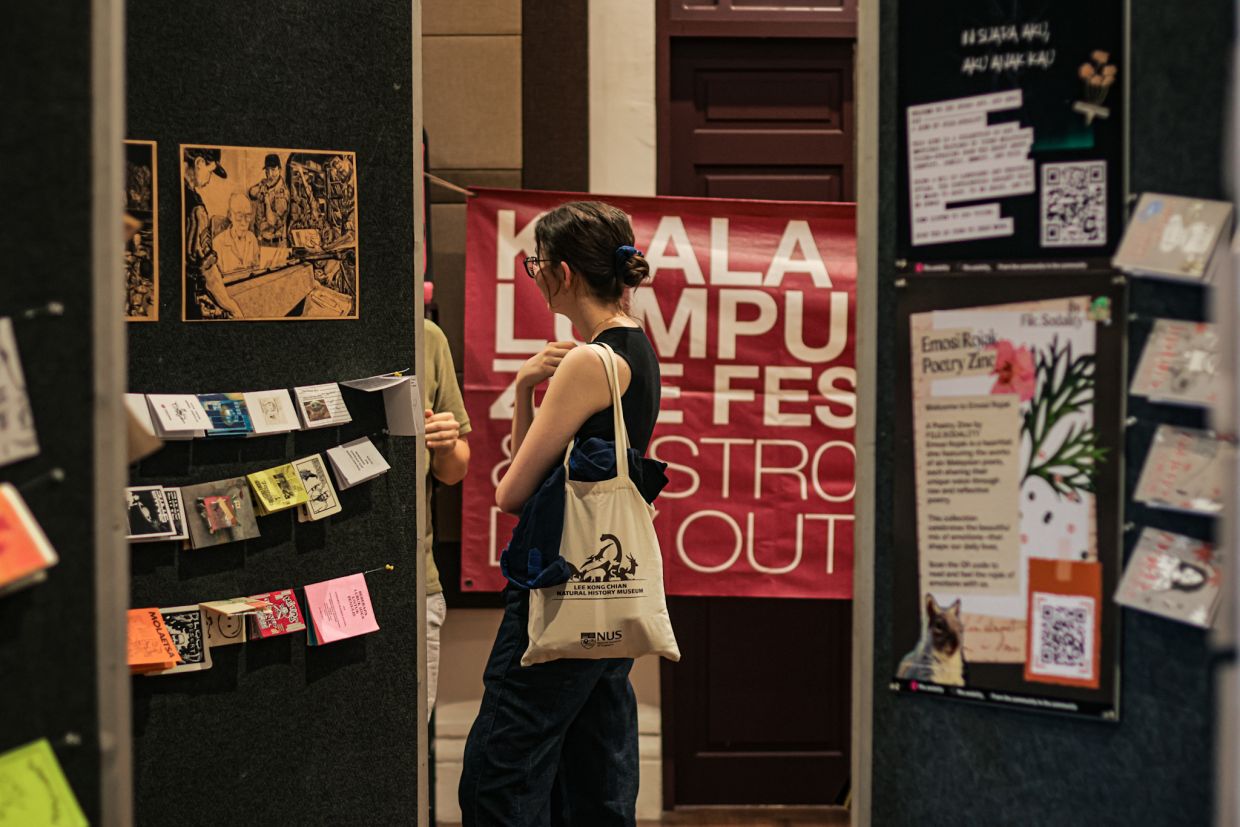
The KL Zine Etc festival is back, marking another milestone for one of the capital's most distinctive cultural gatherings dedicated to self-published work and independent creativity. Taking place across three days at a heritage trade hall's first floor, the second iteration of KLZE has nearly doubled its exhibitor count from the inaugural event, now hosting more than 50 vendors alongside a thematic exhibition centred on peace and conflict. The festival's growth reflects the expanding appetite among Malaysians for creative spaces that exist deliberately outside conventional publishing and retail structures.
The curatorial direction this year reveals a thoughtful engagement with global anxieties. Organisers developed an anti-war exhibition in response to ongoing international conflicts, though they deliberately broadened the concept to encompass internal struggles—the personal wars waged through mental health challenges, identity questions, and ideological tensions. This layered approach moves beyond simply making political statements; it invites visitors to consider how conflict operates at multiple scales simultaneously, from geopolitical tensions down to the psychological landscapes individuals navigate daily. By framing the festival as a space for building "ceasefire zones," the organisers have created language that speaks to both activism and interpersonal healing.
The range of creative work on display demonstrates the thematic and aesthetic diversity within Malaysia's independent publishing ecosystem. Participating zinesters and publishers explore contemporary fanzines rooted in punk aesthetics, folk narratives that preserve oral traditions, indigenous activism and representation, comics and graphic storytelling, environmental documentation, feminist discourse, and role-playing game materials. This breadth suggests that the zine tradition in Malaysia—far from being nostalgic or niche—functions as a vital medium for marginalised voices, experimental ideas, and stories that mainstream publishers consider commercially risky.
The festival's geographic reach within Malaysia underscores how independent publishing networks operate across the country's regions. Vendors travelling from Kelantan, Melaka, Johor, Sarawak, and Sabah—Kedai Hitam Putih, Pipit Press, Shuren Press, Olivia JD, and Borneo Komrad among them—indicate that zine culture is not concentrated in the capital but distributed through a decentralised network of creators and small presses. This structure has particular significance for a geographically dispersed nation where centralised distribution systems often overlook regional voices. By gathering these regional publishers in one space, KLZE facilitates direct relationships between creators and readers that would otherwise require significant logistical effort.
Crucially, KLZE has emerged as a destination for independent publishers and zinemakers across Southeast Asia and beyond. The festival welcomes participants from Singapore, Indonesia, the Philippines, Hong Kong, China, Myanmar, and Taiwan, positioning Kuala Lumpur as a regional nexus for alternative publishing cultures. This international dimension reflects how zine communities operate as borderless networks connected by shared aesthetic values and anti-establishment ethos rather than by formal institutions. For Malaysian audiences, this means exposure to different approaches to independent publishing and visual culture from neighbouring and distant regions.
The practical programming adds substantial value beyond vendor exhibitions. Over its three-day run, KLZE offers zine-focused workshops that teach technical and conceptual skills, film screenings that contextualise zine aesthetics within broader media landscapes, and music sessions that reinforce the festival's DIY, community-focused character. These activities transform KLZE from a market into a knowledge-sharing and skill-building platform, making it accessible to curious newcomers rather than only to seasoned zinesters. The hands-on workshops particularly matter in a region where formal training in independent publishing and DIY print culture remains limited.
The multilingual nature of the works on display—presented in Bahasa Malaysia, English, Chinese, and other languages—reflects both Malaysia's linguistic diversity and the internationalism of contemporary zine culture. This linguistic plurality matters practically for accessibility and symbolically as a statement about whose stories and voices merit publication and circulation. It signals that zine culture here explicitly resists monolinguality and the hierarchies it implies.
The festival's pricing strategy also warrants attention. At RM10 entry with a RM5 voucher redeemable toward zine purchases, KLZE maintains accessibility while financially supporting vendors. This approach acknowledges that independent publishers operate on slim margins and that readers interested in zines often operate within tight budgets themselves. The entry fee is low enough to encourage casual visitors while the voucher ensures that newcomers can leave with a physical purchase, potentially converting browsing interest into genuine collecting behaviour.
For Malaysian readers and creators, KLZE represents more than a shopping event or cultural curiosity. It demonstrates that alternative publishing infrastructure exists and is growing, that audiences exist for experimental and politically engaged work, and that regional networks of creative practitioners are consolidating. The festival's explicitly peace-oriented messaging this year also stakes a cultural claim: that independent publishing spaces can function as laboratories for imagining different ways of being together, ways marked by listening, exchange, and mutual recognition rather than by conflict. In a region where state control over publishing remains a concern and where marginalised communities struggle for representational space, festivals like KLZE quietly assert the necessity and viability of self-determined creative expression.

