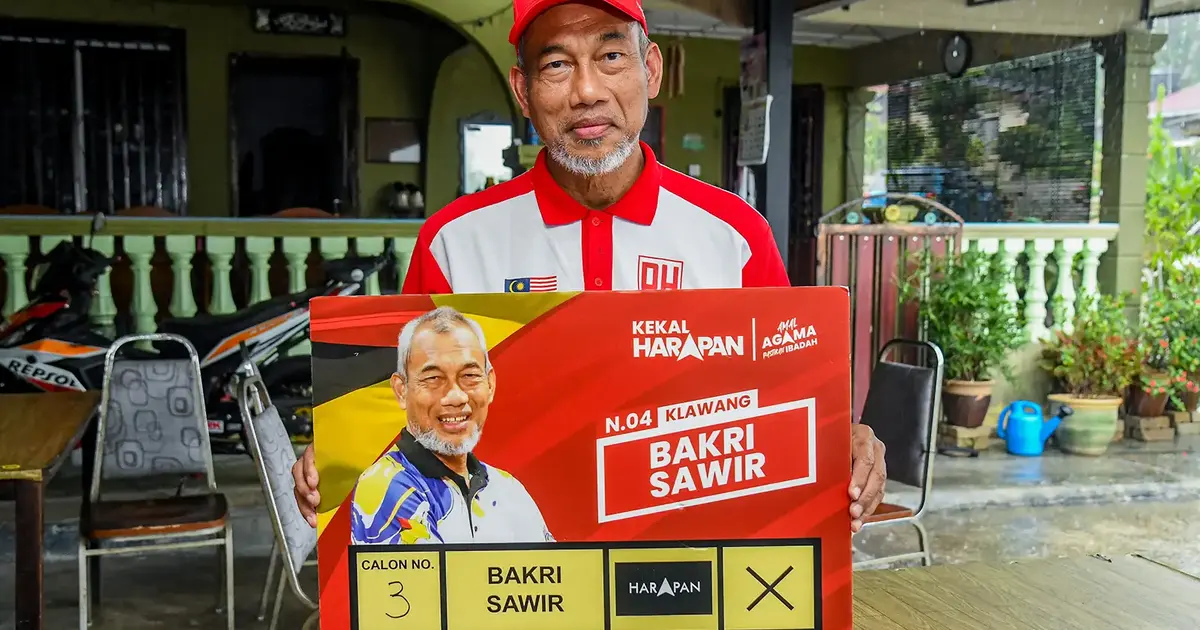
Two-term Klawang assemblyman Bakri Sawir has declared his confidence in securing another mandate in the state constituency, expressing little concern over the electoral challenges posed by the Barisan Nasional and Perikatan Nasional alliance. The Pakatan Harapan representative's optimism stems from his previous experience in 2023, when he believes Umno, a key component of BN, abandoned him during the state elections despite prior understandings.
Sawir's political narrative centres on what he characterises as a betrayal by his erstwhile allies, an experience that paradoxically strengthened his resolve and proved he could secure voter support through his own merits rather than relying on the machinery of larger coalition partners. His assertion reflects a broader dynamic within Malaysian state politics, where independent performance and local ground support often transcend formal party alliances. The Klawang assemblyman contends that his track record of two consecutive terms demonstrates his ability to connect with constituents on issues that matter to them, regardless of the political realignment at higher levels.
The timing of Sawir's statement comes amid intensifying political manoeuvres in Selangor, where the BN-PN collaboration has recalibrated the competitive landscape. Rather than viewing this consolidation as a threat, the PH candidate has reframed it as validation of his capacity to operate independently. His 2023 experience, which he views as having exposed the conditional nature of cross-party cooperation, has evidently informed his electoral calculus and messaging for the forthcoming contest.
Sawir's confidence carries implications for how Pakatan Harapan approaches its campaign in constituencies where it must defend existing representation. His willingness to publicly downplay the significance of the BN-PN pact signals to voters that the incumbent remains a viable choice despite being outnumbered by larger coalitions. This positioning is particularly relevant in Selangor, where PH has maintained substantial representation but faces mounting pressure from BN's traditional machinery and PN's recent electoral gains across the peninsula.
The Klawang assemblyman's stance also underscores a crucial aspect of Malaysian electoral politics: that local constituencies often operate according to their own internal logic, where personality, service record, and constituent engagement can outweigh national coalition dynamics. Voters in smaller assemblyman seats frequently prioritise representatives who demonstrate visible commitment to local grievances, infrastructure development, and community services. Sawir's repeated electoral success in Klawang suggests he has cultivated precisely this brand of constituency presence.
However, the political terrain has shifted considerably since 2023. The BN-PN pact represents a formal alignment of resources, campaign machinery, and electoral coordination that differs from the fragmented opposition Sawir may have faced previously. This alliance brings together Umno's extensive organisational network, Perikatan's growing voter base in certain demographics, and combined financial resources. Whether Sawir's previous success translates to immunity from this reorganised opposition remains a genuine test of his local political capital.
Sawir's narrative of overcoming adversity also carries electoral value. Voters often respond positively to candidates who demonstrate resilience and the ability to succeed despite setbacks. His framing of the 2023 situation as a betrayal that he overcame transforms a potentially negative episode into evidence of his determination and capacity to serve constituents faithfully. This emotional dimension of his campaign messaging should not be underestimated in Malaysian electoral contexts, where personal attributes and perceived integrity significantly influence voter decisions.
The broader context for Klawang's political competition involves Selangor's status as Malaysia's most developed and densely populated state, where electoral contests carry national significance. Selangor's voting patterns often presage national trends, and individual constituency outcomes accumulate into statements about governance confidence and policy direction at state level. For Sawir, retaining Klawang would strengthen PH's narrative about voter endorsement, while a loss would suggest the BN-PN alliance has successfully penetrated what were previously secure opposition constituencies.
Sawir's public confidence, whether rooted in genuine internal polling and grassroots feedback or partly aspirational in nature, serves a purpose beyond mere rhetoric. It signals to his own supporters that defeat is not inevitable, encouraging volunteer mobilisation and voter turnout. In Malaysian electoral contests, such messaging can have tangible effects, as it combats the demoralising narrative that smaller coalitions face against better-resourced opponents. Conversely, his dismissal of the BN-PN threat risks appearing tone-deaf if the alliance demonstrates substantial organisational capacity in Klawang during the campaign period.
Looking ahead, Sawir's repeated invocation of his 2023 success frames the upcoming contest as an opportunity to definitively prove that his political foundation rests on constituent trust rather than party machinery. Should he secure re-election despite facing a united BN-PN challenge, it would constitute powerful validation of his thesis. Conversely, if the combined opposition dislodges him, observers will interpret it as evidence that even seasoned local politicians cannot withstand the gravitational pull of coordinated national coalitions.
For Malaysian politics more broadly, Sawir's confidence encapsulates the enduring tension between national-level coalition politics and grassroots constituency dynamics. His experience suggests that while party alliances matter significantly, they remain secondary to the local performance and voter relationships that individual representatives build over consecutive terms.

