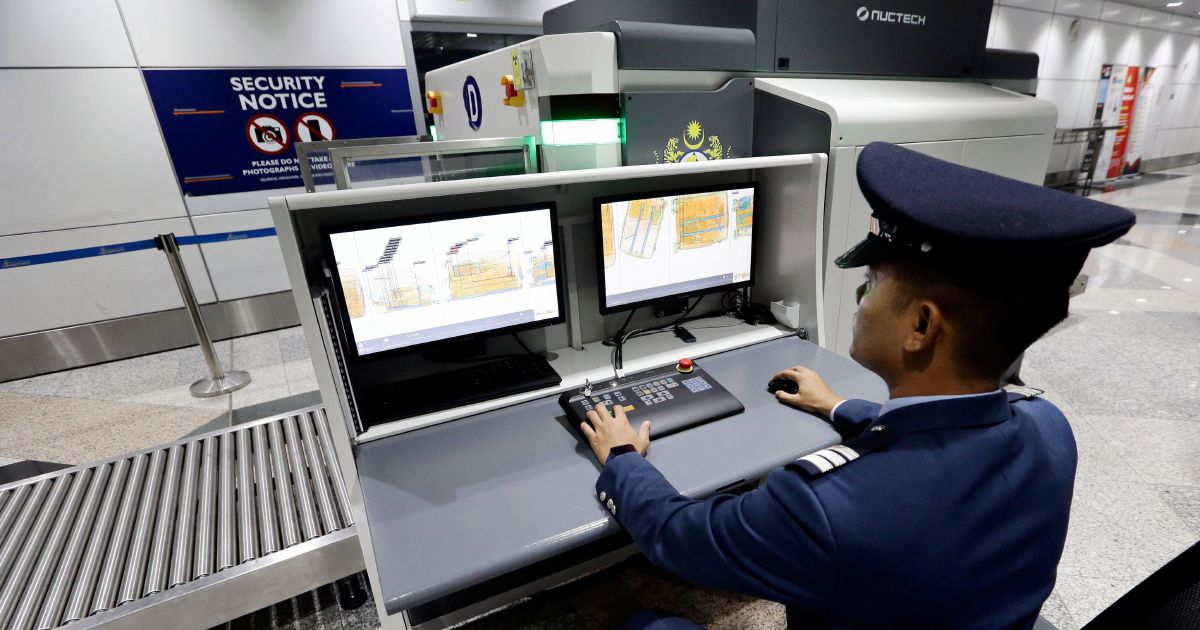
Home Minister Datuk Seri Saifuddin Nasution Ismail has clarified that detection failures at Kuala Lumpur International Airport stem not from technological limitations but from operational procedures that have weighted security priorities toward weapon identification at the expense of narcotics interdiction. Speaking in Putrajaya, Saifuddin acknowledged that the airport's scanning infrastructure possesses sufficient capability to identify contraband substances including drugs, suggesting that the vulnerability lies within the standard operating procedures governing how security personnel deploy these systems rather than in the machinery itself.
This distinction carries significant implications for understanding border security efficacy across Malaysia's premier international gateway. Rather than triggering a costly equipment overhaul, the assessment points toward procedural recalibration—a potentially more straightforward remedial pathway. The revelation indicates that screening operations have structurally prioritised certain threat categories over others, creating enforcement asymmetries where some contraband types receive disproportionate attention relative to others despite comparable public health and security ramifications.
The statement emerged amid broader scrutiny of KLIA's border security performance, particularly concerning the passage of controlled substances through the airport's departure and transit zones. Drug smuggling remains a persistent challenge for Malaysian enforcement authorities, with international trafficking networks regularly attempting to exploit vulnerabilities within airport screening systems. The reliance on Southeast Asia as a transshipment hub for narcotics destined for regional and global markets underscores the operational significance of this disclosure.
Saifuddin's characterisation of the problem as procedural rather than technological reflects a distinction that carries operational and budgetary consequences. Equipment acquisition requires substantial capital allocation and procurement timelines, whereas procedure modification can be implemented through directive and staff retraining. This assessment suggests that addressing detection gaps may not necessitate the infrastructure investment that equipment failure might otherwise mandate, though it does require systematic examination of how scanning devices are currently integrated into screening workflows.
The prioritisation toward weapons detection at KLIA reflects post-2001 global security paradigm shifts that elevated aviation terrorism prevention to paramount concern levels. However, the sustained passage of narcotics through international airports indicates that this threat hierarchy may warrant recalibration in contemporary contexts. Southeast Asian nations have grappled with intensifying methamphetamine, heroin, and synthetic drug flows, with airport interdiction representing a critical control point within broader supply chain disruption strategies.
Procedural reorientation toward enhanced narcotics screening would likely necessitate modified operator training, revised detection thresholds within scanning protocols, and potentially increased personnel allocation to secondary screening phases. The existing technical architecture appears capable of supporting such adjustments without requiring replacement, though implementation would demand resource commitment and sustained operational discipline. The adequacy of equipment itself removes a significant barrier to remediation, positioning the pathway toward improved detection as administratively feasible rather than capital-constrained.
For Malaysia's international aviation sector, this acknowledgment carries implications extending beyond KLIA's operations. Regional airports including those in Penang, Johor Bahru, and Kota Kinabalu function as secondary entry points within international smuggling networks. A systematic review of screening standard operating procedures at KLIA would likely generate template solutions applicable across Malaysia's airport system, offering potential efficiency gains and detection improvements across the broader network.
The Home Minister's statement implicitly acknowledges that institutional factors—procedures, prioritisation, and resource allocation—rather than technological deficiency have constrained narcotics interdiction effectiveness. This framing may facilitate internal security sector discussions around procedural enhancement without the institutional defensiveness that direct equipment criticism might otherwise provoke. Establishing consensus around procedure-centric improvement pathways could facilitate faster implementation than the bureaucratic contestation often surrounding equipment adequacy disputes.
Regional security cooperation through ASEAN mechanisms and bilateral intelligence sharing relies substantially on effective border interdiction. Malaysian enforcement authorities operate within frameworks of international narcotics control obligations and regional counternarcotics partnerships. Enhanced detection capabilities at KLIA would strengthen Malaysia's contribution to these collaborative structures while reducing domestic trafficking vulnerability. The procedural focus suggested by Saifuddin's comments positions narcotics screening enhancement as achievable within existing institutional frameworks and resource constraints.
The disclosure that scanning technology functions adequately suggests that responsibility for detection gaps devolves onto operational management and standard operating procedure design. This distribution of accountability may facilitate targeted remediation through personnel retraining, procedural revision, and supervisory emphasis on narcotics detection within screening workflows. Effective implementation would require sustained institutional commitment rather than technological transition, positioning the enhancement pathway as operationally achievable within reasonable implementation timelines.
Moving forward, the distinction between equipment capability and procedural deployment becomes critical for assessing whether KLIA's screening systems can deliver improved narcotics interdiction rates. The Home Minister's characterisation suggests that capacity exists within the current infrastructure; realising that capacity depends on systematic procedure modification and operational discipline rather than capital replacement. This assessment offers a constructive foundation for border security improvement, provided that institutional priorities and resource allocation align with revised operational protocols emphasising comprehensive contraband detection across all threat categories.

