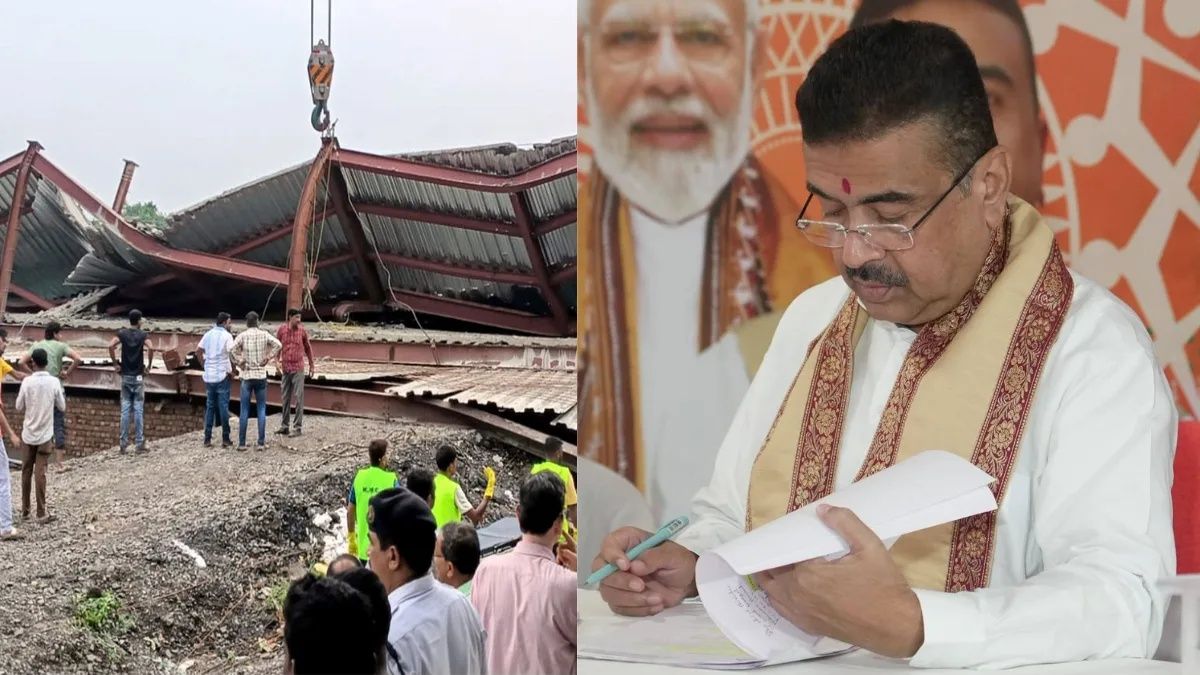
The death toll from the catastrophic collapse of a warehouse structure in Taratala, Kolkata, has climbed to eleven as rescue teams pressed their efforts through the second day of recovery operations on Thursday, June 25. The latest victim was recovered at approximately 1.15pm and transported to the Trauma Care Centre at SSKM Hospital, though authorities have yet to confirm the person's identity. The mounting casualty figures underscore the scale of the structural failure and fuel concerns that additional workers remain trapped beneath the rubble, fueling urgency in the ongoing search-and-rescue mission.
The response to the disaster has demonstrated coordinated action between federal and state authorities, with personnel from the Indian Army, the National Disaster Response Force, and allied agencies maintaining a continuous presence at the debris site. This multi-agency approach reflects the gravity with which New Delhi and the West Bengal government are treating the incident, though the challenge of extracting survivors from unstable debris remains formidable. The coordination between different command structures underscores how catastrophic infrastructure failures transcend routine administrative boundaries and demand integrated crisis response.
West Bengal Chief Minister Suvendu Adhikari used a legislative assembly address to launch a pointed political critique, directing blame at the former Kolkata Municipal Corporation leadership under the Trinamool Congress administration. Adhikari alleged that serious irregularities plagued the approval process for the Taratala warehouse structure, with documentation suggesting the construction plan received sanction despite fundamental design flaws. By presenting documents bearing signatures of former Mayor Firhad Hakim, the Chief Minister sought to establish a documentary trail of official malfeasance, suggesting that approvals proceeded despite structural inadequacies that should have triggered rejection.
The allegations extend beyond mere administrative oversight to accusations of systemic corruption within the municipal approval machinery. Adhikari contended that former officials and engineers responsible for sanctioning the plan must answer serious questions about their conduct, implying that professional negligence and possibly financial incentives motivated their decisions. Such assertions, if substantiated, would represent a failure not merely of individual judgment but of institutional safeguards designed to protect public safety. The political dimension of these accusations—directed at a rival party's previous governance—nonetheless carries implications for how building regulation functions across Indian municipalities more broadly.
Investigative efforts have already resulted in five arrests spanning multiple facets of the construction ecosystem. Those detained include the construction company's site supervisor, the fabricator responsible for iron structural components, the individual holding the land lease, a labour supplier connected to construction contracting, and a broker implicated in securing the KMC building approval. However, Azgar, identified as the principal accused, remains at large, suggesting that investigation into the incident's origins remains incomplete and potentially complicated by the absence of a key figure. The breadth of arrests indicates that authorities view culpability as distributed across the supply chain rather than concentrated in a single actor.
Acknowledging the rescue efforts of the armed forces and disaster response personnel, Adhikari announced immediate administrative interventions aimed at preventing similar incidents. Effective immediately, all construction activity except for work classified as essential services has been suspended for four weeks across the Kolkata Municipal Corporation area and eight additional municipal jurisdictions including Rajarhat-New Town, Maheshtala, Budge Budge, Pujali, Bishnupur, Sonarpur, and Baruipur. This blanket suspension, while potentially disruptive to the construction industry and development schedules, reflects a precautionary approach to building safety pending comprehensive reassessment of existing approvals.
The centrepiece of the government's remedial response is a high-level committee chaired by Additional Chief Secretary Rajesh Pandey, tasked with conducting systematic audits of all approved building plans within the affected zones. The committee's composition reveals the scale of scrutiny being applied, drawing on expertise from IIT Kharagpur, Rail India Technical and Economic Service, Indian Railway Construction Limited, the Fire Services Department, the Public Works Department, and the KMC itself. This multidisciplinary approach seeks to apply engineering rigour, railway construction standards, and fire safety protocols to the review process, effectively introducing external technical benchmarks to municipal approval systems.
Adhikari's public declarations regarding potential penalties signal a hardening stance toward those found culpable in the collapse. Beyond conventional criminal prosecution and imprisonment, the Chief Minister indicated that asset confiscation may be pursued to generate compensation for victims and their families. Such extraordinary measures, while potentially contentious from civil liberties perspectives, reflect political determination to impose consequences severe enough to deter future corner-cutting and regulatory dereliction. The implicit message to contractors, engineers, and officials is that safety violations carry costs far exceeding standard fines or brief detentions.
For Malaysia and the wider Southeast Asian region, the Kolkata warehouse collapse offers cautionary lessons regarding building regulation oversight. Many rapidly urbanizing cities across the region exhibit similar pressures for accelerated development, potential gaps in enforcement capacity, and occasional corruption within municipal approval systems. The incident illustrates how structural failures can cascade from initial approval irregularities through construction supervision to catastrophic public consequences. It also demonstrates the political accountability mechanisms that democracies can mobilize when disasters occur, contrasting with contexts where such transparency and consequence-assignment remain limited.
The suspension of construction activity and comprehensive audit processes may temporarily slow Kolkata's development momentum, but officials argue this investment in regulatory rigor serves long-term urban resilience. Engineers and developers across India will face elevated scrutiny of their submissions, and municipal officials approving plans know that safety lapses now invite career-ending consequences. Whether these interventions prove sufficient to systematically prevent future collapses depends substantially on the implementation rigour of the Pandey committee and the sustained political will to maintain elevated standards beyond the immediate crisis period. The challenge facing West Bengal—and by extension, other rapidly developing regions—is institutionalizing these safety improvements into permanent governance practice rather than allowing them to lapse as public attention shifts elsewhere.

