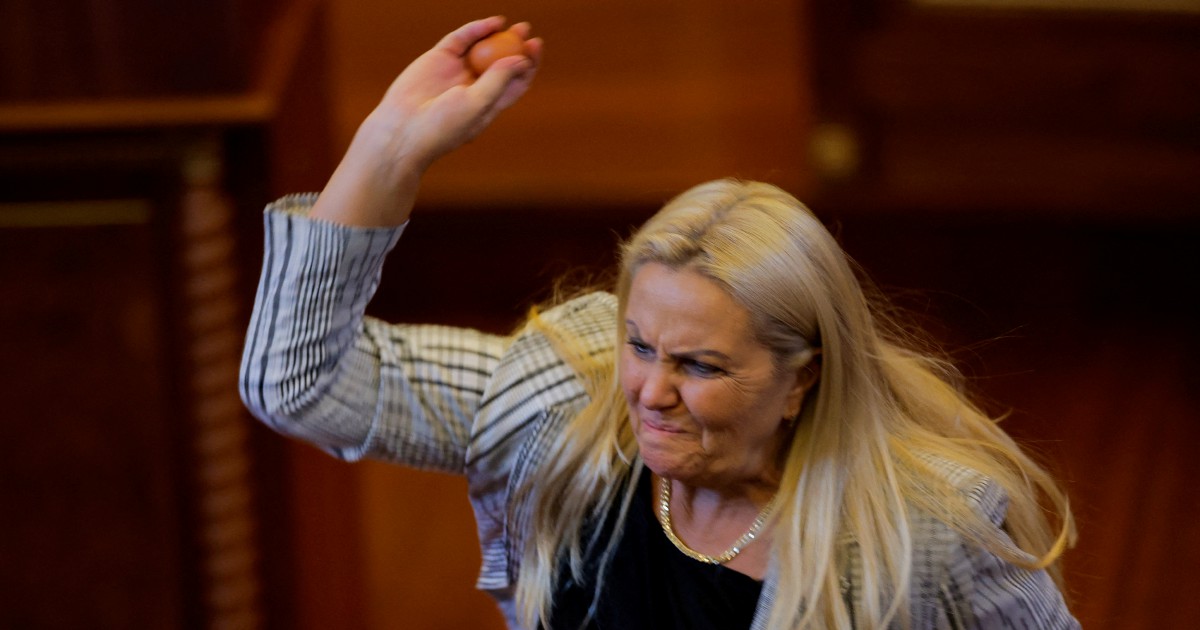
Proceedings at Kosovo's parliament ground to a halt on Saturday after an opposition lawmaker launched eggs at caretaker Prime Minister Albin Kurti, marking a dramatic escalation of the fractious political standoff consuming the Balkan nation. The incident forced lawmakers to abandon the chamber and suspend sessions, underscoring the severity of institutional tensions that have defined Kosovo's governance landscape in recent months. The physical confrontation reflects deeper divisions within the government and opposition that now threaten to push the country toward another round of electoral contests.
The egg-throwing incident represents more than mere theatrics or a momentary lapse in parliamentary decorum. It exemplifies the corrosive breakdown of political civility and procedural norms that has characterised Kosovo's complex institutional environment. When lawmakers resort to such direct physical acts against government leaders, it signals a breakdown in the mechanisms designed to channel political disagreement through formal channels. For observers of Balkan politics, such scenes evoke memories of other fractured parliaments where institutional collapse preceded deeper political instability.
Albin Kurti remains at the centre of Kosovo's political tempest, serving in a caretaker capacity while the nation grapples with questions of governance legitimacy and constitutional authority. The designation of caretaker status itself reveals underlying disagreements about who holds rightful claim to executive power and under what circumstances. Kurti's government operates in a state of provisional authority, a precarious position that undermines the ability to implement coherent policy or command broad legislative support. This fundamental uncertainty about governmental legitimacy shapes how opposition parties respond to executive actions.
The threatened prospect of snap elections looms over Kosovo's political landscape, creating incentives for confrontational rather than collaborative behaviour among lawmakers. When politicians believe an early dissolution of parliament likely, they shift attention toward positioning for renewed electoral campaigns rather than engaging in constructive legislative work. This dynamic transforms parliament from a forum for deliberation into a stage for performative opposition, where dramatic gestures like the Saturday egg-throwing serve instrumental purposes in mobilising core supporters and generating media attention.
Kosovo's political instability carries immediate consequences for the nation's ability to address pressing governance challenges. The European Union and other international stakeholders have repeatedly emphasised that Kosovo requires functional, legitimate institutions to progress toward full regional integration and continued democratisation. Chronic institutional dysfunction weakens the state's capacity to implement reforms in areas ranging from rule of law to economic development, creating gaps that undermine public confidence in democratic institutions themselves.
The broader context of Balkans politics amplifies concerns about Kosovo's trajectory. The region has experienced cycles of political crisis that sometimes escalate into security threats. While contemporary Kosovo is far removed from the armed conflicts of the 1990s, the underlying tensions between communities and the fragility of post-conflict institutions mean that governance breakdowns carry risks beyond mere political inconvenience. International observers and neighbouring states watch developments carefully, aware that Balkan crises can generate ripple effects across borders.
For Malaysia and Southeast Asian observers, Kosovo's institutional struggles offer instructive lessons about the fragility of post-conflict democracy and the importance of building robust parliamentary traditions early in democratic transitions. Newly independent or post-conflict states face particular challenges in establishing shared understandings about political procedures and the legitimate scope of parliamentary opposition. Without such foundations, parliaments can become venues for winner-take-all contests rather than forums for negotiated governance.
The Kurti government's caretaker status also reflects unresolved questions about election results and constitutional authority that third-party mediation has failed to resolve conclusively. When electoral contests produce disputed outcomes or complex parliamentary mathematics, the resulting uncertainty poisons political relations and prevents formation of stable coalitions. Kosovo's experience suggests that without clear institutional frameworks and respected mechanisms for resolving such disputes, political actors will continue seeking advantage through confrontation rather than compromise.
Snap elections represent an expensive and destabilising outcome that serves few interests beyond those seeking to reset political calculations. The cost of repeated electoral cycles drains state resources needed for public services and development, while the uncertainty inherent in electoral periods discourages investment and reform initiatives. Kosovo has experienced multiple electoral cycles in recent years, raising questions about whether additional elections might resolve underlying disputes or merely defer confrontation.
The international dimension to Kosovo's political crisis cannot be overlooked. The United States and European Union have invested considerably in Kosovo's stabilisation and democratisation, providing security guarantees and technical assistance. Deteriorating parliamentary conduct and institutional breakdown undermine the legitimacy of international engagement and complicate the calculation of whether further external investment in Kosovo's institutions remains justified. International actors must balance respect for Kosovo's sovereignty with concerns about whether Kosovo's political class is demonstrating capacity for self-governance.
Parliamentary suspensions and physical confrontations between legislators represent warning signs that Kosovo's institutions face genuine stress. The incident on Saturday signals that political actors view legislative procedures as increasingly irrelevant to their core interests, a dangerous precedent for any democracy. Whether Kosovo's leaders can reverse this trajectory through negotiated settlement or procedural reforms remains an open question with significance extending far beyond Pristina.

