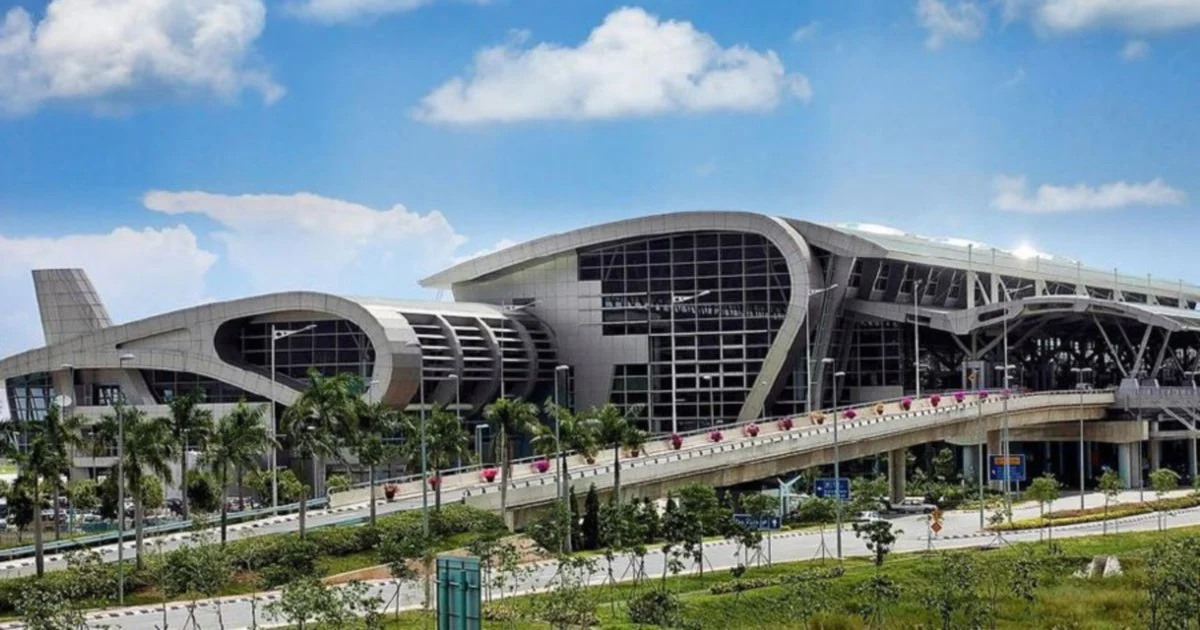
A nearly RM500 million expansion programme for Kota Kinabalu International Airport cannot proceed until critical land and site complications are resolved between federal authorities and the Sabah government, according to Deputy Transport Minister Datuk Hasbi Habibollah. The project, which represents a significant infrastructure investment for East Malaysia's busiest gateway, has become entangled in administrative and jurisdictional complexities that require coordinated resolution at both state and federal levels before construction can commence.
The stalling of KKIA's expansion highlights the intricate challenges surrounding major airport infrastructure development in Malaysia, particularly when such projects involve land administered by state governments. While the broad framework for the project exists and funding arrangements have been contemplated, the granular details of land acquisition, site boundary clarifications, and usage rights between the airport authority and state-level stakeholders remain unresolved. These preliminary hurdles, though administratively routine in nature, can significantly delay capital-intensive projects if not addressed methodically.
For Sabah's economic trajectory, timely resolution of these impediments carries substantial weight. Kota Kinabalu International Airport currently serves as the primary aviation hub for the state, handling connections for tourists, business travellers, and freight destined for the wider East Malaysian region. Expansion of terminal capacity, runway infrastructure, and ground support facilities would enhance the airport's ability to accommodate rising passenger volumes and larger aircraft, potentially unlocking new long-haul routes and commercial opportunities that presently bypass the state's aviation network.
The investment quantum of approximately RM500 million underscores the federal government's strategic commitment to strengthening air transport infrastructure beyond the Klang Valley corridor. Such regional airports serve dual purposes: they facilitate the movement of people and goods essential to local economic activity, while simultaneously projecting Malaysia's development agenda into secondary cities and states. For investors and businesses considering Sabah as an operational base, airport capacity constraints often rank among top concerns when evaluating logistics feasibility and connectivity.
Sabah's geographical position at Malaysia's eastern frontier makes aviation infrastructure particularly critical to its competitiveness. The state's tourism sector, which encompasses world-renowned destinations and natural attractions, depends substantially on accessible airport infrastructure to convert potential demand into actual visitor arrivals. Competing regional airports in Brunei and Indonesian Borneo have undertaken modernisation programmes in recent years, creating competitive pressure on Malaysian facilities to maintain their relative advantages. Without timely expansion, KKIA risks gradual marginalisation as airlines route traffic through upgraded competitors or consolidate operations elsewhere.
The administrative impasse surrounding land matters suggests that institutional coordination between federal transport authorities and state-level stakeholders requires strengthening. Land administration in Malaysia follows a largely state-based framework, meaning projects requiring airport expansion often necessitate active cooperation from state governments to facilitate site acquisitions, boundary adjustments, or usage modifications. When such cooperation encounters delays, downstream project schedules inevitably slip, affecting not only the airport operator but also airlines, cargo handlers, and commercial entities dependent on the facility's operational capacity.
The resolution process described by Deputy Minister Hasbi Habibollah will likely involve technical site assessments, land title verifications, and potentially negotiations regarding compensation arrangements or usage modifications. These procedural elements, while essential for legal clarity and administrative soundness, require sustained engagement across multiple government departments and state-level bodies. The complexity multiplies if expansion plans require acquiring privately held land parcels adjacent to the airport, introducing private landowner negotiations alongside government-to-government discussions.
For the aviation sector more broadly, KKIA's expansion carries implications extending beyond Sabah itself. Malaysia's airports are expected to collectively accommodate substantial growth in passenger traffic and cargo volumes over the coming decade, driven by regional economic expansion and tourism recovery from pandemic-related disruptions. Smaller regional airports like Kota Kinabalu play crucial roles in this distributed capacity strategy, preventing overconcentration at major hubs and enabling more efficient network utilisation across the country's geographic expanse. When such projects encounter delays, systemic capacity pressures mount at congested urban airports, compounding operational challenges and limiting the nation's ability to capture emerging aviation opportunities.
The timeline for resolving these outstanding issues remains undefined in Deputy Minister Hasbi Habibollah's statement, though his framing suggests active engagement is underway. Infrastructure projects of this scale typically involve 18 to 36 months of preparatory and approval processes even after land disputes are settled, meaning any extended delay in resolving current impediments would substantially push back the project's completion horizon. Given that airport infrastructure typically operates across multi-decade lifecycles, even seemingly modest scheduling delays can have compounding economic effects as demand outpaces available capacity for longer than originally projected.
Stakeholders monitoring this project will likely view the resolution of land and site issues as a barometer for the federal and Sabah governments' capacity to coordinate effectively on major infrastructure initiatives. The state has ambitious plans for economic diversification and regional development that increasingly hinge on adequate transport connectivity. Successfully untangling the KKIA expansion's preliminary complications would signal institutional readiness to tackle more complex collaborative projects and reinforce investor confidence in Sabah's governance framework.
Beyond the immediate aviation context, this situation underscores the importance of pre-project clarity regarding land status, site boundaries, and usage rights before major infrastructure investments advance to design and construction phases. Lessons from KKIA's current impasse may inform how future regional airport, rail, or port expansion projects are structured and sequenced, potentially streamlining the pathway from approval to ground-breaking. For East Malaysia's broader development agenda, clearing these obstacles represents an essential prerequisite for unlocking the economic potential that improved aviation infrastructure can catalyse across Sabah and neighbouring territories.

