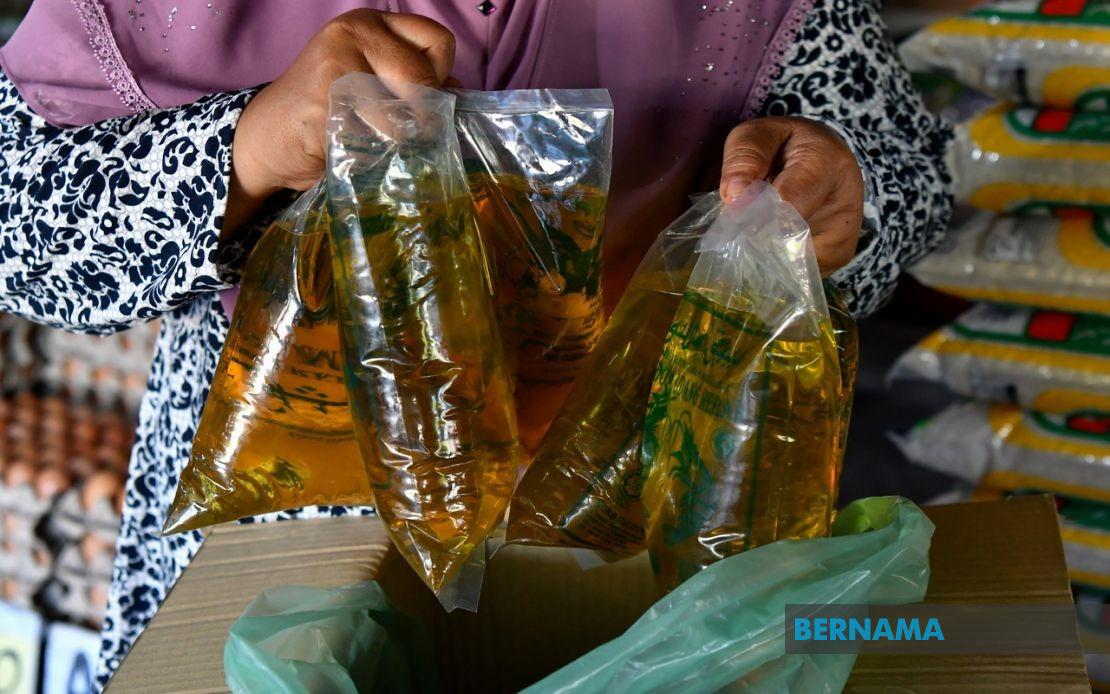
Malaysia's Domestic Trade and Cost of Living Ministry (KPDN) has committed to examining the Public Accounts Committee's recommendations on managing cooking oil price controls and subsidies, signalling a fresh phase in the government's effort to tighten the increasingly costly subsidy scheme. The move follows a PAC report tabled in parliament on July 16, which scrutinised how federal funds supporting cooking oil affordability have been managed and where vulnerabilities in the system allow money to disappear through unauthorised channels. The ministry's acceptance of these findings reflects growing acknowledgment that the current approach requires fundamental structural reform rather than incremental adjustments.
At the centre of the ministry's modernisation strategy sits the Cooking Oil Stabilisation Scheme System, or eCOSS, a digital infrastructure project launched in 2023 to replace paper-based record-keeping with real-time electronic tracking. According to KPDN Minister Datuk Armizan Mohd Ali, this two-pronged rollout combines gradual system integration across supply chains with expansion via a mobile application that commenced limited operation in May 2025. The transition from manual to digital administration addresses a persistent vulnerability: the ease with which records can be falsified or supplies redirected without detection. By creating an electronic audit trail, authorities aim to identify anomalies that slip through conventional oversight mechanisms.
A forthcoming enhancement will leverage identity verification technology, with the National Registration Department rolling out a new identity card format that enables QR code-based verification during purchases. This innovation carries significant implications for targeted subsidy distribution, as it would theoretically prevent non-citizens from claiming subsidised cooking oil—a known loophole that diverts resources intended for Malaysian households and businesses. The system would tighten eligibility checks at the point of sale, making it substantially harder for individuals to circumvent residency requirements through false documentation or informal market transactions. For consumers, the process would become faster and more transparent, though it requires widespread adoption among retailers.
Perhaps more contentious than technological fixes are the PAC's recommendations regarding refinery quotas and market concentration. The current Cooking Oil Stabilisation Scheme does not formally allocate refinery quotas; instead, repackers—the middlemen who prepare cooking oil for retail—select suppliers based on logistics costs, creditworthiness, pricing competitiveness, and supply reliability. However, this arrangement has reportedly benefited foreign-owned refineries disproportionately, raising questions about whether Malaysia's strategic agricultural commodity is being processed primarily outside the country. The PAC has urged KPDN to intervene by redistributing quotas toward locally-owned competitors, a recommendation that touches on both economic nationalism and subsidy efficiency.
KPDN's response indicates partial acceptance of this direction. The ministry is implementing phased measures to encourage repackers to source from Malaysian-owned refineries, including mandatory quota replacement conditions and business-matching platforms designed to connect local refiners with repacking companies that might otherwise overlook them. These interventions stop short of hard quotas but introduce regulatory pressure and informational advantage for local operators. The approach attempts to balance subsidy policy objectives with market principles, avoiding outright protectionism whilst creating pathways for domestically-owned enterprises to compete more effectively. Success depends on whether domestic refiners can match the cost and service standards that currently favour foreign competitors.
Complementary measures address leakage through different supply-chain segments. The ministry has prohibited the sale of one-kilogramme cooking oil packets to non-citizens, eliminating a retail-level vulnerability where small packages could be purchased by ineligible buyers and resold informally. Integration between eCOSS and the Sumbangan Asas Rahmah (SARA) system—Malaysia's unified cash assistance programme—is also underway, potentially creating a more comprehensive database linking subsidy eligibility across government services. Streamlined enforcement protocols targeting refinery operators, repackers, wholesalers, and retailers represent a tougher prosecutorial stance, signalling that violations will carry serious legal consequences.
The convergence of digital, regulatory, and enforcement initiatives reflects the scale of subsidy management challenges Malaysia faces. Cooking oil subsidies consume substantial public resources, particularly when global commodity prices fluctuate upward, making the subsidy bill unsustainable without efficiency improvements. Leakages compound the problem, redirecting funds to beneficiaries outside policy intent. The National Audit Department's July 2025 audit report and the PAC's subsequent analysis identified systemic weaknesses that pointed toward technology deficits, governance gaps, and market structure imbalances. KPDN's review signals acknowledgment that incremental fixes have proven insufficient.
For Malaysian consumers and businesses reliant on affordable cooking oil, these reforms carry mixed implications. Improved targeting and reduced leakages could theoretically stabilise subsidies long-term, preventing abrupt price increases if the scheme's financial burden becomes unsustainable. However, enhanced identity verification and purchase restrictions might increase friction at retail points, potentially inconveniencing bulk buyers or businesses procuring for institutional use. The shift toward local refineries could eventually improve domestic value-added processing, though transition costs might temporarily pressure suppliers unfamiliar with the new quota and matching mechanisms.
Regionally, Malaysia's approach to cooking oil subsidy management attracts attention from neighbouring countries facing similar pressures. Indonesia, Thailand, and the Philippines all struggle with commodity subsidy schemes that drain budgets whilst failing to reach intended beneficiaries. Malaysia's experience with digital systems and quota restructuring provides potential lessons, though each nation's agricultural structure and market dynamics differ significantly. The eCOSS model, if successfully scaled, could inform broader subsidy reform discussions across Southeast Asia.
The timeline for full eCOSS implementation remains unspecified, though the May 2025 mobile application pilot suggests that expanded rollout could commence within months or across 2026. The ministry has indicated its commitment to strict enforcement against operators violating scheme regulations, suggesting that the reform package will include enhanced monitoring and penalties. KPDN's willingness to study PAC recommendations and integrate audit findings indicates a reform-minded approach, though translating recommendations into sustainable operational change typically requires sustained investment, stakeholder cooperation, and public patience as teething problems emerge during implementation.
The broader context is Malaysia's fiscal trajectory and subsidy sustainability. As the nation manages its post-pandemic budget recovery, discretionary spending on commodity subsidies becomes increasingly difficult to justify if they fail to reach target populations efficiently. The PAC report and KPDN's response reflect a recognition that subsidy programmes require modernisation to remain economically viable and socially defensible. Whether the proposed reforms prove sufficient to stabilise the scheme—or whether more fundamental restructuring toward means-tested alternatives becomes necessary—depends partly on implementation fidelity and partly on how market prices and consumer demand evolve. For now, the ministry's announced measures represent the government's most comprehensive subsidy management overhaul in recent years, reflecting both technological possibility and fiscal necessity.

