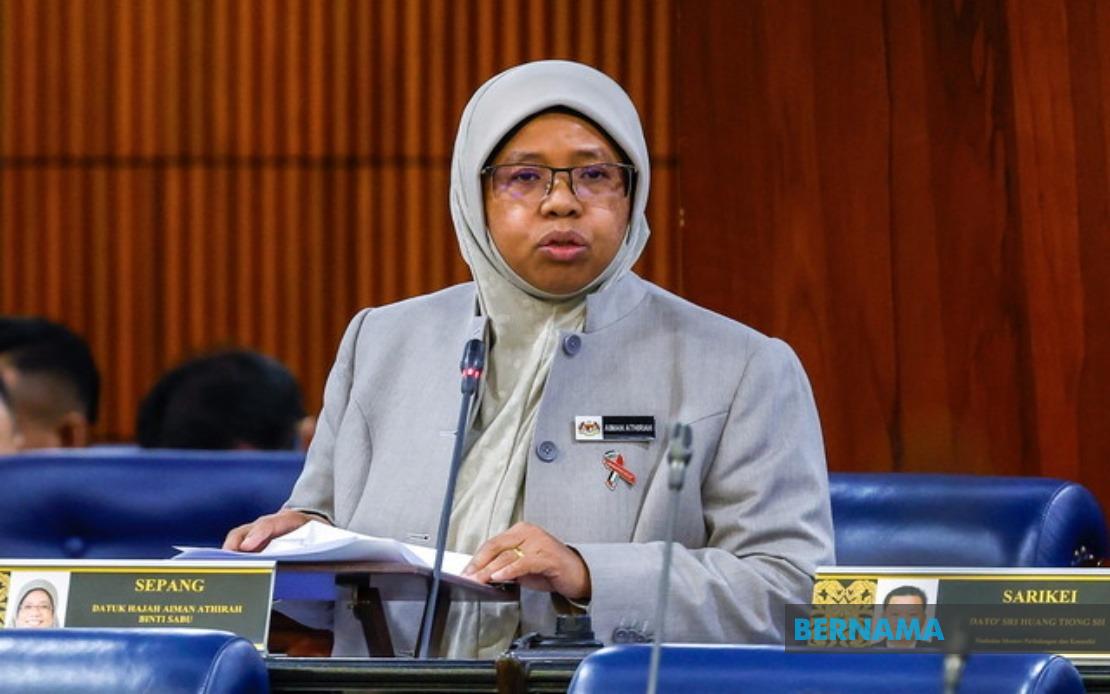
The Ministry of Housing and Local Government has taken significant steps to accelerate development in Malaysian ethnic villages, approving nearly 600 projects this year to address long-standing infrastructure and housing deficits. According to Deputy Minister Datuk Aiman Athirah Sabu, the approval of 573 projects in Chinese new villages alongside 21 initiatives in Indian villages signals renewed governmental commitment to these historically underserved communities, which have struggled for decades with inadequate basic amenities and deteriorating housing stock.
The scale of work approved for Chinese new villages demonstrates the breadth of challenges these settlements face. Among the 573 approved projects, infrastructure remains the priority, with 366 dedicated initiatives already green-lit. The progress on these schemes reveals a mixed implementation picture: 148 infrastructure projects have reached completion, suggesting steady execution on some fronts, while 218 remain ongoing. This split between completed and in-progress work indicates the ministry is managing a substantial pipeline that will likely extend well beyond this financial year.
Housing repair and construction assistance forms a critical component of the intervention strategy. The Housing Repair Assistance Programme has secured approval for 197 separate projects, with 47 already finished and 150 in active stages of work. More concerning is the status of the New Village Housing Construction Assistance Programme, where all 10 approved projects have not yet begun despite receiving formal approval. This suggests potential bottlenecks in procurement, land acquisition, or community coordination that may require immediate attention to maintain momentum.
Indian villages have historically received less structured development attention compared to their Chinese counterparts, making the dedicated allocation for these communities a noteworthy policy shift. The 21 approved projects span six states—Johor, Melaka, Selangor, Kuala Lumpur, Perak, and Negeri Sembilan—covering 18 distinct villages. These initiatives encompass infrastructure development, public amenities enhancement, and safety improvements, with a total outlay of RM2 million. The project timeline shows five completed, 13 under construction, two in procurement phases, and one still in planning, indicating relatively newer initiatives still gaining momentum.
The longer-term financial commitment demonstrates the government's recognition that single-year allocations cannot address decades of accumulated deficits. Since 2023, authorities have channelled RM328.9 million specifically toward Chinese new village development, benefiting residents across 613 villages nationwide. This sustained funding approach provides some assurance that improvements will not remain isolated pockets of development but rather part of comprehensive modernization efforts.
For Indian villages, the commitment represents a meaningful course correction. Beginning in 2025, the ministry has coordinated special allocations totalling RM15 million directed toward 50 identified Indian villages through 87 distinct projects. These funds aim to benefit 22,144 residents, suggesting careful targeting of interventions based on community needs assessments. The dual-funding approach—RM10 million through KPKT's 2025 budget initiative and RM5 million via the Malaysian Indian Transformation Unit (MITRA) programme—indicates cross-agency coordination to maximize impact.
The approval of these projects carries significance beyond mere numbers. Chinese new villages, established during the colonial era and expanded during the Emergency period, have historically served as vital economic and cultural anchors for rural Malaysian-Chinese communities. Yet insufficient infrastructure investment over decades has contributed to outmigration and economic stagnation in many settlements. Similarly, Indian villages representing traditional agricultural communities have faced systemic underinvestment, with many lacking adequate roads, water systems, and basic utilities.
The parliamentary question that prompted this disclosure, raised by S. Kesavan (PH–Sungai Siput), reflects growing political attention to these communities' development needs. Sungai Siput itself encompasses several such villages, making the issue locally salient. The detailed ministerial response suggests these constituencies have begun leveraging parliamentary mechanisms more effectively to secure concrete commitments and public accountability for village development.
Implementation challenges remain evident from the data. The gap between approvals and completions—particularly the zero commencement rate for housing construction projects—suggests that bureaucratic processes, funding disbursement mechanisms, or contractor capacity may be limiting execution speed. For Malaysian policymakers and residents in these villages, the critical phase now involves translating approvals into tangible on-ground improvements within reasonable timeframes.
These development initiatives also reflect broader Southeast Asian patterns where ethnic minority communities in rural areas frequently face infrastructure disparities compared to urban centres or majority-population regions. Malaysia's approach, involving dedicated allocations and structured programmes, offers a model of targeted intervention, though success ultimately depends on effective project management and community engagement throughout implementation cycles.
The approval of 594 projects worth RM73 million this year, combined with the sustained multi-year funding commitment, indicates institutional recognition that village development requires persistent effort rather than episodic intervention. Whether this translates into visible improvements in residents' daily lives—better roads, functional water systems, safer communities—will determine whether these approvals represent genuine development momentum or merely bureaucratic processing of familiar promises.

