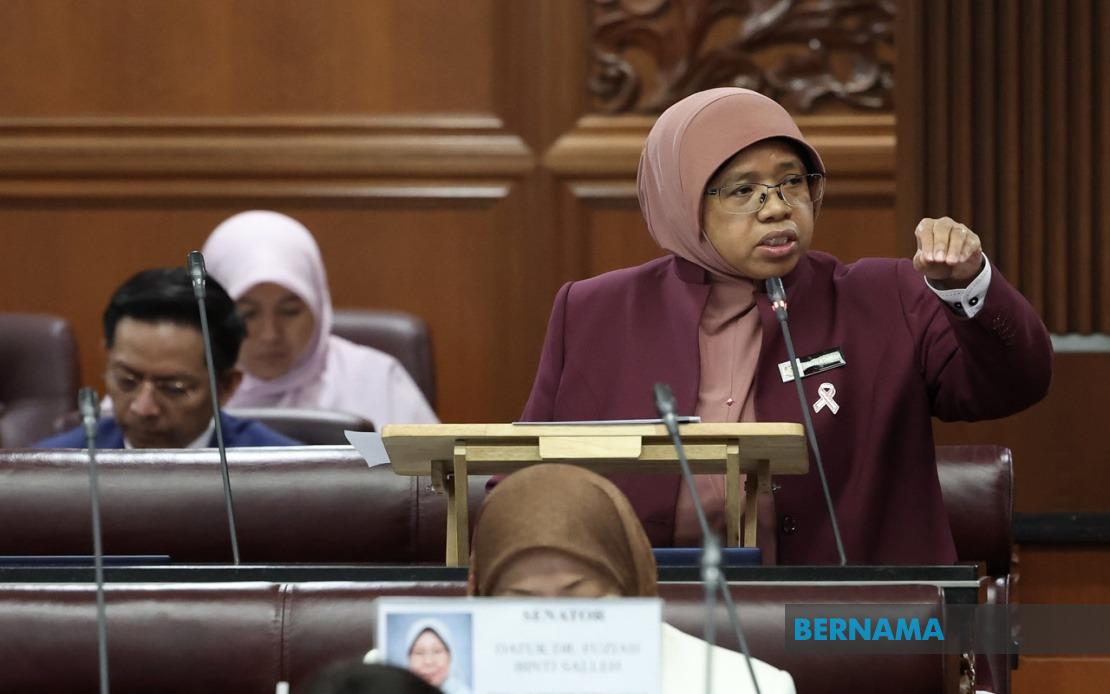
The Ministry of Housing and Local Government has adopted a strategic approach to managing maintenance backlogs across the nation's ageing affordable housing stock, concentrating its limited resources on People's Housing Programme projects that have surpassed the ten-year mark. Deputy Minister Datuk Aiman Athirah Sabu outlined this prioritisation framework during parliamentary proceedings, acknowledging that the ministry must make difficult allocation decisions when faced with substantial funding gaps between requested and available maintenance budgets.
The decision to focus on projects exceeding a decade in age reflects a recognition that structural and mechanical systems in high-rise residential blocks deteriorate according to predictable timelines. Lifts, roof membranes, elevated water storage tanks, internal distribution networks for water supply, waste pipes, and the electrical systems that power common areas represent the foundation of liveable conditions in these densely populated developments. By concentrating effort on these critical components rather than spreading resources thinly across cosmetic or minor repairs, the ministry aims to prevent situations where residents face service interruptions or safety hazards stemming from fundamental infrastructure failure.
The funding reality tells a sobering story about the pressures on Malaysia's public housing maintenance systems. During the 12th Malaysia Plan period, the ministry disbursed RM159.1 million across five rolling funding cycles dedicated to high-rise strata PPR projects nationwide. However, the disparity between demand and available resources became sharply apparent in 2026 when joint management bodies and management corporations submitted 226 separate maintenance requests totalling RM79.9 million but received approval for merely RM44.6 million—representing just 56 percent of identified needs. This gap of RM35.3 million underscores how Malaysia's investment in maintaining affordable housing stock lags behind the actual condition of these buildings and the expectations of residents who depend upon them.
The application and approval process operates according to a structured annual timeline that extends across multiple government levels and requires patience from housing administrators. Submission windows open in August and close in October, establishing a clear deadline for management entities to lodge their applications. Subsequently, specialist committees evaluate proposals during November and December sessions, with final approvals considered in January. Local authorities receive notification of approved projects that same month, and Letters of Acceptance flow out by April at the latest, permitting actual construction and repair work to commence. This multi-stage approval architecture ensures scrutiny and alignment with broader government objectives, though it also means that maintenance needs identified in one calendar year typically cannot be addressed until months later.
Before applications even reach KPKT's evaluation machinery, housing administrators must navigate a preliminary filtering stage through the Commissioner of Buildings or relevant municipal authority. This intermediate review layer aims to validate that requests meet technical standards and comply with regulatory frameworks, though it also introduces additional processing steps that can extend timelines. The involvement of local governments in this gatekeeping function reflects Malaysia's federal structure and the distributed responsibilities for urban housing oversight across multiple administrative tiers.
The concentration of maintenance resources on buildings older than ten years carries particular significance for Malaysia's urban landscape. The People's Housing Programme has constructed hundreds of thousands of affordable residential units since its inception, primarily serving lower-income households and first-time homebuyers. Many of these developments are now entering the intermediate stage of their lifecycle where foundational systems begin exhibiting wear but have not yet reached the point of catastrophic failure. Proactive maintenance of these components can substantially extend the usable lifespan of the buildings and prevent the exponential cost escalation that occurs when critical failures cascade through interconnected systems.
From a Southeast Asian perspective, Malaysia's experience with aging public housing stock mirrors challenges confronting several regional neighbours. Singapore, Thailand, and Indonesia all operate substantial subsidised housing programmes where buildings constructed in the 1980s and 1990s now require significant capital expenditure to maintain habitability. The funding constraints that KPKT faces are not unique to Malaysia but reflect broader regional patterns of inadequate government budget allocation to asset maintenance relative to the scale of housing stock requiring intervention. Countries across Southeast Asia struggle with similar choices between directing resources toward new housing construction, which creates political visibility, versus unglamorous but essential maintenance work that preserves existing assets.
The implications for residents of aging PPR developments involve both immediate practical concerns and longer-term policy questions. When lift systems malfunction, elderly residents and people with mobility challenges face barriers to accessing their homes. When water reticulation systems fail, entire residential blocks experience supply interruptions. When electrical infrastructure deteriorates, fire risk increases substantially. These are not theoretical concerns but daily realities in some of Malaysia's older PPR projects where deferred maintenance has accumulated. The ministry's decision to prioritise these components rather than aesthetic upgrades reflects appropriate prioritisation, though it inevitably means that other maintenance needs go unaddressed due to insufficient funding.
The fundamental tension underlying Malaysia's PPR maintenance challenge stems from the initial underpricing of these housing units and the consequent undersourcing of long-term maintenance reserves. When government-subsidised housing is sold at prices designed to maximise affordability rather than recover full lifecycle costs, the burden of maintenance necessarily shifts to public budgets. Many residents of these developments possess limited capacity to contribute substantially to maintenance funds through monthly levies, constraining the resources available from residential communities themselves. This creates dependency on government allocations that have not kept pace with the aging of the housing stock and the increasing complexity and cost of maintaining the mechanical systems in high-rise residential blocks.
Looking ahead, the ministry's targeted approach to prioritisation represents pragmatic crisis management rather than comprehensive solution to systemic underfunding. Unless budget allocations increase substantially beyond current levels, the backlog of deferred maintenance will continue accumulating in PPR projects approaching and exceeding fifteen and twenty years of age. Some housing administrators and residents have begun advocating for dedicated long-term funding mechanisms that would treat PPR maintenance as a predictable, adequately resourced government function rather than a perpetually underfunded discretionary programme competing annually for limited resources alongside other spending priorities. Whether Malaysian policymakers will embrace such structural reforms or continue managing maintenance challenges through annual budget cycles and prioritisation frameworks remains to be seen.

