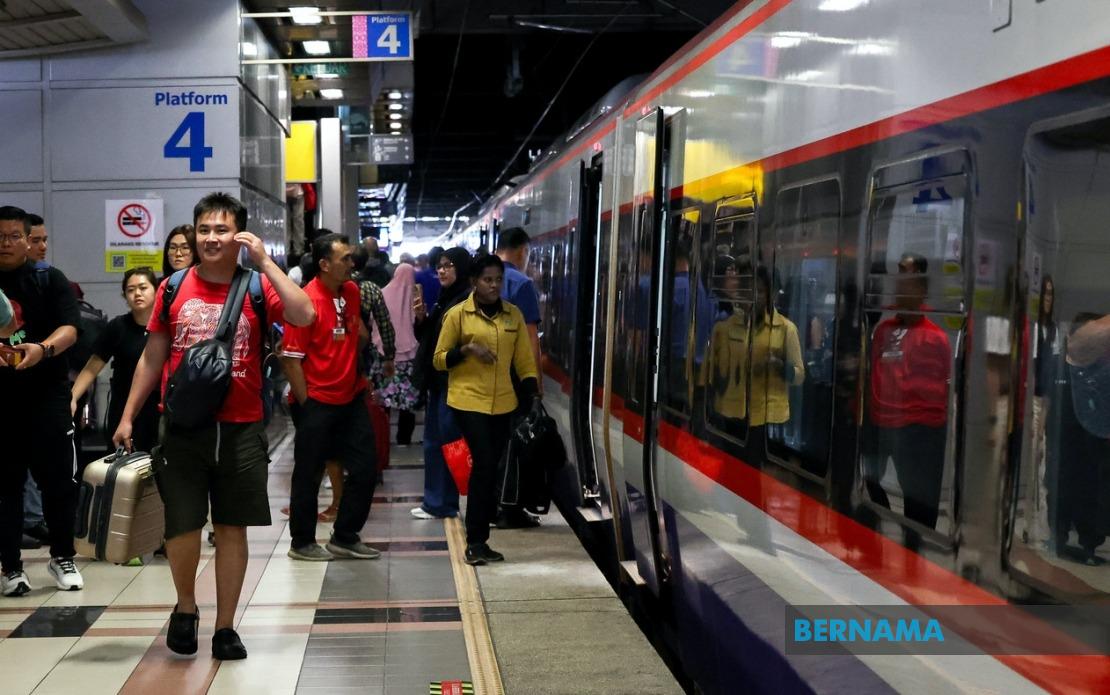
Keretapi Tanah Melayu Berhad (KTMB) has unveiled plans to deploy substantially more train capacity across its southern corridor network to support voters travelling to Johor for the state election scheduled this weekend. The national rail operator is releasing 7,464 additional seats on the Electric Train Service (ETS) in response to overwhelming public demand, having sold out previous allocations within days of their announcement on June 19.
The additional capacity will be concentrated on two critical north-south corridors that link the Klang Valley to Johor. Four extra train services will operate along the KL Sentral to JB Sentral route in both directions, while a parallel four-service increase applies to the JB Sentral to Gemas line. These supplementary trains will provide 2,488 seats daily when operating at full capacity, delivering approximately 7,464 total seats across the three-day window from July 10 to 12.
This announcement reflects the substantial logistical challenges posed by electoral events in Malaysia, where large voter populations return to their constituencies during polling periods. Johor, as the nation's second-largest state by land area and home to significant population centres including Johor Bahru, Iskandar Puteri, and Kota Tinggi, typically sees considerable internal migration when elections are held. The rapid sellout of previous ticket allocations demonstrates that voters increasingly prefer rail transport over road travel, reducing highway congestion and creating a more predictable journey experience during periods of peak travel demand.
KTMB's pricing strategy reflects a deliberate effort to encourage modal shift toward rail. The 20 per cent discount applied across all supplementary ETS services during the three-day operational window significantly undercuts alternative transport options. This promotional approach serves multiple objectives: it incentivises rail usage, distributes voter travel across time and capacity more evenly, and acknowledges the civic importance of facilitating electoral participation. When considered against petrol costs, highway tolls, and travel time, discounted rail fares present a compelling value proposition for voters planning cross-state journeys.
The timing of ticket sales staggered across the two main routes reflects operational and commercial considerations. KTMB opened advance bookings for the JB Sentral to Gemas service on July 7 at 3.00 pm, granting regional passengers a head start in reserving seats. Tickets for the KL Sentral to JB Sentral route became available the following morning at 9.00 am, a timing that targets Klang Valley voters who typically require longer lead time for journey planning. This staged release may also help KTMB manage booking system load more effectively across multiple routes.
The recommendation that passengers utilise cashless purchasing methods via the KITS Style mobile application, KTMB's website, or station kiosks represents a broader digitalisation trend within Malaysian transport infrastructure. Digital-first ticketing reduces congestion at physical counters, provides real-time seat availability information, and creates audit trails useful for capacity planning. For election periods specifically, cashless systems enable KTMB to track demand patterns with precision and inform future transport policy decisions around electoral logistics.
KTMB's advisory that passengers arrive at stations 30 minutes before departure, combined with the five-minute platform closure prior to train departure, represents standard international rail safety protocols. These directives carry particular weight during election periods when passenger volume creates potential bottlenecks at station entrances. Johor Bahru's JB Sentral and KL's Kuala Lumpur Sentral both experience substantial weekday traffic, making advance arrival especially prudent during predicted peak demand periods surrounding electoral events.
From a Southeast Asian regional perspective, Malaysia's experience deploying additional transport capacity for elections offers instructive insights. Many regional economies lack integrated rail infrastructure connecting population centres, forcing reliance on road transport during peak electoral travel periods. The experience of successfully selling 7,464 supplementary ETS tickets within a three-day window suggests that Southeast Asian cities investing in high-capacity rail corridors may enhance both civic participation and transport system efficiency. Infrastructure projects linking major population centres, particularly in rapidly urbanising corridors like Johor and Selangor, consequently carry implicit benefits beyond ordinary commercial considerations.
The magnitude of demand captured through these ETS initiatives also signals evolving voter behaviour and preferences. Younger demographic segments increasingly favour rail transport for intercity travel, a preference that may shape transport infrastructure investment decisions across Malaysia's political economy. Election-driven demand spikes therefore provide valuable data for transport planners assessing long-term capacity requirements on routes serving multiple electoral constituencies.
For Malaysian voters planning journeys to Johor, KTMB's expanded capacity represents a significant convenience improvement over previous election periods. The 20 per cent discount effectively reduces travel costs while the staggered ticketing schedule provides adequate opportunity for advance bookings. KTMB's call centre at 03-9779 1200 remains available for passenger queries, while official social media channels provide real-time service updates. These multi-channel communication approaches reflect contemporary best practices in public transport operations, ensuring voters possess clear information about available options and operational procedures during the election period.

