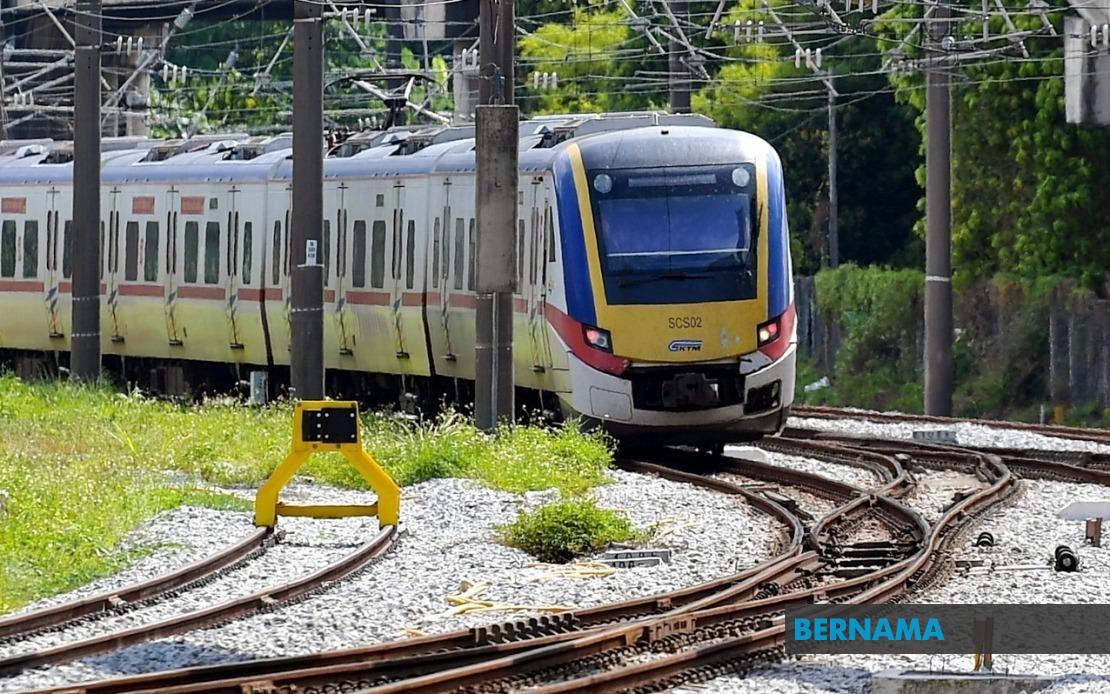
Keretapi Tanah Melayu Berhad (KTMB) is mobilising substantial additional capacity on its premium rail routes to handle the anticipated surge in passenger numbers during Malaysia's National Day celebrations and upcoming school holidays. The national rail operator has announced plans to deploy 124 supplementary services across its Electric Train Service (ETS) and Electric Multiple Unit (EMU) Plus offerings, providing a combined total of 38,944 seats for travellers throughout the holiday period spanning late August into early September.
The expansion centres primarily on bolstering ETS capacity, the flagship high-speed rail network that connects major urban centres across the peninsula. KTMB will introduce 100 additional ETS services equipped with 31,600 seats, scheduled to operate across three separate holiday windows: August 21 to 23, August 28 to 31, and September 4 to 6. This graduated approach allows KTMB to match service levels to anticipated passenger flow patterns, concentrating extra trains during the peak exodus and return periods rather than maintaining uniform additions throughout the month. The timing reflects industry experience suggesting that holiday travel concentrates heavily around the initial departure weekend and the final return days before school resumption.
Complementing the ETS expansion, KTMB is introducing 24 additional EMU Plus services that will collectively accommodate 7,344 passengers. These premium regional trains operate on selected dates between August 21 and September 6, with particular emphasis on routes serving commuter corridors that feed into major urban hubs. Notably, KTMB has extended EMU Plus service reach to Bandar Tasik Selatan, a burgeoning residential and commercial zone in the Klang Valley, signalling the operator's strategy to capture demand from emerging suburban communities that may not have previously found premium rail options convenient.
The northern rail corridor receives dedicated attention in this initiative, reflecting the substantial volume of holiday traffic that traditionally flows toward Peninsular Malaysia's northern states. Eight supplementary services on the busy Padang Besar-Butterworth-Padang Besar route will commence operation from August 27 to 31, bringing the daily service count on this critical artery to 46 trains. This particular route serves as a crucial gateway for cross-border travel to Thailand and serves communities across Perlis, Kedah, and Penang. The elevation to 46 daily services represents a fundamental expansion of the route's baseline capacity and underscores KTMB's commitment to preventing service congestion during peak holiday periods.
Tickets for all supplementary services have already gone into circulation through KTMB's established distribution channels, allowing passengers to plan their journeys with certainty and affording the operator advance data on anticipated utilisation patterns. This early ticketing window, which commenced the day after the announcement, demonstrates KTMB's confidence in demand forecasting and its operational readiness to deploy the additional resources efficiently. For Malaysian travellers planning National Day excursions or coordinating school holiday logistics, early booking availability eliminates uncertainty and enables better itinerary planning.
The service expansion underscores KTMB's broader confidence in the ETS platform as it approaches a significant operational milestone. The network, which commenced operations on August 12, 2010, with a single Kuala Lumpur-Ipoh corridor, has evolved dramatically over its 16-year operational history. Subsequent expansions extended service northward to Butterworth and Padang Besar in 2015, while a further southern expansion anticipated completion at the close of 2025 would deepen the network's geographic footprint. This phased growth strategy has transformed the ETS from a niche service into a cornerstone of Malaysia's intercity transport infrastructure.
Operational performance data validates this expansion trajectory. KTMB reports that from January through July of this year, ETS services transported 3.67 million passengers, representing a robust 56 per cent year-on-year increase compared to 2.36 million travellers during the same period in 2024. This sustained double-digit growth reflects both rising consumer confidence in rail reliability and demographic shifts toward alternatives to highway congestion. Cumulatively, since its 2010 inauguration, the ETS has served 44.3 million passengers, establishing itself as an integral component of Malaysia's transport ecosystem.
The expansion initiative coincides with KTMB's anniversary celebrations marking 16 years of ETS operation, a milestone the operator marked with customer appreciation activities spanning August 10 to 14. These promotional efforts, encompassing voucher distributions, complimentary meal partnerships with KFC, gratis travel tickets, and discount incentives, served both to recognise passenger loyalty and to encourage continued patronage. By synchronising service expansion announcements with anniversary festivities, KTMB effectively communicated that its growth reflects passenger confidence rather than capacity constraints forcing reactive responses.
KTMB's Group Chief Executive Officer Datuk Azlan Shah Al Bakri characterised the service expansion as emblematic of the operator's commitment to advancing rail transport modernisation across Malaysia. He positioned the capacity additions within a broader narrative of infrastructure development, highlighting the sequential expansion from Ipoh northward to Butterworth and Padang Besar, then southward at year-end 2025. This framing contextualises current holiday-season augmentations as incremental steps within a strategic transformation that is fundamentally reshaping Malaysia's intercity transport landscape.
For Malaysian travellers and policymakers, the expansion carries several implications. The continued growth in ETS utilisation validates the substantial public investment underlying the network's development and provides ammunition for advocates of further rail infrastructure expansion. For commuters and holidaymakers, the additional capacity during peak periods addresses a perennial frustration with crowded services during major travel windows, potentially improving journey comfort and encouraging modal shift away from private vehicles. The extension of EMU Plus to Bandar Tasik Selatan signals KTMB's responsiveness to demographic changes within metropolitan regions and its willingness to reconfigure service patterns in response to shifting population distributions.
The holiday-season capacity boost arrives amid broader discussions within Southeast Asia regarding transport infrastructure adequacy. While neighbouring Singapore has long maintained comprehensive rail networks and Thailand and Indonesia are pursuing major expansion projects, Malaysia's rail modernisation has progressed more unevenly, with pockets of excellence like the ETS coexisting alongside less-developed corridors. The demonstrated ability to surge capacity during peak periods suggests operational maturity and technical capability that could provide templates for service enhancement elsewhere within the national network.
Looking forward, the sustainability of this growth trajectory depends on KTMB's ability to maintain service reliability and passenger experience even as volumes accelerate. The 56 per cent annual growth rate evident in first-half 2024 figures cannot continue indefinitely without infrastructure constraints eventually manifesting. Nonetheless, the current expansion strategy, combining targeted capacity additions with geographic network extension, indicates that KTMB and the broader Malaysian transport ecosystem are demonstrating capacity to accommodate rising demand through modernisation and strategic investment. For the tens of thousands of Malaysian travellers planning National Day and school holiday movements, these 124 supplementary services represent concrete manifestation of infrastructure responsiveness to citizen mobility needs.

