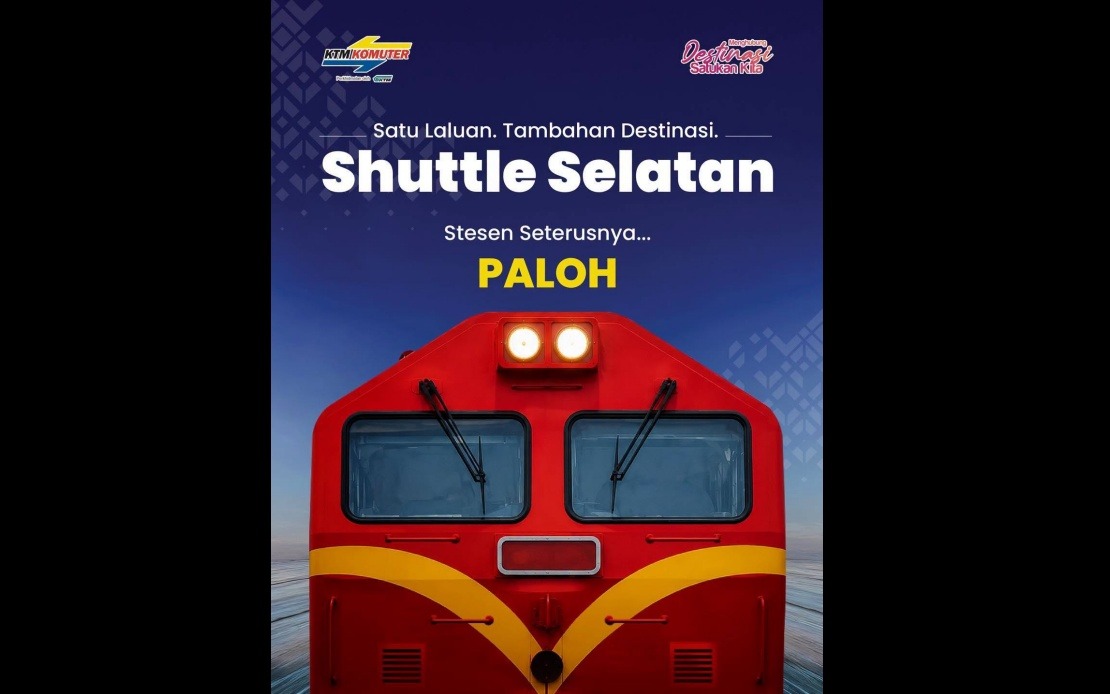
Keretapi Tanah Melayu Berhad (KTMB) is moving forward with a significant expansion of its rail connectivity in Johor, extending the Southern Shuttle service to encompass the Paloh-JB Sentral-Paloh route beginning August 8. This development represents a decisive step in the Transport Ministry's broader strategy to strengthen public transportation infrastructure in the southern corridor, just three months after the service's initial launch with limited connectivity.
The extended network will now serve seven stations across central Johor, linking Paloh with Kluang, Renggam, Layang-Layang, Kulai, Kempas Baru, and JB Sentral. The journey between Paloh and the Johor Bahru terminal will take approximately two hours, positioning the route as a viable alternative to road travel for workers and residents commuting within the region. This timetable remains competitive with private vehicle travel while offering greater comfort and reliability, particularly during peak hours when congestion affects road networks.
The strategic rationale behind this expansion centres on creating a direct rail corridor connecting outlying suburban communities with key economic zones. Kulai and JB Sentral function as important employment and commercial anchors in the state, yet residents in peripheral areas like Paloh have historically lacked convenient rail access. By leveraging the Gemas-Johor Bahru Electrified Double-Track Project (PLBEGJB) infrastructure already under development, KTMB is maximising investment efficiency while simultaneously extending service reach. This approach demonstrates pragmatic infrastructure planning, utilising completed segments of larger projects to deliver immediate community benefits.
Operational capacity has been designed to accommodate substantial daily passenger volumes. Each train will carry up to 400 passengers, with 10 daily services split evenly between morning departures from Paloh and evening returns. The schedule deliberately targets commuter patterns, with the earliest service departing Paloh at 3.55 am to facilitate connections to Singapore-bound workers crossing the Johor Bahru border. The last evening departure from JB Sentral at 8.30 pm accommodates those finishing work in the urban centre and returning to suburban residences, representing a realistic acknowledgment of how cross-border and regional employment structures function in this economically integrated area.
Fare pricing has been configured to encourage ridership adoption during this critical launch phase. KTMB has maintained promotional pricing at RM7.70 for the full Paloh-JB Sentral journey, reduced from the standard RM15.30 rate. This temporary discount will remain available until new electric trains arrive, indicating the operator's confidence in future fleet modernisation and suggesting that pricing may adjust once capacity pressures increase. For price-sensitive commuters accustomed to private vehicle costs or informal transport arrangements, this promotional structure provides compelling economic incentive to shift travel modes.
Concessions extended through the MyRailLife Pass programme further reduce barriers to regular usage. Free travel privileges granted to children aged four to six, students from primary through secondary education, and persons with disabilities represent significant subsidies that broaden service accessibility beyond working-age commuters. By extending these concessions through December 31 for the newly launched route, KTMB is effectively building patronage habits among demographic groups whose lifetime travel behaviour will influence long-term ridership patterns. Students, in particular, represent future regular commuters whose early exposure to rail travel may establish lasting preferences.
Intermodal connectivity strengthens the route's utility within the broader transportation network. Transfer opportunities at Kempas Baru Station enable seamless transitions to the Kempas Baru-Pasir Gudang service, creating a network effect that connects the Paloh-Kluang-Kulai-Johor Bahru corridor with Pasir Gudang's substantial industrial employment base. This integration recognises that few workers make single-destination trips; most require connections to reach actual employment locations. By enabling transfers, the Southern Shuttle effectively expands its service area far beyond the seven named stations, increasing relevance across a broader geographic and economic region.
The Johor-Singapore Special Economic Zone (JS-SEZ) represents the larger policy context within which this service expansion gains strategic significance. As bilateral economic integration intensifies between Malaysia and Singapore, border-crossing workers require reliable transportation that supports both the timing requirements of cross-border employment and the frequency demands of daily movement. Enhanced rail connectivity reduces bottlenecks at the Johor Bahru border crossing and provides alternatives to private vehicles, alleviating pressure on road infrastructure while supporting higher employment mobility. For Malaysian workers employed in higher-wage Singapore positions, reliable rail access becomes a quality-of-life factor that influences residential choices and workforce retention.
Initial service uptake metrics provide encouraging signals about market receptiveness. The limited two-route service operated prior to this expansion generated 3,209 passengers, demonstrating that demand exists for convenient rail alternatives in this corridor despite competition from entrenched private vehicle usage and informal transport arrangements. This baseline ridership volume, though modest in absolute terms, suggests sufficient market viability to justify the operational expense of expanded service. For a region historically underserved by modern rail infrastructure, establishing any meaningful ridership foundation represents progress toward shifting transportation culture.
The broader implications for Malaysian transportation policy extend beyond Johor's borders. This expansion validates the Transport Ministry's investment in rail modernisation and electrification projects, demonstrating that infrastructure completion translates into expanded service delivery relatively quickly. For other regions where major rail projects remain under development—including Peninsular Malaysia's northern and central corridors—the Paloh extension provides a template for maximising asset utilisation and community benefit as sections of larger initiatives reach completion. It also illustrates how strategic timing and pricing can overcome public hesitation toward adopting newer transport options.
Vehicle dependency reduction remains an explicit policy objective behind this service launch. Johor's rapid urbanisation and expansion of suburban residential areas have intensified traffic congestion and parking pressures, creating conditions where viable rail alternatives acquire policy appeal beyond pure transport efficiency. By offering convenient rail access, the Southern Shuttle contributes to longer-term goals of reducing private vehicle growth rates and associated environmental pressures. Each commuter shifting from personal vehicle to rail travel reduces both congestion costs and infrastructure burden, creating positive externalities that benefit the broader community beyond direct users.
The August 8 launch date positions the expansion during Johor's mid-year school holidays period, potentially affecting initial ridership patterns and requiring service adjustments as normal commuting patterns resume. KTMB's decision to maintain consistent daily trip frequencies regardless of seasonal variation reflects confidence that underlying demand will sustain usage, though monitoring initial performance data will provide critical insights for future service optimisation and potential further expansion.

