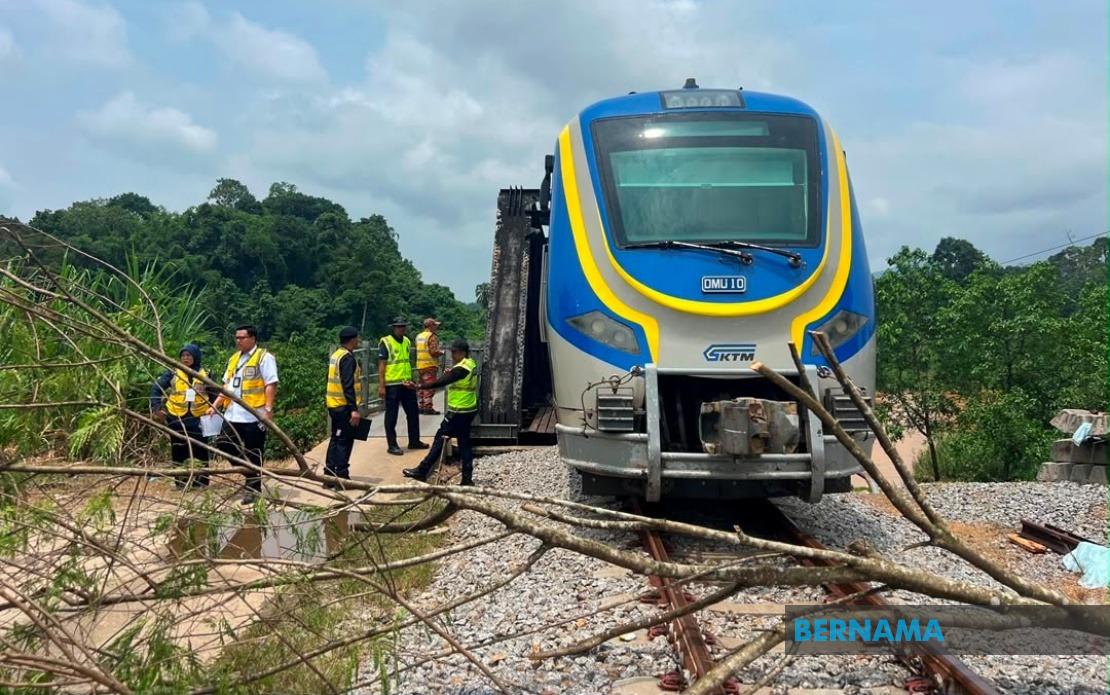
Keretapi Tanah Melayu Berhad has conducted a comprehensive emergency response drill on the EX-Kemubu route in Kuala Krai, evaluating critical aspects of its crisis management protocols including accessibility for rescue teams, speed of emergency response, and the flow of information across multiple agencies. The exercise represents a proactive effort to strengthen disaster preparedness on one of the railway operator's most geographically isolated lines.
Khairul Naim Johdi, KTMB's general manager for Occupational Safety, Health and Environment, underscored that the training was deliberately designed to assess real-world challenges specific to rural railway operations. The EX-Kemubu corridor presents particular difficulties due to its distance from major road networks, a factor that can significantly delay rescue efforts during genuine emergencies. By simulating crisis scenarios in such terrain, KTMB aims to identify gaps in current protocols and refine procedures before lives are at stake.
The selection of the EX-Kemubu route as the training venue reflects strategic thinking about operational vulnerabilities. The line traverses areas with multiple risk factors, including sections running adjacent to rivers where derailments or other incidents could be compounded by environmental hazards. The remote setting ensures that training scenarios mirror authentic constraints faced by first responders, making the exercise more instructive than drills conducted in accessible locations.
A total of 350 personnel participated in the drill, representing a cross-section of Malaysia's emergency response infrastructure. The Royal Malaysia Police, Malaysian Fire and Rescue Department, Ministry of Health, Malaysian Civil Defense Force, and Department of Social Welfare all contributed staff and resources. This multi-agency approach reflects the integrated nature of modern disaster response, where railway incidents require coordinated action across law enforcement, medical services, fire suppression, and civil protection functions.
The evaluation methodology incorporated formal post-exercise analysis, with assessors examining response delays, the performance of initial responders, routes taken to reach incident sites, and the timeliness of information flow. This structured feedback mechanism enables KTMB to document which procedures functioned effectively and which require refinement. For agencies operating in Malaysian contexts where geographical barriers frequently complicate emergency access, such systematic evaluation provides invaluable data for improving operational standards.
Khairul Naim identified access as the paramount challenge in rural emergency situations, a concern that extends beyond KTMB to any organisation managing infrastructure in remote areas. In forested or sparsely populated regions characteristic of parts of Peninsular Malaysia, even minor incidents can escalate due to the time required for rescue teams to mobilise and navigate to affected locations. The training therefore emphasised techniques for accelerating response initiation and identifying optimal routes for emergency vehicles and personnel.
KTMB operates a structured training calendar, with large-scale emergency drills rotated annually across its four operational regions. Complementing these major exercises are smaller, focused drills conducted throughout each year to maintain personnel proficiency and test specific response protocols. This approach recognises that emergency preparedness requires continuous reinforcement rather than sporadic attention, a principle increasingly recognised across Southeast Asia's transport and infrastructure sectors.
Internal coordination mechanisms form a cornerstone of KTMB's response architecture. When an incident occurs, railway staff contact the operation controller at the KTMB control centre, which serves as the central hub for information processing and agency notification. The efficiency of this initial reporting stage directly influences response times for all downstream agencies. By practising this notification sequence repeatedly, KTMB staff internalise procedures and develop the situational awareness necessary to communicate accurately during genuine crises when stress and uncertainty are magnified.
Passenger evacuation capabilities occupy a central position in KTMB's emergency philosophy. The training emphasised that railway staff must be thoroughly versed in evacuation procedures, recognising that in many scenarios, train crew will be the first personnel to act in protecting passenger safety. This focus aligns with international best practices in railway safety, where crew competency in emergency management directly correlates with casualty reduction.
The Dabong and Kemubu route, which encompasses the EX-Kemubu segment, represents a critical corridor for regional connectivity. Ensuring that all parties involved in emergency response understand their respective responsibilities and can execute coordinated actions is essential not only for protecting human life but also for maintaining public confidence in railway travel. In Malaysia, where rail usage has been subject to periodic concerns following high-profile incidents, demonstrating tangible commitment to safety management through regular, visible training efforts contributes to broader perceptions of operational reliability.
For Malaysia's broader transport safety ecosystem, KTMB's emphasis on systematic emergency preparedness offers a model applicable to other sectors. The integration of local agencies into railway-specific drills creates familiarity and reduces confusion during actual emergencies. By testing protocols in conditions that approximate real-world constraints, organisations can identify systemic weaknesses that tabletop exercises alone might overlook. As Southeast Asian nations continue investing in rail infrastructure expansion, adopting comprehensive emergency management frameworks that account for geographical and logistical realities will become increasingly important for ensuring safe, resilient transport networks.

