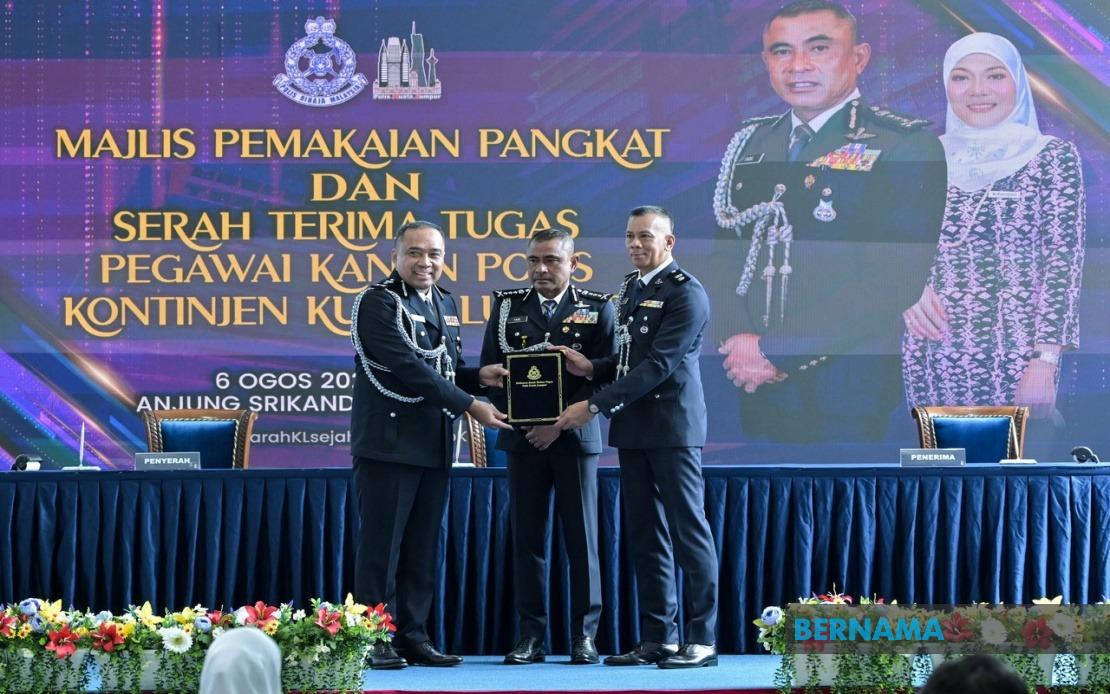
Kuala Lumpur's police force has undergone a substantial reorganisation of its upper echelon, with Datuk Fadil Marsus, the city's police chief, overseeing the formal transition of six critical command positions at the contingent headquarters. The ceremony marks a deliberate restructuring aimed at refreshing operational approaches and ensuring continuity in leadership as the force confronts mounting security challenges across the capital region.
The reshuffle encompasses several strategically important departments that form the backbone of law enforcement operations in Malaysia's federal territory. The posts affected include the directorship of the Criminal Investigation Department, stewardship of the Narcotics Crime Investigation Department, and the district command positions covering Dang Wangi and Sentul—areas that encompass significant portions of central Kuala Lumpur. Additionally, two deputy chief positions within the Special Branch and the CID have been reassigned, reflecting a comprehensive top-level restructuring rather than isolated appointments.
SAC Zulkarnain Samsudin relinquished his responsibilities as head of the Criminal Investigation Department, with SAC Sazlee Adam assuming the role and bringing fresh perspectives to the department tasked with investigating serious crimes across the city. The Narcotics Crime Investigation Department also saw leadership transition, with SAC Haslah Bachok passing oversight to ACP Kee Hang Kee, signalling a potential shift in strategic priorities in addressing drug-related offences that continue to plague urban areas.
At the district level, Supt Nuzulan Mohd Din stepped into the Dang Wangi district chief position, taking over from SAC Sazlee Adam, who moved upward to the CID directorship. Simultaneously, Supt Jasni Zolpa accepted command of the Sentul district police headquarters, succeeding SAC Basri Sagoni. These shifts at the grassroots administrative level suggest an attempt to inject new operational approaches into the districts that interface most directly with the public.
The Special Branch, responsible for intelligence and counter-terrorism operations, experienced its own transition when SAC Kamaruzaman Md Alib handed over the deputy chief position to ACP Saefuddin @ Mohd Fitri Abdul Rahman. Notably, SAC Zulkarnain Samsudin, freshly vacated from his CID directorship, moved laterally to the CID deputy chief position before subsequently handing it to Supt Ong Seng Keong, suggesting deliberate sequencing in the appointments to manage institutional knowledge transfer.
Kuala Lumpur deputy police chief Datuk Mohd Azani Omar attended the handover ceremony, underscoring the significance of the occasion within the force's hierarchy. The formal nature of the gathering and the presence of senior command reflected the institutional weight placed on ensuring smooth transitions during what amounts to a wholesale restructuring of mid-to-senior level operations.
In his remarks during the ceremony, Fadil characterised these appointments not merely as reward mechanisms but as acknowledgements of demonstrated competence coupled with expanded accountability. He articulated a vision where promotions represent institutional trust rather than personal advancement, emphasising that those ascending to these roles must embody integrity, professionalism, and a commitment to public service. This messaging carries implications for the broader force culture and the standards expected of those in leadership positions.
The police chief framed the reshuffle as essential to organisational renewal and continuity, positioning leadership changes as mechanisms through which institutions refresh their operational methodologies without disrupting service delivery to citizens. In an organisation as hierarchical as the Royal Malaysia Police, such ceremonial transitions serve both practical and symbolic functions—they communicate institutional commitment to change while maintaining organisational stability.
Fadil's public statements during the ceremony referenced the escalating complexity of security threats confronting Kuala Lumpur, from traditional crime through narcotics trafficking to the operational readiness required in contemporary policing environments. He explicitly called upon the force to maintain heightened commitment to crime suppression, substance abuse prevention, investigative capability enhancement, and operational preparedness while simultaneously strengthening community relations—a multifaceted mandate that underscores the evolving demands on urban law enforcement in Malaysia.
The timing of such restructuring often reflects institutional responses to performance metrics, crime trends, or strategic reassessments. While the original announcement does not specify triggering factors for this particular reshuffle, the emphasis placed on refreshing approaches and introducing new ideas suggests that the Kuala Lumpur police contingent may be responding to perceived gaps or opportunities for improvement across multiple operational domains.
For Kuala Lumpur residents and businesses, these command changes carry practical implications. District-level leadership directly influences policing visibility, response times, and community engagement strategies. Changes in the CID and NCID leadership may signal shifts in investigative priorities or methodologies for addressing serious crimes and drug trafficking—issues that significantly impact public safety perception and actual crime outcomes in the city.
The reshuffle also reflects broader trends within Malaysian policing where institutional modernisation increasingly emphasises skills-based advancement, cross-departmental experience, and rotating postings to prevent ossification within specific divisions. These structural moves, though often technical and administrative in appearance, collectively shape the organisational culture and operational effectiveness of one of Malaysia's largest police contingents, directly affecting security outcomes across the capital.

